
When it comes to American independent cinema, few filmmakers capture its spirit better than Jim Jarmusch. An uncompromising artist, Jarmusch has consistently resisted mainstream pressures. Even when he toys with genres like vampires, samurai and zombies, his films often feel like deliberate reversals or reinventions of those conventions. The result is a unique body of work that many admire and few can emulate.
Jarmusch launched his directing career with Permanent Vacation, a final university project released in 1980. His follow-up, Stranger Than Paradise, became a touchstone of 1980s independent cinema and an important entry in the No Wave movement. No Wave films—made between roughly 1976 and 1985—favored stripped-down, guerrilla-style production and stories that embraced darker, more unsettling moods than mainstream Hollywood. As a prominent voice in that scene, Jarmusch quickly gathered a devoted audience of cinephiles and outsiders. Those early films established him as a distinct auteur, a reputation he has maintained as he cultivated recurring collaborators such as Tilda Swinton, Bill Murray and Steve Buscemi.
Although a particular tone is often associated with his name, Jarmusch’s filmography is varied. His work can be divided into three broad periods, each highlighting a different approach to form, tone and subject matter.
The first period encompasses his No Wave beginnings. From Permanent Vacation (1980) through Down by Law (1986), these films prioritize raw authenticity and a worn, lived-in aesthetic. The cinematography and production design often feel gritty, almost tactile, and the stories prioritize character and mood over plot mechanics.
Jarmusch’s middle period stretches roughly from Mystery Train (1989) to Coffee and Cigarettes (2003). During these years he expanded his palette—experimenting with structure, exploring anthology formats, and blending genres from eastern-influenced martial arts to revisionist westerns. This phase represents some of his most adventurous and playful formal work.
The most recent phase combines the extremes of the earlier periods. Here Jarmusch tends toward slower, more reflective films while retaining his penchant for formal invention and gentle humor. With decades of experience, his later films feel both polished and quietly daring.
Below are three films chosen to represent those distinct phases. This guide—Where to Start with Jim Jarmusch—highlights signature entries that introduce his evolving style and recurring preoccupations over a career spanning more than forty years.
1. Down by Law (1986)
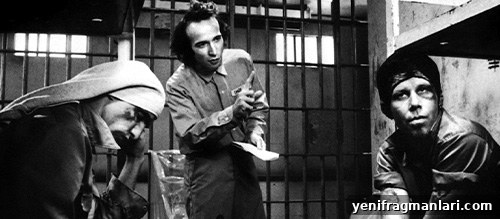
Down by Law, Jarmusch’s third feature, refines the hallmarks of his early work: minimalist but lived-in sets, a stark black-and-white palette, and inventive use of limited resources. While his first two films are emblematic of the No Wave aesthetic, Down by Law feels like the movement’s culmination—ambitious in story and confident in style.
The film follows Zack (Tom Waits) and Jack (John Lurie), who meet in prison after being wrongly accused, and their cellmate Bob (Roberto Benigni), an Italian tourist jailed for accidental manslaughter. Tensions and contrasts between the three personalities drive the drama. When Bob proposes an escape plan, the trio’s uneasy alliance transforms into a surprising found-family dynamic as the movie shifts into a restrained road picture. Through brief glimpses of a disheveled America, Jarmusch foregrounds character interactions rather than the mechanics of escape—he deliberately omits the prison break scene, choosing to focus on the emotional aftermath and the chemistry among the leads.
Performances are central to the film’s appeal. Tom Waits and John Lurie give textured, low-key turns as men with rough exteriors and hidden softness, while Roberto Benigni provides buoyant comic relief and warmth that anchors the trio. Robby Müller’s expressive black-and-white cinematography enhances the film’s gritty authenticity. Down by Law remains an essential entry point for anyone interested in 1980s American indie cinema and Jarmusch’s early voice.
2. Mystery Train (1989)
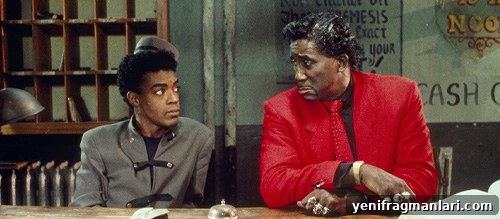
Mystery Train marks a stylistic shift: Jarmusch moved away from black-and-white and embraced a new fixation—rock and roll, particularly Elvis Presley. Across his career, music often shapes Jarmusch’s casting, soundtrack choices and thematic interests; Mystery Train foregrounds that musical sensibility and introduces his recurring use of anthology structure.
The film consists of three distinct but thematically linked stories set in Memphis, Tennessee. The first follows two teenagers from Yokohama who visit the city as pilgrims to Elvis landmarks. The second centers on a woman stranded in Memphis who has strange encounters and even an apparition of Elvis. The third focuses on local residents hiding from the law after a drunken shooting. All three segments intersect at the Arcade Hotel, whose night clerk and bellboy provide comic continuity and a local flavor that ties the episodes together.
Memphis functions as more than a backdrop; it becomes a character whose meaning shifts with each narrative. For the visiting teens it is sacred territory; for the stranded woman it is alien and uneasy; for the locals it’s a familiar playground. Jarmusch crafts a multi-faceted portrait of place that reveals how setting shapes perception. The film is populated by offbeat, memorable characters—Screamin’ Jay Hawkins’ flamboyant night clerk and Steve Buscemi’s character among them—whose personalities help render Memphis vivid and timeless. Mystery Train demonstrates Jarmusch’s gift for blending musical culture, location-based storytelling and quirky humanism.
3. Paterson (2016)

Paterson exemplifies Jarmusch’s later, more meditative period. The film celebrates the ordinary: a bus driver named Paterson (played by Adam Driver) lives in Paterson, New Jersey, and finds quiet joy in daily routine and the small acts of creation—chiefly, writing poetry. Where other filmmakers might manufacture dramatic peaks, Jarmusch revels in subtlety, turning mundanity into something quietly profound.
Not much dramatic upheaval happens: Paterson’s life unfolds through modest moments—bus routes, bar visits, overheard conversations, and the occasional inconvenience. These small events are rendered with affection and precision. The poems in the film, written by real-life poet Ron Padgett, underscore the beauty of small things—love, a box of matches, a stray dog—and reflect Jarmusch’s own background in poetry. Structurally, the film mimics poetic form: days are presented like stanzas, and repeated routines create a comforting rhythm.
Adam Driver’s portrayal grounds the film with a gentle, humane presence. Paterson’s quiet strength is his empathy and attentiveness, qualities that make him deeply sympathetic. Paterson is an ode to patience and attention: a reminder to slow down, notice detail, and find meaning in ordinary life. For many viewers, the film will feel like a rare, restorative experience.
Over his four-decade career, Jim Jarmusch has enjoyed a remarkable degree of artistic freedom, and his filmography contains remarkably few missteps. His consistent authorship—clear thematic concerns, distinct visual choices and a steady group of collaborators—makes even his less celebrated films rewarding. Jarmusch refuses to trade artistic integrity for mass appeal, choosing instead to make intelligent, thoughtful cinema that remains approachable rather than pretentious. If these three films resonate with you, they offer a solid starting point for exploring a singular American auteur whose work is concise in runtime but expansive in creative vision.