


Babylon (2022)
Director: Damien Chazelle
Screenwriter: Damien Chazelle
Starring: Diego Calva, Margot Robbie, Brad Pitt, Li Jun Li, Jovan Adepo, Jean Smart, Tobey Maguire, Ethan Suplee, Olivia Hamilton, Spike Jonze, Katherine Waterston, Lukas Haas, Rory Scovel, Eric Roberts, Jeff Garlin, Flea
Babylon (2022), written and directed by Damien Chazelle, is a bold, unflinching examination of early Hollywood—the pre-code era when the industry was simultaneously intoxicating and chaotic. Following Chazelle’s previous films that explored American myth and ambition, this movie strips away romanticized memory and exposes the messy, often brutal realities behind the creation of cinematic legend.
The film opens with a short prologue and immediately plunges into a sprawling, lawless party set in the California desert. Guests arrive in sand-dusted cars, men in suits and women in revealing attire. A jazz band plays while sex and debauchery unfold in every corner of a vast hall. Cinematographer Linus Sandgren and Chazelle swing the camera through the crowd, introducing characters and small vignettes: a trumpet player, a nude dancer, a security guard, an assistant. The energy recalls a frenetic De Palma sequence, but Chazelle’s staging brims with life, narrative intent and thematic purpose. This opening is meant to divide audiences—some will be overwhelmed, others exhilarated—but it is undeniably a technical and creative triumph: raw, loud, immersive, and deliberately overwhelming.
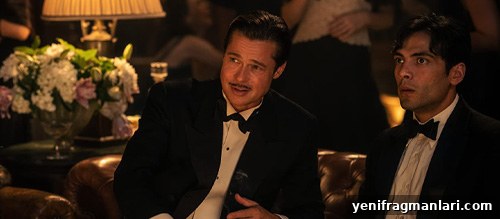
From this chaos the film introduces three central figures who anchor its narrative and emotional core. Brad Pitt plays Jack Conrad, a superstar of the silent screen reminiscent of classic leading men, charming yet haunted by addiction and decline. Margot Robbie is Nellie LaRoy, a brash aspiring starlet who knows she belongs in the spotlight before she ever gets a real chance. Diego Calva plays Manny Torres, a Mexican immigrant who scrambles for work on studio lots and embodies the hopeful outsider drawn to Hollywood’s promise. Each character represents different facets of silent-era cinema and the seismic changes brought by the arrival of sound.
Diego Calva’s Manny is the audience’s primary viewpoint, the character through whom the story’s arc transitions across time. His transformation—from wide-eyed dreamer to a man hardened by disappointment and pressure—is convincingly charted. Margot Robbie and Brad Pitt deliver some of their finest, most complex work: Robbie’s fiery magnetism and volatility, Pitt’s blend of charisma and profound sadness. Chazelle stages intimate moments—extreme close-ups, score-less exchanges, extended monologues—to let these performances breathe and to chart the emotional and professional shifts each character experiences.
While the star performances command attention, the film’s success ultimately rests on Chazelle’s bold direction and layered writing. Babylon is not a conventional history lesson; it is a cinematic reflection that uses the mythology of Old Hollywood as a prism for broader commentary. Like the work of filmmakers who interrogate their mediums and eras, Chazelle reflects on how art and commerce collide, how power structures and legal frameworks shape creative output, and how myths are constructed and then dismantled.
A central theme of Babylon is how the studio system’s consolidation into moneyed corporate interests transformed cinema. The film argues that the transition from silent films to sound marked more than just a technological shift: it triggered a cultural and economic realignment that gradually strangled the raw pluralism of early filmmaking. The initial openness of the desert party—drugs, sex, free-floating possibility—gives way to a colder, more controlled era where money and reputation dictate terms. This new order of big business and old money is embodied by characters who bring a predatory, calculated influence to an industry that once felt like a democratic dream factory.
Tobey Maguire appears in a smaller but crucial role as a representative of this new, ruthless phase of Hollywood. His presence signals the arrival of a system that is less about creative risk and more about safe, profitable returns for wealthy stakeholders. Chazelle’s portrait does not merely revel in scandal; it traces how the veneer of glamour often masks insidious control. Post-silent era Hollywood, the film suggests, remains a place where dreams can be cultivated but also exploited and discarded.
In an era when filmmaking itself has become intensely self-reflective—amid streaming platforms, franchise dominance, and debates over theatrical experience—Babylon arrives as both a historical piece and a commentary on the present. Chazelle blends the lavishness of classic Hollywood with modern blockbuster scale and a carefully calibrated tempo driven by a vital score. The film operates as history, critique and elegy: it honors the creativity of cinema’s past while warning about the structural forces that can erode its spirit.
Cinema remains a communal art form, a place where dreamers gather—directors, actors, technicians, critics and audiences—to share stories that foster empathy and imagination. Babylon insists we remember who shaped cinema’s origins and question who shapes its future. Great films will continue to exist even within a commercial industry, but the movie’s urgency highlights the stakes as we confront streaming and the shifting theatrical landscape. A line in the film, delivered by Jean Smart’s character, captures this hope: films will outlast their creators, becoming the legacy that binds generations.
Ultimately, Babylon is intelligent and emotionally potent filmmaking that masks a rigorous critique beneath its raucous surface. It is an immersive big-screen experience—ambitious, provocative and at times overwhelming—anchored by powerful performances and confident direction. This is a film that both celebrates and deconstructs the myths of Hollywood, making it an essential, unforgettable work for contemporary audiences.
Score: 22/24