
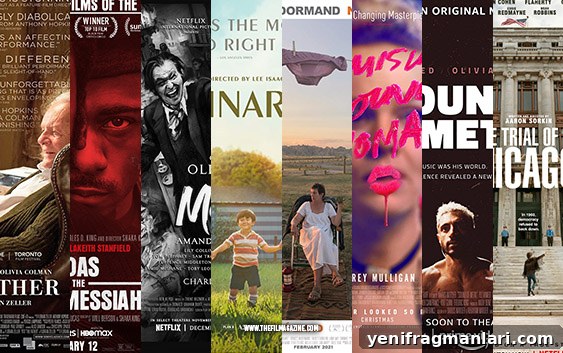
The Best Picture nominees at the 2021 Oscars demonstrate that, even in our darkest times, exceptional cinema can be made, shared and celebrated. The theatrical experience may have been disrupted and the industry thrown into uncertainty, but The Academy of Motion Picture Arts & Sciences still had a wealth of outstanding films to choose from—reminding us that cinema remains far more than a factory for tentpoles and franchise-driven releases.
Notably, four of the eight Best Picture nominees were directed by first-time feature filmmakers. That shift signals both hope and change within the industry: the artistic traditions of previous decades continue, and producers are still willing to back directors with strong, original visions.
The Academy’s lineup this year mixes finely written drama, committed performances and confident direction. In this edition of Ranked, The Film Magazine evaluates each nominee, ranking them according to artistic quality and cultural resonance.
Follow The Film Magazine on Twitter to catch more lists like this one.
8. The Trial of the Chicago 7
The Trial of the Chicago 7 Review
The Trial of the Chicago 7 is a timely courtroom drama that stands out in a year when ensemble historical dramas with sizable budgets have been scarce. Aaron Sorkin brings his trademark rapid-fire dialogue and moral urgency to the real-life story of activists charged after the 1968 Democratic National Convention. The film balances moments of sharp wit and dramatic intensity, translating historical events into a compelling contemporary reflection on protest, justice and the American conscience.
Sorkin is widely respected as a master of American drama: his characters banter, interrupt and escalate tension through dialogue until it reaches cathartic release. In this film, he channels those strengths into one of his most clearly authorial works. However, because Sorkin directs his own script rather than collaborating with a more expressionistic filmmaker, The Trial of the Chicago 7 lacks some of the stylistic visual flourishes—inventive blocking, bold cinematography and production design—that mark several other Best Picture nominees.
7. Sound of Metal
Sound of Metal Review
Sound of Metal is rightly praised as a technical triumph. The sound design immerses you in the protagonist’s experience of sudden hearing loss—drums and cheers give way to silence, ringing and muffled speech—so effectively that viewers spend two hours inhabiting his altered world. Riz Ahmed delivers a magnetic performance as a drummer confronting addiction, loss and identity, bringing authenticity through physical detail and emotional restraint.
Beyond its sonic achievements and strong central performance, the film follows a fairly familiar structure: a displaced protagonist finds a new community and must re-evaluate what matters. While the film sensitively depicts personal transformation, it sidesteps broader systemic issues—financial barriers, access to medical care and long-term support—that many newly deaf people face, particularly in the United States. Still, as Darius Marder’s feature debut, Sound of Metal demonstrates strong directorial promise even if it doesn’t push the envelope narratively as some other nominees do.
Recommended for you: 21st Century Best Picture Oscar Winners Ranked
6. Minari
Minari Review
Like 2020’s Parasite, Minari brings a Korean-language voice into Oscar contention, but Lee Isaac Chung’s film is quieter and more intimate. It tells the story of a Korean-American family farming in rural America, exploring their hopes, tensions and small, hard-won joys. The film’s greatest strength is its characterization: every family member feels real, layered and recognizable. Performances by Steven Yeun, Han Ye-ri and Youn Yuh-jung are especially moving, and the child actors provide authentic centers of gravity.
While Minari doesn’t revolutionize cinematic language or push formal boundaries, it earns its warmth through subtle, human moments and careful observation. The film follows familiar Hollywood narrative beats—the pursuit of the American Dream, faith and familial reconciliation—but applies them to a specific immigrant experience with sensitivity and heart. The result is a gentle, resonant drama that succeeds as a whole.
5. Mank
Mank Review
Mank is an awards-season film in every sense: sumptuous black-and-white cinematography, meticulous production design and a screenplay that revisits Hollywood’s Golden Age and the controversies surrounding Orson Welles and Citizen Kane. David Fincher brings his technical mastery to his father Jack Fincher’s script, producing a film that functions both as entertainment and as a study of Hollywood mythology.
The performances are precise and restrained, avoiding caricature despite the subject matter. Yet Mank arrives in a cultural moment when many viewers are skeptical of films that center historical male figures and the glamour of old Hollywood. For some, the film’s focus on studio-era personalities feels out of step with the broader conversation about inclusivity and systemic problems in the industry. Still, as a filmmaking accomplishment it is impressive and likely to be reassessed favorably over time.
Recommended for you: David Fincher Movies Ranked
4. Judas and the Black Messiah
Judas and the Black Messiah Review
Shaka King’s Judas and the Black Messiah is a striking piece of cinema that combines historical urgency with kinetic filmmaking. Sean Bobbitt’s cinematography favors wide lenses and luminous night sequences that elevate tense moments into memorable set pieces. At the center are standout performances from Daniel Kaluuya and LaKeith Stanfield, both of whom bring depth and charisma to their roles and assert themselves as major talents of their generation.
King frames the story more like a gangster film than a straight political biopic—organized chaos, betrayals and escalating violence give the film momentum and the texture of crime cinema. While it doesn’t always break new stylistic ground, the film’s conviction and emotional power make it essential viewing.
3. Promising Young Woman
Promising Young Woman Review
Emerald Fennell’s Promising Young Woman has sparked wide debate—and for good reason. The film forces public conversations about sexism, gendered violence and the everyday risks women face. Carey Mulligan anchors the film with a fearless performance as a woman whose unresolved trauma fuels a complex and unnerving campaign of retribution.
The film’s most controversial and daring choice is its third act, which divides opinion but also marks Fennell as a bold, authorial filmmaker willing to take cinematic risks. Promising Young Woman may not be the most technically flashy film among the nominees, but its cultural urgency, dark wit and uncompromising perspective make it one of the year’s most provocative works.
2. The Father
The Father Review
Florian Zeller’s The Father is one of the most remarkable directorial debuts in recent memory. Adapting his own stage play, Zeller crafts a cinematic experience that simulates the disorientation of dementia. The film frequently shifts perspective, rearranges sets and loops conversations, pulling the viewer into the protagonist’s unraveling perception of reality. The effect is unsettling in the best sense: intimate, immersive and emotionally devastating.
Anthony Hopkins delivers possibly the finest performance of his career—bracing, unpredictable and achingly human. He balances anger, charm and fragility in a portrayal that lingers long after the credits. While the film occasionally leans toward melodrama, its inventiveness and emotional honesty make it a standout of 2021.
1. Nomadland
Nomadland Review
If any nominee feels destined for the canon of modern American cinema, it’s Chloé Zhao’s Nomadland. Zhao assembles an empathetic, vérité-style portrait of a woman living on the margins of contemporary America. The film blends documentary and fiction, following Frances McDormand’s Fern as she travels, works seasonal jobs and forms connections with real-life nomads whose lives inform the movie’s emotional truth.
The cinematography evokes wide-open landscapes and natural light, recalling both classic westerns and the lyrical work of filmmakers like Terrence Malick. McDormand gives a quietly powerful performance—resilient and wounded, economical and profound. The film’s pacing is gentle and observational, and its rewards are cumulative: a delicate, humane meditation on loss, resilience and the search for belonging.
Recommended for you: 2020 Oscars Best Picture Nominees Ranked
In a year when cinemas were mostly closed and filmmaking faced unprecedented challenges, the 2021 Best Picture nominees offer a powerful reminder that film remains a diverse and vital art form. These movies reflect a range of voices, styles and concerns and show that exceptional work can thrive beyond the blockbuster model.
Which Best Picture nominee is your favorite? Would you have ranked these films differently? Share your thoughts in the comments and follow The Film Magazine on Facebook and Twitter to stay updated.