
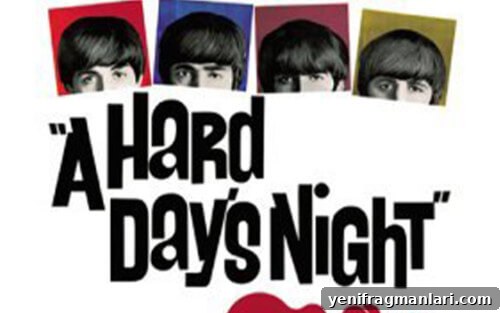
A Hard Day’s Night (1964)
Director: Richard Lester
Screenwriter: Alun Owen
Starring: John Lennon, Paul McCartney, George Harrison, Ringo Starr, Wilfrid Brambell, Norman Rossington, John Junkin and Victor Spinetti
Modern commentary on popular culture frequently emphasizes nostalgia and escapism: audiences visit cinemas to leave their present behind, whether the destination is an imagined realm or a cinematic fantasy. Yet one of the most effective time machines is surprisingly literal — Richard Lester’s A Hard Day’s Night. Shot in crisp black and white, the film transports viewers back to 1964 London and Liverpool and captures the energy of Beatlemania in a way that still feels immediate. For those born after the Beatles’ later years, the movie offers a taste of the hysteria and adoration that surrounded the group; for those who lived through it, it can reopen memories of a heady, unforgettable moment in pop culture. At the time of its release, A Hard Day’s Night helped focus international attention on the UK and accelerated the global wave known as the British Invasion.
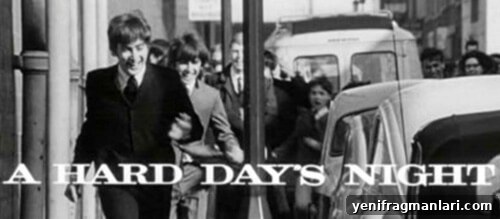
The film functions in many ways as one of the most successful publicity vehicles in music history. Just two years after their first hit, The Beatles were already household names; by 1964 they had released several best-selling records and returned from a landmark world tour. A Hard Day’s Night distilled the sensation of the band into an accessible hour and a half, creating the illusion of intimacy for millions who could never attend their concerts.
“How did you find America?”
“Turned left at Greenland.”
The film’s strength lies in its willingness to present The Beatles as themselves — lively, witty and distinctly Liverpudlian — rather than elevated, manufactured stars. Unlike the formulaic rock-and-roll movies that preceded and followed it, A Hard Day’s Night adopts a mockumentary tone that feels spontaneous and freewheeling. The narrative follows John, Paul, George and Ringo on a chaotic journey to a television studio, accompanied by Paul’s fictional grandfather. The movie never fabricates personas; instead, it softens the corners around four talented, charismatic young men and reveals their unique personalities: John as the mischief-maker, Paul the affable charmer, George quietly grounded, and Ringo the lovable, self-aware everyman.
By 1964 the Beatles’ reputation for sharp humor and quick retorts was well established, and that comic sensibility is a running thread through the script by Alun Owen and the agile direction of Richard Lester. The film blends witty dialogue with physical comedy and surreal moments that feel both unexpected and perfectly timed. From an absurd encounter on a moving train to John’s sudden disappearance from a bathtub, these set pieces elevate the film into something mischievous and slightly magical. The boys’ pranks and refusals to conform frustrate every authority figure they meet — television directors, handlers and the police — and in doing so the film gives voice to youthful irreverence in a society on the cusp of dramatic cultural change.
“I fought the war for your sort!”
“I bet you’re sorry you won.”
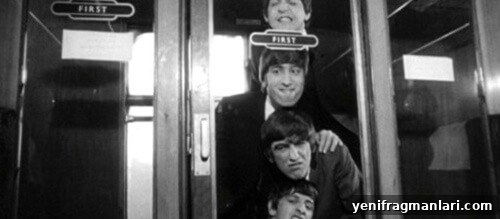
Lester’s direction rewards repeat viewings: jokes and visual details reveal themselves with each pass. Yet the film’s enduring appeal ultimately rests on the band. The Beatles come across as effortless performers and natural comedic actors, trading insults and banter at a rapid-fire pace that keeps scenes lively. The script also allows space for quiet, human moments — most notably Ringo’s brief, melancholy subplot after he leaves the group’s company shortly before a scheduled performance. That interlude, tender and unexpectedly vulnerable, provides emotional balance amid the film’s exuberant comedy.
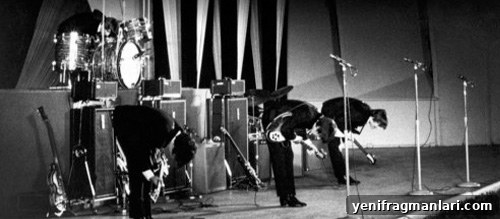
The soundtrack propels the film’s tempo and emotional beats. Lennon-McCartney songs punctuate the story, and the band’s on-screen performances — especially the climactic television sequence — capture their joy in playing live. Watching them grin and laugh as they perform is infectious; the film’s portrayal of screaming, ecstatic audiences underscores how singular The Beatles’ phenomenon was. Those scenes of fans in thrall are as essential as the music itself, documenting a cultural reaction many viewers still recognize: ecstatic fandom, raw and communal.
More than a period piece, A Hard Day’s Night is often regarded as a cultural artifact that preserves The Beatles at a particular moment of possibility. It captures them before the pressures of fame and changing artistic directions altered their public personas. The film acts as a capsule of their early spirit — youthful, mischievous and irresistibly musical — and it continues to charm new generations. For fans and casual viewers alike, it offers both entertainment and a reminder of how music and cinema can combine to create an enduring cultural milestone.
24/24