
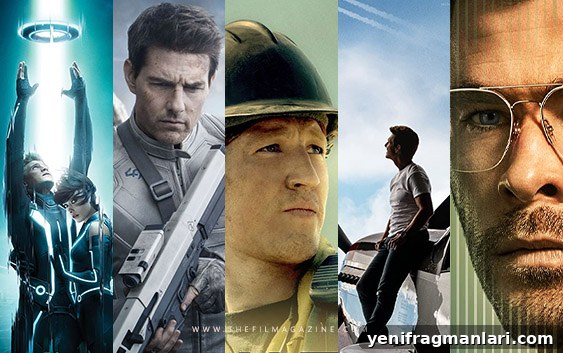
American filmmaker Joseph Kosinski first made a major splash in 2010 with the high-budget directorial debut Tron: Legacy, a studio spectacle that immediately marked him as a filmmaker comfortable with large-scale visual effects and ambitious production. Backed by a significant studio investment, Kosinski arrived as a director who embraced digital technology and spectacle, promising a new voice in mainstream Hollywood filmmaking.
In the years that followed, his career did not become the unbroken string of hits some expected. Disappointing box office returns for Tron: Legacy stalled plans for a franchise, and several subsequent projects met with mixed critical and commercial responses. Still, Kosinski built strong relationships with top-tier actors and repeatedly attracted high-profile collaborators who trusted his cinematic vision. Tom Cruise, Jeff Bridges, Jennifer Connelly, and frequent collaborator Miles Teller appeared across Kosinski’s films, reflecting industry confidence in his ability to deliver striking images and performance-driven storytelling.
Kosinski is now widely known rather than an emerging talent: his name is attached to a billion-dollar phenomenon and a growing filmography. His style remains unmistakably modern Hollywood—prioritizing spectacle, using actors as emotional anchors, and continually pushing technical boundaries. Kosinski often favors cinematic craftsmanship and visual innovation over minimalist or arthouse approaches. His influences feel closer to mainstream auteurs who built careers around large-scale storytelling and technical innovation than to directors focused on more intimate, gritty realism.
In this feature, we rank Joseph Kosinski’s major films by overall quality, artistic ambition, cultural significance, and popular appeal. Below are the Joseph Kosinski movies ranked from least to most impactful in his career.
Follow @thefilmagazine on social media for more film commentary.
5. Spiderhead (2022)
Spiderhead Review
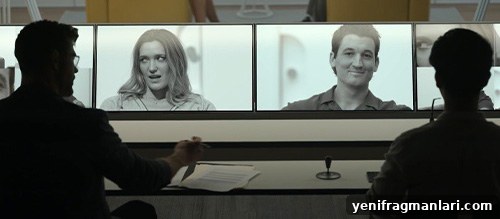
Spiderhead, Kosinski’s streaming debut, arrived after the success of Top Gun: Maverick and felt like a noticeable step back for the director. The film centers on a moral and psychological experiment, but despite a compelling premise, it struggles to commit to a consistent perspective. The script attempts to balance two central figures—Miles Teller’s inmate and Chris Hemsworth’s scientist—yet never fully develops either viewpoint, leaving the narrative unfocused.
The film’s concept is intriguing but underexplored; it reads like a feature-length thought experiment without the depth or philosophical clarity the material demands. Visually, Spiderhead is the weakest entry in Kosinski’s filmography to date. Pandemic-era production constraints combined with a glossy streaming aesthetic undermined the film’s visual coherence, producing empty sets and poorly integrated moments where the atmosphere feels manufactured rather than immersive.
Ultimately, Spiderhead is an uneven misfire: a film with strong talent and an interesting idea, but one that fails to translate promise into sustained dramatic or visual accomplishment.
4. Oblivion (2013)
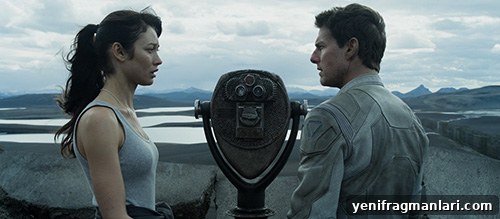
Oblivion grew out of a long-gestating idea from Kosinski, developed from a graphic novel concept into a full screenplay and realized as a major studio sci-fi film. Starring Tom Cruise, the movie solidified many of Kosinski’s stylistic trademarks: wide, high-contrast visuals, a focus on atmosphere over brisk plotting, and a reliance on science-fiction concepts that favor striking imagery.
Set on a depopulated, post-apocalyptic Earth, the film juxtaposes human emotion against vast digital landscapes. The narrative explores themes of memory, identity, and loss, but at times leans on familiar genre tropes and conveniences. Despite its visual ambition, Oblivion struggled to find a broad audience upon release, and its box office returns fell short of the high costs required to stage such a spectacle.
Viewed now, Oblivion remains a visually interesting but narratively uneven film: one that demonstrates Kosinski’s strengths as a visual stylist while highlighting the need for greater narrative precision.