
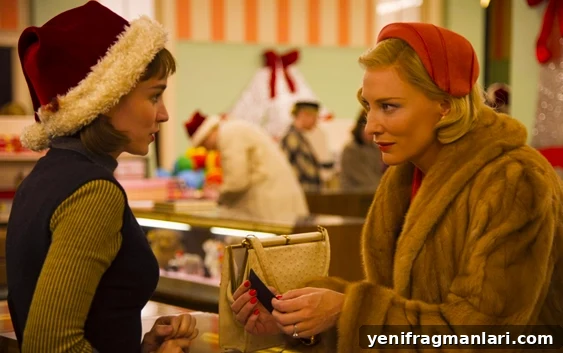

Carol (2015)
Director: Todd Haynes
Screenwriter: Phylis Nagy
Starring: Cate Blanchett, Rooney Mara, Sarah Paulson, Jake Lacy, Kyle Chandler, John Magaro
Some films simply entertain; others open a private door and invite you inside. Carol belongs to the latter group: it asks you to bring your memories, your questions and your quietest feelings, then holds them with the same tenderness it shows its characters. This is a film that trusts its audience enough to reveal itself slowly, to demand attention and introspection rather than merely seeking applause.
Todd Haynes is a filmmaker who consistently approaches queer stories with nuance and dignity, and in Carol he strips away sensationalism to focus on human connection. The central question is not simply whether society will accept the relationship between Therese and Carol; it is whether either woman can meet the other’s love. By centering feeling over spectacle, Haynes refuses the habitual cinematic shortcut of turning difference into pity or tragedy. The result is a restrained, powerful portrait of desire, longing and the ordinary courage of living truthfully.
Set in 1950s Manhattan around the Christmas season, the story follows Therese Belivet (Rooney Mara), a young aspiring photographer who works in a department store, and Carol Aird (Cate Blanchett), a woman navigating a difficult divorce and the complexities of motherhood. A chance moment—misplaced gloves returned, a brief intimacy—begins an exchange that deepens into a relationship. As Carol’s attachment to Therese grows, so too does the pressure from her personal life: her husband Harge (Kyle Chandler) grows wary and threatened, and Carol must choose whether to retreat into the safety of the expected or risk everything for authenticity.
Phylis Nagy’s screenplay invites viewers to inhabit Therese’s perspective; we often feel as though we sit just behind her shoulder, privy to her private interior life. That vantage point creates intimacy and empathy: Therese’s uncertainties, small joys and growing conviction become ours. The narrative’s restraint is deliberate. Love is portrayed in gestures, glances and quiet confessions rather than loud proclamations, which makes the emotional payoff all the more affecting.
Visually, Carol is a crafted experience. Cinematographer Ed Lachman shot the film on Super 16mm, producing a gentle grain and muted palette that evoke both the 1950s and the texture of memory. Frames feel composed like photographs from old magazines; influences from mid-century photographers can be seen in the way women, interiors and cityscapes are observed and reverenced. This aesthetic choice does more than mimic an era: it situates the story within recollection, the way we remember relationships as a sequence of salient images and sensations.
Haynes’ direction is full of deliberate details: the first shot of interlocking metal on a sidewalk grate, the repeated motifs of trains and fogged windows, and references to classic melodrama. These elements underscore themes of fate and inevitability while framing the romance as both personal and cinematic—echoes of films like Brief Encounter are woven into the structure so that the audience progresses with the characters, aware of consequences yet still feeling each moment as it arrives.
Performances are central to the film’s success. Rooney Mara portrays Therese as an observant, tentative artist finding her footing. Hidden behind a camera at first, Therese learns to move from looking outward to claiming her own life. Mara’s performance charts that growth with subtlety: small shifts in posture, in the eyes, transform a hesitant young woman into someone who can respond to love and choose for herself.
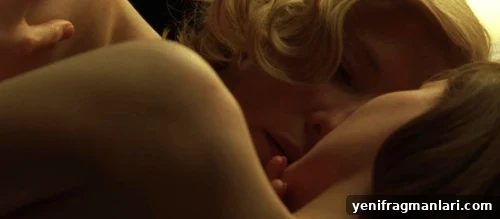
Cate Blanchett is magnetic as Carol. She brings a composed, enigmatic presence that hints at history and interior complexity; Carol is a figure you want to understand but cannot fully possess. Blanchett allows the character to soften in private moments, especially with Therese, revealing a capacity for tenderness beneath an exterior shaped by obligation and fear. Their chemistry—when their eyes meet, when gestures of care pass between them—feels immediate and lived-in.
Carter Burwell’s subtle score complements the emotional arc, haunting in its piano motifs and giving scenes a resonance that lingers. Supporting performances, including Kyle Chandler as Carol’s frustrated husband and John Magaro in a smaller but memorable role, add texture and stakes to the central relationship.
If the film has a flaw, it is in a tonal shift that occurs when plot elements related to custody and legal danger dominate the latter sections. These sequences introduce darker notes that can read as heavier than the intimate vignettes that precede them, and at times Therese’s interior journey feels partially overshadowed by external conflict. Still, these complications also underline how fraught lives could be for queer women in that era, and they give the romance sharper edges.
Nagy’s adaptation of Patricia Highsmith’s novel tightens and clarifies the story’s emotional through-line. Rather than reducing characters to symbols, the screenplay allows Carol to insist, in her own terms, that she is not a martyr—she is a woman making difficult choices. That refusal to sentimentalize suffering is one of the film’s strengths: it treats desire as neither scandalous nor theatrical but as a matter of human authenticity.
Many romances on film feel effortless when executed well, and Carol achieves that quality through craft, restraint and performance. It is a film that rewards quiet observation: the small, truthful moments accumulate until they form a profound portrait of love and the cost of living it openly. Watching it is to be invited into a private space—one where two people find each other amid the noise and conventions of their time.
Score: 21/24
Rating: 4 out of 5.
Recommended for you: 50 Unmissable Christmas Movies (editorial suggestion)
Written by Bella Madge
Support the author on the following platforms:
Substack: BellaWatchesFilms
Instagram: @bellawatchesfilms
TikTok: @bellawatchesfilms
Picturehouse Fresh Takes: Name Me Lawand Review