
The Piano (1993)
Director: Jane Campion
Screenwriter: Jane Campion
Starring: Holly Hunter, Harvey Keitel, Sam Neill, Anna Paquin
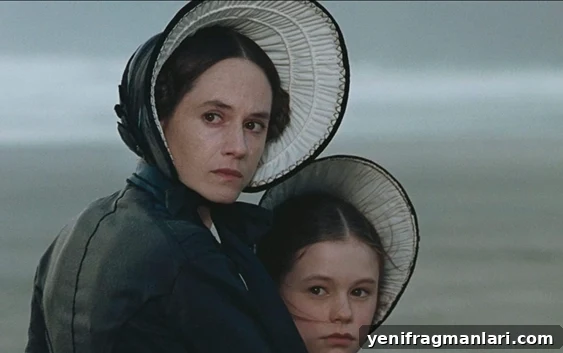
Jane Campion’s The Piano opens with a monologue from Ada McGrath, a Scottish woman who, for reasons never fully explained, ceased speaking at the age of six. The voice we hear—that high, lyrical performance by Holly Hunter in a convincing Scottish accent—is not Ada’s spoken voice but the voice of her inner life. Recently married off by her father, Ada is sent with her young daughter Flora (Anna Paquin) to live with her new husband on the remote coast of colonial New Zealand. Her husband, Alistair Stewart (Sam Neill), says he does not mind her muteness; Ada accepts this as fortunate, remarking, “Silence affects us all in the end.”
Released in 1993, The Piano won Jane Campion the Palme d’Or at Cannes, making her the first female director to receive that honor. Three decades on, the film endures as one of Campion’s most acclaimed works, praised for its acting—Holly Hunter and Anna Paquin both earned Academy Awards—its evocative score, and its haunting cinematography. The Piano is a gothic tale of desire, domination, and the brutal ways men try to control women and the world around them.
Though Ada does not use spoken language, she is not voiceless. She expresses herself through sign language, written notes, and most importantly, her piano. For Campion, the piano functions as Ada’s voice; the way the men in the film treat that instrument reveals their characters. Stewart is ignorant and unwilling to listen: he abandons the piano on the beach, sells it, and finally attacks it with an axe. George Baines (Harvey Keitel), in contrast, rescues and tunes the piano, sits beside Ada as she plays, and learns to communicate with her on her terms.
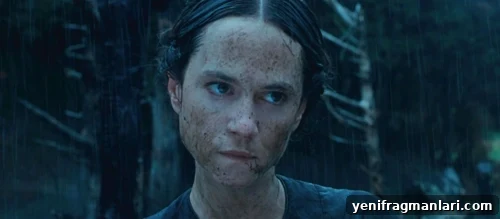
The film features strong performances across the cast, with Holly Hunter delivering a particularly stunning portrayal of Ada. She disappears into the role—altering vocal cadence, transforming her expressions, and using physicality to convey a fierce, complex woman. Hunter’s performance demonstrates that acting goes beyond words; her gestures, facial contortions, and signing are powerfully expressive. Hunter performs the piano sequences herself, which lends further authenticity to her depiction.
Sam Neill and Harvey Keitel offer compelling counterpoints as Ada’s repressive husband and her eventual lover. Neill’s portrayal of Stewart is quietly volatile: a man who, insecure and brittle, displaces his frustrations onto others. That simmering restraint builds to a chilling and violent release, underlining the film’s exploration of control and masculinity.
The Piano draws on motifs of classic gothic romance from the late eighteenth and early nineteenth centuries, reflecting the voices and anxieties that dominated that tradition. Campion’s filmmaking often blends beauty and horror—eroticism, violence, and mystery braided together—and this film feels distinctly literary. Campion has cited works such as Wuthering Heights among her inspirations. The children’s play in the movie echoes the French folk tale Blue Beard, the story of a man who kills his wives and hides their bodies in a secret chamber.
Although The Piano is not overtly gory, it is unflinching in its depiction of cruelty. Stewart’s refusal to accept Ada’s autonomy leads him to try to break her spirit and force her submission. After a brutal act late in the film leaves Ada wounded and covered in mud, Stewart calmly tells her, “I only clipped your wing.” Campion juxtaposes this brutality with tender scenes of intimacy: touch and small gestures become intensely erotic in a Victorian context. The film uses nudity sparingly and thoughtfully, emphasizing vulnerability and the fragile exposure of self that true intimacy requires. In doing so, The Piano restores an emotional candor to cinematic eroticism that is often missing in contemporary films.
Beyond the personal drama, the film engages with the destructive effects of colonialism on land and indigenous communities, although Campion’s representation of the Māori has drawn criticism for relying on stereotypes and underdeveloped characterization. The Māori characters are given limited depth in the film and at times are portrayed in reductive ways that deserve scrutiny. Nevertheless, the story makes clear that Stewart’s treatment of the local people—attempts to seize land through bribery and coercion—reveals his inability to recognize others’ humanity. He cannot fathom why sacred burial grounds matter, equating difference with inferiority.
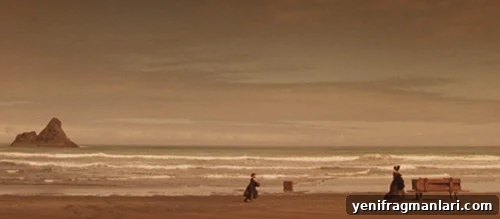
Campion has remarked that she once considered a bleaker ending for the film—one she thought might be “more real.” Whether that choice would have suited the story is debatable, but the released ending remains one of the film’s most memorable sequences, lingering with viewers long after the credits roll.
The Piano stays with you: its images, sounds, and performances burrow under the skin. Jane Campion created one of the late twentieth century’s most indelible female protagonists in Ada, placing her in a tale as vast, dark, and elemental as the ocean itself.
Score: 23/24
Recommended for you: Jane Campion Films Ranked