Blade (1998)
Director: Stephen Norrington
Screenwriter: David S. Goyer
Starring: Wesley Snipes, Stephen Dorff, Kris Kristofferson, N’Bushe Wright, Donal Logue, Udo Kier, Sanaa Lathan, Arly Jover
When it premiered in 1998, Blade arrived as a lean, intense hybrid of horror and superhero cinema. Over twenty-five years later its influence is clear: this was not just another comic-book adaptation but a film that reshaped the tone and look of blockbuster action, horror, and the modern vampire story. Its impact reaches into how studios approached darker, more violent material inside mainstream franchise filmmaking.
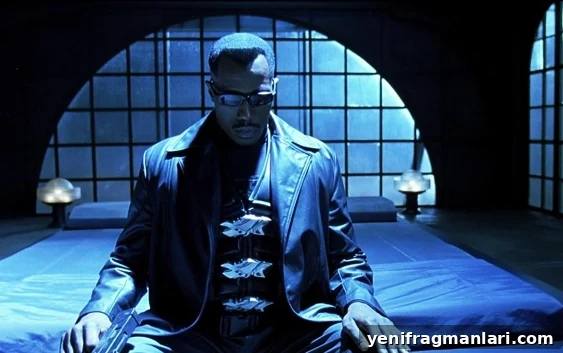
Blade follows the story of Eric Brooks, better known as Blade (Wesley Snipes), a man born from a vampire attack who becomes a “daywalker” — possessing vampire strengths without their usual daytime weakness, but cursed with a constant thirst for blood. Raised and trained by the grizzled hunter Abraham Whistler (Kris Kristofferson), Blade becomes a one-man weapon against the undead. Equipped with an arsenal of blades, stakes and a synthetic serum that controls his bloodlust, Blade battles vampire networks in Los Angeles and teams up with haematologist Dr. Karen Jenson (N’Bushe Wright) to uncover a conspiracy led by the ambitious Deacon Frost (Stephen Dorff).
The film adapts the basic Marvel Comics premise—created by Marv Wolfman five decades earlier in Tomb of Dracula—but screenwriter David S. Goyer builds an original cinematic world around the character. He sets clear rules for vampirism in Blade’s universe, blending pseudo-scientific explanations with mythic elements to turn vampires from tragic romantic figures into predators and vectors of a viral-like menace. This framing gave the movie a distinct identity and influenced later genre entries that treated supernatural horror through a more scientific lens.
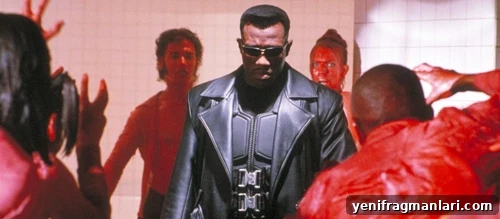
Blade is notable for preserving an appropriately savage horror pulse while delivering stylized action. The film doesn’t shy away from gruesome set pieces: explosive vampire deaths, brutal regenerations, and sharp jump scares punctuate the narrative. That combination of visceral gore and kinetic action set Blade apart from the generally tamer comic adaptations of the era, and the film’s choreography—especially in the nightclub extermination sequence and the climactic duel—demonstrates director Stephen Norrington’s talent for staging tightly paced, physical action. His approach anticipated the “Gun-Fu” and tightly edited fight aesthetics that dominated early 2000s action cinema.
Wesley Snipes anchors the film with a cool, stoic presence that convinced audiences he was the right actor to carry the role. His physicality and understated charisma give Blade credibility as both a haunted figure and a relentless fighter. Kris Kristofferson brings gruff warmth as Whistler, while Stephen Dorff’s Deacon Frost is simultaneously charismatic and unsettling, providing a memorable antagonist. Donal Logue provides comic relief and a memorable physical comedy turn as Quinn, a hapless vampire who repeatedly regenerates after encounters with Blade, including one sequence of absurd and grisly subway-related mishap that remains darkly funny.
One area where the film falters is in its final act. The grand design behind the vampire plot becomes more convoluted and less plausible when subjected to real-world logic, draining some tension from the climax. Additionally, the later franchise decision to sideline a strong female lead is disappointing: N’Bushe Wright’s Dr. Karen Jenson is written with agency and courage in the first film, playing a crucial role in the finale, yet she is quietly removed from subsequent entries, diminishing the character’s long-term impact.

Beyond the single film, Blade’s release alongside other late-90s comic adaptations helped demonstrate that comic-book-based features could be mature, commercially viable, and stylistically bold. Blade was important not only for its blend of horror and action but also for putting a prominent Black hero at the center of a blockbuster in a way that mattered to mainstream audiences. Its influence can be traced through subsequent genre films that favored grimmer tones, edgier violence, and more physically driven heroes.
Blade may have spawned sequels of varying quality, but this first film endures as an icon of late-90s genre filmmaking. It delivered a fresh, uncompromising vision of vampirism and a distinct action style that influenced filmmakers who followed. Imperfect in places, the film nevertheless remains a thrilling and often brutal ride—a defining hybrid of horror, action, and early comic-book cinema that still entertains and inspires discussion more than two decades after its release.
Score: 20/24