Since his breakthrough in 1989 with the science fiction comedy Bill and Ted’s Excellent Adventure, Keanu Reeves has built a long and varied career in Hollywood with more than 100 credits to his name. The Canadian actor, born in Lebanon, has become a familiar face in some of the most notable action films of the last several decades while also demonstrating range across indie dramas, romantic comedies, and voice work in animation. Reeves’s off-screen reputation for kindness and humility has made him a beloved figure to many fans, and despite periods of uneven critical response he has repeatedly reinvented himself and remained a durable presence in popular cinema. His resurgence with the 2014 hit John Wick introduced him to a new generation while reaffirming his status as one of the few contemporary stars who can anchor both intense action films and quieter character pieces.
Beyond live-action work, Reeves has contributed voice roles to animated features and has occasionally appeared as himself in family films. In the 1990s he played bass guitar in the band Dogstar, an early example of his creative pursuits outside of film. Over the years, audiences and critics have debated Reeves’s strengths and weaknesses as an actor: some dismiss him as a performer who always plays himself, while others point to moments of subtlety, vulnerability, and physical control that reveal a versatile talent. Rather than accept simple labels, it’s more instructive to look at specific films that highlight the qualities that make Reeves compelling on screen.
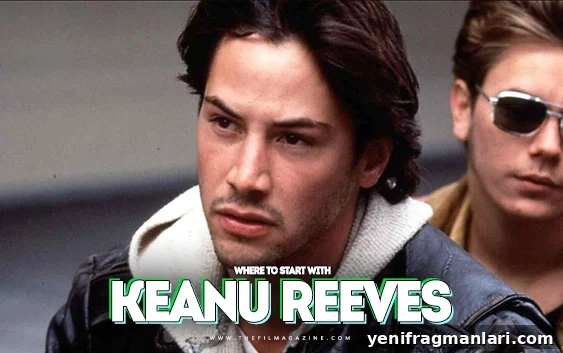
For readers wondering where to begin exploring Keanu Reeves’s work, the following shortlist highlights three films that together showcase his dramatic range, his emergence as an action star, and his comeback into mainstream cinematic prominence. Each entry demonstrates different facets of his craft: from intimate emotional listening to romantic leading-man charisma to meticulous physical performance. This guide, Where to Start with Keanu Reeves, selects three standout films that serve as excellent entry points for both new viewers and longtime fans.
1. My Own Private Idaho (1991)

Released the same year as Point Break, which would help establish Reeves as an action lead, Gus Van Sant’s My Own Private Idaho presented a different, more adult-facing side of Reeves’s abilities. Loosely inspired in part by Shakespeare’s histories, the film follows River Phoenix’s vulnerable Mike Waters, a young street hustler struggling with narcolepsy, on a search for family and belonging. Reeves plays Scott Favor, Mike’s best friend, another hustler who comes from privilege and whose outward confidence masks deeper conflicts.
In this film Reeves is cocky and charismatic but also evasive and emotionally complex. His performance mixes naturalistic behavior with moments of theatricality, including extended passages where he speaks texts inspired by Shakespeare. Those moments reveal a willingness to take risks and to adapt to a director’s stylized approach. Reeves’s chemistry with River Phoenix—who was a close friend in real life—lends authenticity to their scenes together. Much of the film’s power rests on Reeves’s ability to listen and react: a quiet glance or a subtle change in posture communicates as much as any line of dialogue.
My Own Private Idaho is a quiet, haunting film that highlights Reeves’s capacity for tenderness and complexity, making it a strong starting point for viewers interested in his dramatic work outside mainstream action fare.
2. Speed (1994)

Jan de Bont’s high-concept thriller Speed elevated Keanu Reeves into mainstream action stardom. Playing bomb-disposal specialist Jack Traven, Reeves brought a grounded, human touch to the role: he’s resourceful, calm under pressure, and convincingly heroic without the exaggerated musculature of many 1980s action archetypes. Paired with Sandra Bullock’s determined Annie, Reeves’s Jack becomes both protector and romantic lead in a film that balances suspense, practical stunts, and witty banter.
Speed’s success rests on a combination of brisk pacing, inventive set pieces, and believable chemistry between the leads. Reeves sells the premise through credible reactions and a steady presence that makes the audience trust him as the movie’s central figure. This film demonstrates how Reeves can carry a large-scale commercial picture while maintaining a sense of vulnerability and relatability—qualities that helped redefine what audiences expected from action heroes in the 1990s.
3. John Wick (2014)

John Wick marked a clear career resurgence for Reeves and reintroduced him as a commanding presence in contemporary action cinema. After a period of mixed reviews and uneven box-office results, Reeves returned with a performance defined less by exposition and more by physical storytelling. Playing a retired assassin drawn back into a criminal underworld by a personal tragedy, Reeves conveys grief, discipline, and lethal efficiency with minimal dialogue but maximal presence.
The appeal of John Wick lies in its grounded choreography, its attention to the mechanics of combat, and Reeves’s painstaking physical commitment to the role. He trained extensively for the film and it shows: movements are precise, the weight of each action registers, and the emotional context—Wick’s loss and sense of duty—remains clear throughout the violence. The film revitalized the modern action genre, spawning a successful franchise and influencing how fight scenes and world-building are approached in mainstream cinema.
Across these three films—My Own Private Idaho, Speed, and John Wick—Keanu Reeves demonstrates both range and consistency. He can be introspective and quietly devastating, charming and reassuringly human, or physically exact and authoritative. He listens to his fellow actors, adapts to varied directorial styles, and sustains a believable presence whether in a small art-house drama or a high-octane blockbuster. For viewers seeking to understand why Reeves remains a significant cinematic figure, these titles provide a balanced starting point that highlights his talents in drama, romance, and action.
Reeves’s career resists easy categorization: he is as adept at subtle emotional beats as he is at long, choreographed action sequences. That combination—of vulnerability and discipline—helps explain his continuing appeal. Watching these three films in sequence offers a compact survey of his evolution as an actor and a clear sense of the reasons audiences and critics continue to talk about his work.