
A Haunting in Venice (2023)
Director: Kenneth Branagh
Screenwriter: Michael Green
Starring: Kenneth Branagh, Tina Fey, Camille Cottin, Kelly Reiley, Jude Hill, Jamie Dornan, Michelle Yeoh, Emma Laird, Kyle Allen
The third film in Kenneth Branagh’s recent cycle of Agatha Christie adaptations arrives quickly after the director’s earlier successes. Following 2017’s Murder on the Orient Express and 2022’s Death on the Nile, this new installment takes a markedly different tone. Rather than continuing in the lush, faithful period style of its predecessors, A Haunting in Venice recasts the familiar detective story as a gothic, horror-tinged mystery set in an atmospheric Venetian palazzo.
Branagh’s decision to shift one of Christie’s later novels into a single-night, single-location setting changes the spirit of the source material. The film borrows only a few pieces of Christie’s original iconography — notably an apple-bobbing scene — and reworks the plot around a fear-driven, supernatural framework. For viewers expecting the deliberate puzzle-play of earlier adaptations, the result is jarring. Where the previous films were praised and critiqued for strict loyalty to Christie’s plotting and aesthetics, this entry aggressively pivots, prioritizing mood and jump scares over close-knit whodunit mechanics.
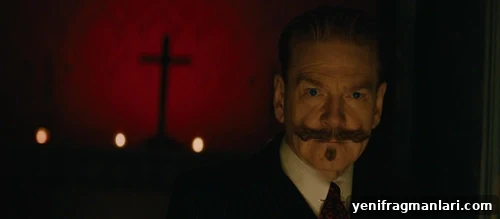
The Venice backdrop is effective visually in places: fogged canals, dimly lit corridors and echoing rooms create a sense of isolation and dread that fits a ghost story. Yet the film’s palette and cinematography often feel muddy and indistinct, which frequently obscures faces and character expressions — a liability in a mystery where gauging subtle reactions matters. The editing also contributes to the uneven experience. Many scenes cut abruptly between shots, undermining tension instead of building it; pacing feels rushed in moments that should breathe, and some dialogue exchanges suffer from jarring close-ups and mid-shots that interrupt natural rhythm.
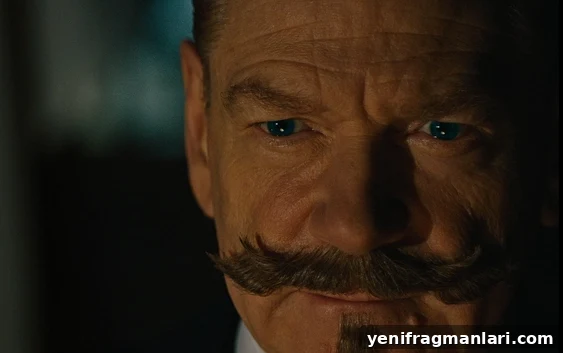
Branagh’s portrayal of Hercule Poirot is one of the film’s most polarizing elements. In earlier adaptations he presented a Poirot that balanced theatricality with a clear moral center; here, the detective often reads as disengaged or given to theatrical groanings at perceived supernatural threats. The character’s warmth and humane eccentricity, traits that defined TV and literary iterations of Poirot, are less apparent. This version risks reducing the detective to a stock figure among many cinematic investigators, rather than preserving the idiosyncratic, compassionate presence Christie wrote.
The film attempts to engage with questions of faith and belief, framing events as a test of Poirot’s stance on the supernatural and spirituality. This thematic thread, however, seldom deepens beyond surface exchanges about gods and occasional biblical references. Shifting the setting to Venice — and by extension placing the narrative closer to Catholic cultural associations — could have opened a richer dialogue about ritual, guilt and institutional faith. Instead those possibilities remain underexplored, leaving the spiritual questions feeling obligatory rather than integral to the mystery.
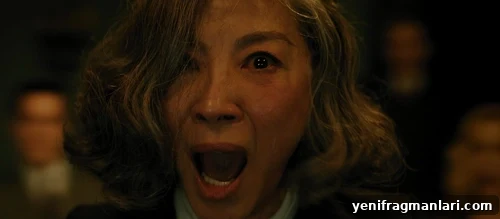
Despite its flaws, A Haunting in Venice is not without merits. A handful of well-timed jump scares create genuine startle moments, and the film benefits whenever Michelle Yeoh is on screen. Yeoh brings physical presence, emotional nuance and a grounded intelligence to her scenes, providing intermittent emotional clarity in an otherwise murky picture. Her rapport with young actor Jude Hill is a highlight: their interactions are complex and tender, and they offer the film’s most human, believable connection. Those two performances suggest that, had the filmmakers chosen to loosen the Agatha Christie label and reframe the story entirely as a new, original supernatural thriller, the project might have felt fresher and less constrained.
Viewed in isolation, the movie can satisfy viewers who enjoy moody, haunted-house atmospheres and a handful of surprising moments. Compared to the earlier films in Branagh’s Christie series, though, this installment feels like a reactive experiment — an attempt to escape criticisms of being overly faithful by swinging in the opposite direction. That reaction produces something uneven: sometimes intriguing, sometimes muddled, and ultimately forgettable in the larger context of Christie adaptations.
For those seeking a Halloween-appropriate thriller with gothic trimmings, A Haunting in Venice offers a few pleasures, primarily in its performances and occasional visual moments. But fans seeking the meticulous plotting and cosy tension of an Agatha Christie mystery may leave disappointed. It’s a film with interesting ideas that aren’t always realized, and the end result reads as a stylistic gamble that doesn’t fully pay off.
Score: 10/24
Rating: 2 out of 5.