

El Conde (2023)
Director: Pablo Larraín
Screenwriters: Guillermo Calderón, Pablo Larraín
Starring: Jaime Vadell, Gloria Münchmeyer, Alfredo Castro, Paula Luchsinger, Stella Gonet
Pablo Larraín’s latest film, El Conde, is a daring historical satire that reimagines Chile’s former dictator Augusto Pinochet as a literal vampire. In this inventive allegory, Pinochet—portrayed by Jaime Vadell—has survived for 250 years, feeding on power and resisting any social change that threatens his grip. The film places him in a remote country estate as his life and legacy unravel, surrounded by a family that mirrors his cruelty: a conniving wife, Lucía (Gloria Münchmeyer), and a loyal, violent butler, Fyodor (Alfredo Castro). When an accountant who is also a nun (Paula Luchsinger) arrives to settle the estate, she is tasked with confronting both the practical matters of inheritance and the supernatural presence it conceals.
El Conde offers no redeeming portrayal of its central figure—Vadell’s Pinochet is petulant, infantilized, and oblivious to the suffering he caused. The film dismantles any attempt to humanize the dictator: he exists in a fabricated universe where supporters flatter him and enable his delusions. Even those who denounce his abuses sometimes reveal an unsettling affection that complicates the moral picture. Larraín uses this dynamic to explore how charismatic authoritarianism survives through complicity, nostalgia, and denial.
Larraín is familiar with dissecting Chilean political history on film. His previous works examine public life and power through stylized narratives: No (2012) dramatized the 1988 plebiscite that determined Pinochet’s fate; Neruda (2016) approached history through the life of the poet. Larraín’s English-language films, including Jackie (2016) and Spencer (2021), also demonstrate his skill at probing controversial public figures. With El Conde, he takes a more overtly satirical and fantastical approach, combining historical critique with grotesque humor.
From the outset the film announces its intent: its release coinciding with significant anniversaries and the film’s promotional choices serve as part of the commentary. Larraín’s satire is deliberate and unambiguous—every visual choice and narrative beat is designed to communicate his perspective on authoritarianism and the lingering cultural effects of dictatorship.
When the film succeeds, it does so with sharp, memorable sequences. The metaphor of a vampire consuming hearts reads clearly as a statement about systemic violence and exploitation. Scenes that juxtapose the dictator and his wife slow-dancing to brass music that echoes political rallies are both absurd and darkly comic, exposing the grotesque conflation of spectacle and power. Larraín finds moments of genuine laugh-out-loud satire amid strikingly eerie images.
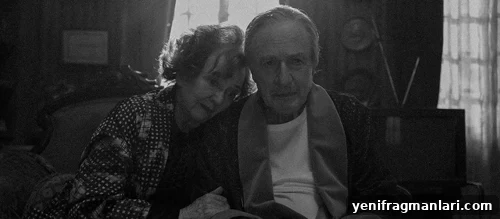
However, the film’s relentless focus on political messaging sometimes overwhelms its narrative momentum. Despite an abundance of gore, desire, and greed, the plot occasionally feels episodic rather than propulsive. Viewers expecting a conventional story arc may find the film’s purpose is more rhetorical than plot-driven: it aims to provoke thought and reaction rather than to follow tidy storytelling beats. That said, the film’s tone and intent are established quickly, and once the aesthetic is clear, viewers will know what to expect.
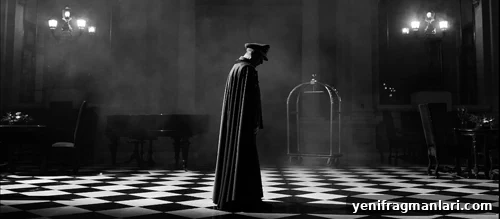
Shot in black and white, El Conde evokes the atmosphere of early vampire cinema, nodding to expressionist traditions while creating a lush, velvety texture that softens and heightens the impact of its more graphic moments. The monochrome palette intensifies the film’s dreamlike quality and amplifies contrasts—between spectacle and cruelty, the public and the private, the human and the monstrous. At its most effective, the film’s visual beauty deepens the unsettling core of its satire.
El Conde wrestles with a difficult subject: the transformation of historical perpetrator into literal monster as a way of interrogating collective memory, culpability, and denial. It nearly reaches greatness. The film’s standout scenes are brilliantly grotesque and often very funny, and the cinematography is consistently accomplished. While it may not satisfy every viewer’s expectations of structure or subtlety, the film remains an accomplished, confident work from a director deeply engaged with his country’s past.
Score: 19/24
Rating: 4 out of 5.