
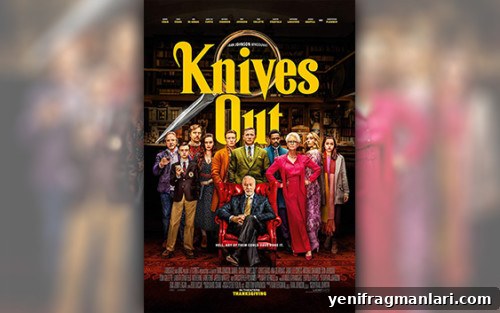

Knives Out (2019)
Director: Rian Johnson
Screenwriter: Rian Johnson
Starring: Daniel Craig, Ana de Armas, Chris Evans, Jamie Lee Curtis, Michael Shannon, Don Johnson, Toni Collette, Christopher Plummer
Rian Johnson has a knack for taking familiar genres and bending them into something fresh. With Knives Out he reimagines the classic whodunnit—not by merely repeating tropes, but by reshaping them into a modern, character-driven puzzle. The film is built around the death of wealthy mystery novelist Harlan Thrombey (Christopher Plummer), whose apparent suicide or murder sets off a chain of events that exposes family secrets, greed, and moral ambiguity.
The plot opens at the Thrombey estate, where Harlan is found lifeless after his 85th birthday celebrations. His sprawling, dysfunctional family—each member benefiting from Harlan’s success in different ways—immediately falls under suspicion. Also under scrutiny is Marta Cabrera (Ana de Armas), Harlan’s devoted nurse and confidante. Tasked with sorting truth from performance is Benoit Blanc (Daniel Craig), an eccentric private detective with a theatrical Southern drawl and a penchant for theatrical metaphors.
Johnson’s ensemble is intentionally exaggerated at times, echoing the stagey, archetypal figures of classic murder mysteries and the board-game logic of Clue. Each family member is drawn with a dominant trait—self-interest, entitlement, performative grief—that makes them easy targets for suspicion but also keeps the narrative brisk and focused. Performances vary from broad to nuanced: Chris Evans’s Ransom is petulant and volatile, Toni Collette’s Joni brings a jittery, modern edge, while Jamie Lee Curtis and Don Johnson provide quieter, textured turns. Christopher Plummer is magnetic in a role that looms over the film even after his character’s death; his presence, both in flashbacks and in the memory of others, anchors much of the drama.
At the center of the story is Marta, who emerges as the most human and morally complex figure. Ana de Armas gives a quietly powerful performance—vulnerable but resolute, someone whose honesty becomes both her strength and a plot device that drives tension. Daniel Craig’s Benoit Blanc is deliberately theatrical: his accent and mannerisms are playful misdirections that distract from what he’s actually observing. Yet his interrogative style—part empathic listener, part cerebral chess player—feels refreshing and rooted in a deep appreciation for mystery storytelling.
The Thrombey house itself functions like a character: labyrinthine corridors, creaking stairs, and carefully positioned sightlines create a claustrophobic stage in which secrets are revealed and performances unravel. Production design and cinematography emphasize this theatricality, with details—like an ostentatious sculptural coat of arms made from blades—serving as darkly comic commentary on the film’s themes of violence and legacy.
Structurally, Knives Out plays with audience expectations. Many traditional devices are present—multiple perspectives, red herrings, dramatic will readings—but Johnson rearranges these elements rather than simply reusing them. The film reveals key information early, then pivots, opening new lines of inquiry and moral dilemmas that complicate the straightforward puzzle. This approach keeps the viewer engaged, since the central question evolves from “who did it?” to “what should be done?” and “who can we trust?”
The film occasionally slows under the weight of its dialogue-heavy scenes, and some supporting characters are sketched more as motifs than fully rounded people. Still, Knives Out succeeds as a witty, intelligent mystery that balances homage with innovation. It’s a clever exercise in plotcraft and character, and it showcases Johnson’s skill at subverting genre expectations while keeping the audience invested in both the puzzle and the people involved.
Knives Out is entertaining, stylish, and thoughtfully constructed: a modern whodunnit that rewards both casual viewers and mystery fans. The performances—especially those of Ana de Armas and Daniel Craig—along with Johnson’s playful storytelling, make it a standout entry in contemporary genre cinema. If the film leaves any lingering wish, it’s for more outings with Benoit Blanc; the character’s mix of charm and deductive rigor suggests fertile ground for future mysteries, should the filmmaker choose to return to him.
18/24