
Bolan’s Shoes (2023)
Director: Ian Puleston-Davies
Screenwriter: Ian Puleston-Davies
Starring: Timothy Spall, Leanne Best, Mark Lewis Jones, Matthew Horne, Holli Dempsey, Andrew Lancel
Marc Bolan’s influence on popular music and style endures long after his passing. As one of the architects of glam rock, he remains a cultural touchstone: his songs, persona and distinctive look continue to spark devotion. Bolan’s Shoes positions itself as a small-scale tribute to that legacy, but the film’s intentions and execution produce a mixed result.
Bolan’s Shoes opens in the 1970s with a group of children from a Liverpool orphanage—among them siblings Jimmy and Sadie and their close friend Penny—taken to a T. Rex concert in Manchester. The show is electric and the shared excitement among the children, their teacher and a local vicar establishes how deeply the band and its frontman affected these lives. The return journey, however, ends in tragedy when the coach crashes, killing and injuring several people. Decades later, the narrative returns to the present where an adult Penny (Leanne Best), now living in Wales, makes an annual pilgrimage to the roadside memorial dedicated to Marc Bolan. That visit becomes the catalyst for a confrontation with her past when she unexpectedly encounters someone she thought she had lost.
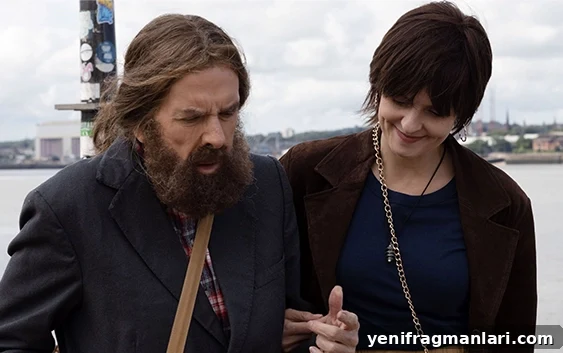
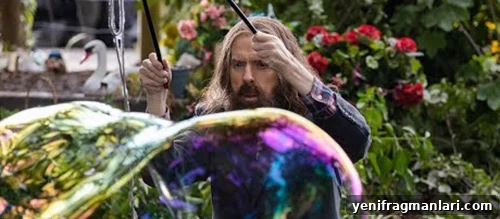
Penny’s encounter is with Jimmy, now an older, long-haired man portrayed by Timothy Spall. Jimmy has endured a hard life since the crash: diagnosed with bipolar disorder, he resides in a rundown caravan and survives on the fringes of society. Their reunion is literal and emotional—two people who once shared a childhood trauma gradually unspool the years of silence and avoidance. As they exchange memories and reveal wounds, the film shifts between present revelations and the fallout of the past. Secrets about family ties and the accident itself are teased out, reshaping our understanding of the three central characters—Penny, Jimmy and Sadie—as the story progresses.
Leanne Best and Timothy Spall are the film’s highlights. Best delivers several powerful moments of emotional revelation, inhabiting Penny’s vulnerability and strength with conviction. Spall, even when his accent drifts, brings a rawness and unpredictability to Jimmy that anchors many scenes. Their on-screen chemistry provides warmth and tenderness, and there are genuinely touching and humorous exchanges sprinkled through the drama.
Where the film falters is largely in its writing and structure. The script feels thin in places, leaving even strong performances to work hard to fill gaps. The relationship between the leads is endearing, but certain pivotal moments land awkwardly, as if important emotional beats are suggested rather than fully earned. The narrative construction is uneven—shifts in time and emphasis occasionally produce confusion rather than clarity. When dramatic revelations arrive, they sometimes feel abrupt or contrived, reducing their emotional payoff.
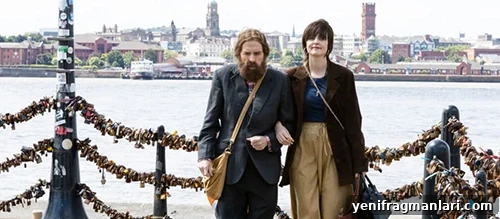
The film also leans on familiar melodramatic tropes. A montage that sends the pair back to Liverpool relies on postcard images of the city and plays like a checklist of landmarks rather than an organic part of their journey. That sequence feels like a shorthand attempt to ground the story geographically without developing the emotional rationale for the trip in detail.
Bolan’s Shoes aims to explore family, trauma and how shared cultural touchstones—like Marc Bolan’s music—can connect disparate lives. Yet the use of Bolan and T. Rex remains mostly peripheral, functioning as a backdrop rather than a fully integrated theme. The subject of the film is not Bolan himself, which is fine, but the screenplay misses opportunities to deepen how the artist’s freewheeling spirit shaped the characters’ identities and choices. The music and myth that surround Bolan often hover at the edges, more evocative than explanatory.
For viewers drawn to the film because of an interest in Bolan or T. Rex, the experience may be underwhelming: the movie is not a musical biography and offers limited insight into the artist’s life or influence. That said, it is not without merit. Humor, small moments of compassion and the central performances lift the film at times, and those who appreciate low-key character dramas may find value in its quieter passages.
Score: 10/24
Rating: ⭐⭐ (2 out of 5)
Written by John McDonald
You can support John McDonald in the following places:
Website: My Little Film Blog
Muck Rack: John McDonald portfolio
Twitter: @JohnPMcDonald17