
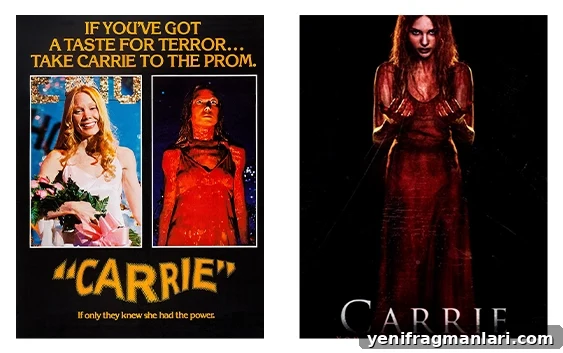
When it comes to remakes, skepticism is understandable: how often can a new version truly match or exceed the original? More often than not the doubt is justified, yet there are notable exceptions where a remake revitalizes its source material, adds fresh perspective, or capitalizes on modern techniques to say something new. Films such as The Thing (1982) and Scarface (1983) are frequently cited examples of remakes or reinterpretations that transcend their origins. Still, many remakes simply retrace familiar steps without offering meaningful innovation.
The 2013 adaptation of Stephen King’s debut novel Carrie is one such example of a remake that struggles to justify its existence. The original 1976 film—directed by Brian De Palma and starring Sissy Spacek—remains a benchmark in horror cinema: atmospheric, unnerving, and resonant decades after its release. The 2013 version, directed by Kimberly Peirce and led by Chloë Grace Moretz with Julianne Moore as Margaret White, recreates the story faithfully but rarely enhances or reinterprets it in ways that feel necessary or compelling.
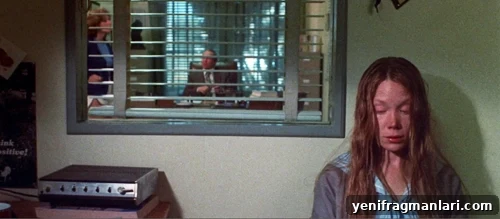
Stephen King’s 1974 novel Carrie launched his career, transforming him from a struggling writer and former teacher into a defining voice in modern horror. The 1976 film amplified that impact, bringing King’s story to a mainstream audience and earning critical acclaim—Spacek and Piper Laurie both received Academy Award nominations for their performances. The film’s tight focus on adolescent cruelty, religious fanaticism, and supernatural retribution created a template for psychological horror that still influences filmmakers today.
Both the 1976 and 2013 films follow Carrie White, a socially isolated teenager raised by an overbearing, religious mother. Carrie’s ignorance about her own body leads to a humiliating moment when she gets her first period at school. The taunting culminates in a prom-night prank involving pig’s blood, which triggers Carrie’s telekinetic powers and a violent, destructive climax. While the plot beats are shared, the execution, tone, and emotional resonance differ greatly between the two versions.

The 1976 Carrie thrives on restraint and atmosphere. Brian De Palma, a director known for his visual style and command of suspense, leverages a haunting score by Pino Donaggio, careful lighting, and evocative production design to make ordinary settings feel tense and ominous. Blood in De Palma’s film functions as a potent symbol—the initial menstrual blood and the later deluge at the prom mark Carrie’s awakening and eventual ruin. The horror is psychological as much as physical: viewers dread the moment the bucket will fall and feel the slow-motion betrayal of the locker room sequence as an almost unbearable emotional blow.
By contrast, the 2013 adaptation favors explicitness over suggestion. Graphic images and more extended sequences of gore replace much of the original’s subtlety. While a modern horror audience may expect more visible violence, the 2013 film’s emphasis on spectacle often undermines the story’s emotional core. The novel’s broader destruction of the town is shown more fully in this remake, but the choice to amplify collateral damage does not necessarily deepen the narrative; in many ways, it diminishes the focused cruelty of the school-centered devastation that made the original so impactful.
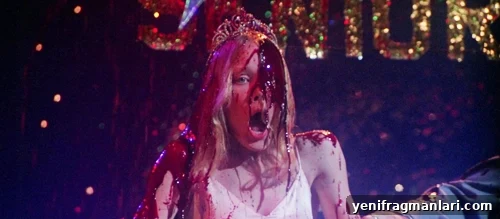
Directorial vision plays a decisive role in the two films’ differing effectiveness. De Palma’s mastery of composition, split-screen techniques, and patient tension-building elevates an otherwise straightforward script. His choices make small moments feel monumental: a head turn, a hand gesture, a shuttered door become instruments of dread. Kimberly Peirce, though an accomplished director—best known for Boys Don’t Cry—approaches Carrie without the distinct visual signature that made De Palma’s film electrifying. Production issues, rewrites, and reshoots contributed to an uneven tone. Bringing back Lawrence D. Cohen, the screenwriter of the 1976 version, led to recycled dialogue and scenes that often felt like echoes rather than reimaginings for a contemporary audience.
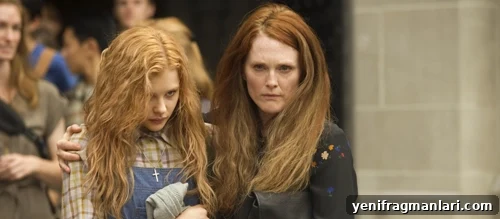
Performances further separate the two films. Sissy Spacek’s portrayal of Carrie in 1976 is a study in contrasts: vulnerable and naive one moment, chillingly resolute the next. Spacek embodies Carrie’s interior life with minimal gestures, making her transformation terrifyingly believable. Chloë Grace Moretz, a talented actor in her own right, brings a different energy to the role in 2013, but her performance often reads as unconvincing for a character who has endured prolonged abuse and bullying. Supporting roles in the remake—Chris, Sue, Tommy, and Billy—tend toward flatness or miscasting, reducing the interpersonal dynamics that give the story emotional weight.
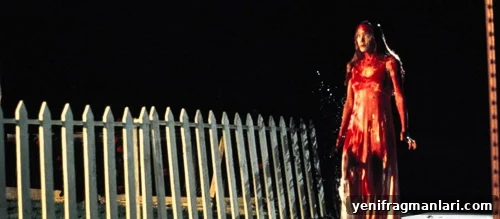
Modernizing a classic like Carrie requires more than updated props, smartphones, or online shaming. The 2013 film attempts a few contemporary touches—such as a viral video element to reflect cyberbullying—but largely relies on replication rather than reinvention. When a remake’s primary impulse is to imitate, it risks losing the original’s emotional logic and thematic clarity. De Palma’s film remains superior because it understands the story’s deeper mechanics: humiliation, religious fanaticism, adolescent terror, and the sudden, terrifying agency of a child pushed beyond her limits.
In sum, the 1976 Carrie endures not only because of its narrative but because of its style, performances, and restraint. The 2013 remake, while competent in technical terms and sincere in its effort, fails to justify its retelling. It highlights how sensitive remakes are to directorial vision and performance: without a clear reason to retell the story—without a distinct voice or fresh insight—remakes can feel redundant. For viewers interested in Stephen King adaptations or the evolution of horror cinema, De Palma’s original remains essential viewing, whereas the 2013 version is best approached as a derivative reinterpretation that rarely surpasses its predecessor.