
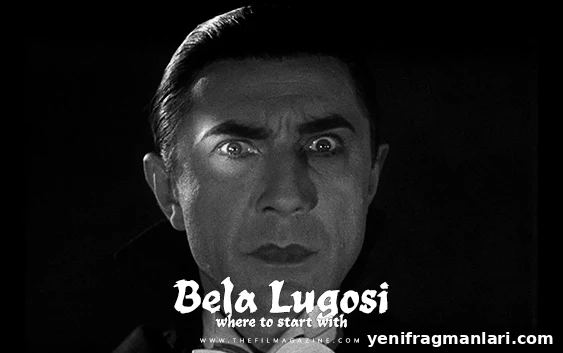
There comes a moment in Bela Lugosi’s career when he seemed unable to vanish into a role. No matter the costume or character, audiences always saw Lugosi — they heard his distinctive voice and perceived the same presence. Much of that recognition stemmed from his accent. Born in Lugos, Hungary, on October 20, 1886, he took the stage name Lugosi as a nod to his birthplace. After serving in the Austro-Hungarian army during World War I, he acted in silent films in Europe before emigrating to the United States in the 1920s. Learning English often phonetically for early roles, he developed a slow, resonant, and exotic way of speaking that would become inseparable from his screen persona.
Lugosi rose to prominence with his portrayal of Count Dracula in the 1927 Broadway adaptation of Bram Stoker’s novel, a part that would define his public image. He became a central figure in early horror cinema, appearing in Universal Pictures’ classic monster films and in other studios’ productions, frequently sharing the screen with actors such as Boris Karloff, Glenn Strange, and Lon Chaney Jr. By the late 1930s, injuries and health struggles stemming from the war, combined with long-term alcohol use and dependence on painkillers, began to erode his opportunities for leading parts. Typecasting further limited his options; although he repeatedly sought varied roles, the market kept returning him to sinister and supernatural characters. His final completed film appearance was released posthumously. Lugosi died on August 16, 1956, at age 73. He was married five times and had one son. He was buried in Los Angeles.
Despite the personal and professional hardships he faced, Bela Lugosi’s impact on film and popular culture endures. His look, voice, and mannerisms established a visual and vocal shorthand for cinematic vampires and gothic villains that later actors echoed. If you’re curious where to begin exploring his work, here are three essential films that showcase his range and the qualities that made him unforgettable.
1. Dracula (1931)
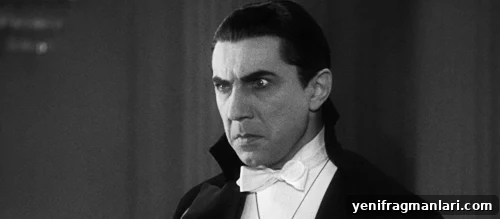
Dracula is unquestionably the role that brought Bela Lugosi to international fame and remains his most iconic performance. When Universal Pictures set out to produce a talking horror picture based on Bram Stoker’s novel, they cast Lugosi to reprise the role he had already made famous on stage. The film also reunited him briefly with fellow stage veteran Edward Van Sloan.
Lugosi’s Dracula diverges from Stoker’s novel in voice and manner. The Count in the original text is described as attempting to speak English fluently; Lugosi’s interpretation, by contrast, is marked by his distinct, somewhat stylized diction. Yet it is Lugosi’s voice and poise that many people still associate with Dracula. His slow, deliberate delivery and graceful, gliding movements — cloak spread like wings, stare unblinking — established visual and vocal cues that generations of fans and performers have imitated. Even short lines, such as his introduction, “I am… Dracula,” became emblematic of his career and were powerful enough that his family later chose to bury him in the Dracula cloak. The role both immortalized and overshadowed him: it guaranteed his lasting fame while also limiting the variety of parts he was offered.
2. White Zombie (1932)
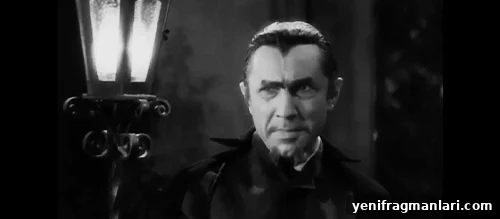
Released the year after Dracula, White Zombie helped establish another cinematic monster archetype: the zombie. In the early 1930s, zombies were depicted in film more as products of voodoo and supernatural control than as the flesh-eating undead familiar in later decades. White Zombie centers on a plot of manipulation and enslavement: people are brought under a sinister master’s control to work for his gain.
Lugosi’s role as Murder Legendre — a calculated and malevolent mastermind — is remembered primarily for his mesmerizing stare and commanding presence. His performance gives the film its core of menace, even when other elements of the production falter. White Zombie functions as an allegory of exploitation and control, and Lugosi’s portrayal of the manipulative figure at its center is a study in how concentrated charisma and threat can define an entire movie. His ability to dominate a scene, often without grand gestures, is a hallmark of his best work and is on full display here.
3. Ninotchka (1939)
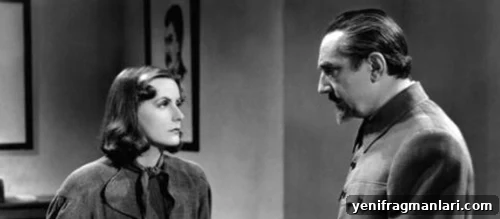
Ninotchka offers a rare glimpse of Lugosi outside his usual horror fare. Although his appearance in this romantic comedy is brief — a single scene near the film’s end lasting only a few minutes — it highlights what he might have achieved had he been offered a broader variety of roles. The film stars Greta Garbo as a stern Soviet emissary who encounters love in Paris. Lugosi’s small but authoritative turn as Commissar Razinin is striking: even in limited screen time, he brings class, restraint, and a quietly intimidating presence.
This cameo underscores a recurring lament about Lugosi’s career. He could command a dramatic moment with economy and sophistication, yet Hollywood repeatedly returned him to sinister, typecast parts. While films such as Son of Frankenstein and The Wolf Man showcased his strengths within the horror genre, Ninotchka hints at an untapped potential for broader character work. The scene remains a brief but powerful reminder of the actor’s versatility and the charisma he carried into every role.
Bela Lugosi’s legacy is complex: he shaped modern images of monsters and villains, and his performances continue to influence actors and filmmakers. Though typecasting and personal struggles limited the scope of his later career, his most memorable roles have endured, ensuring that his work remains a vital part of cinematic history.