
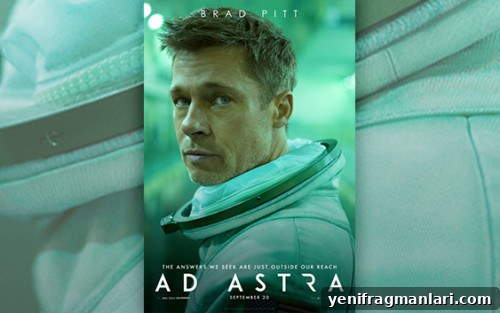
Ad Astra (2019)
Director: James Gray
Screenwriters: James Gray, Ethan Gross
Starring: Brad Pitt, Tommy Lee Jones, Ruth Negga, Donald Sutherland
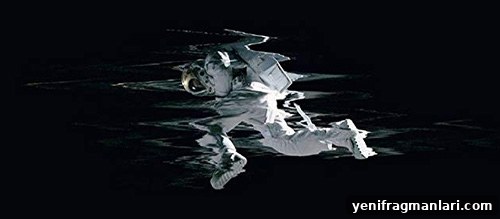
The film opens in the hushed, delicate void of space, where the black of the cosmos frames the vivid blue and white of Earth. Brad Pitt’s Roy McBride, a seasoned astronaut and systems engineer, performs a routine inspection on a high-orbit facility when an explosion sends him tumbling. His immediate instinct is to reach for a switch that could save lives, yet the accident propels him back to Earth and into a mission that will force him to confront both cosmic dangers and deeply personal truths.
At the center of Ad Astra is a search for answers: solar storms—electrical flares—are striking the planet with increasing intensity, and Roy is tasked with tracing their origin. The investigation becomes personal when it turns out the source may be connected to his father, Clifford McBride (Tommy Lee Jones), a celebrated astronaut long thought dead but possibly alive at the edge of the solar system. Roy’s journey outward is therefore also an inward quest to reopen a fractured relationship and to find the meaning behind his father’s obsession with discovery.
James Gray’s follow-up to The Lost City of Z relocates the themes of exploration and obsession from the Amazon to space. Much like the earlier film, Ad Astra examines humanity’s drive to uncover the unknown and mines the psychological toll of that pursuit. The movie constructs a near-future world where antennas sweep the exosphere and human presence reaches the Moon and Mars, but its real focus is intimate: the film reads as an extended study of isolation, unresolved trauma and masculine stoicism, exploring how repression and denial can become as dangerous as any external threat.
Roy’s voiceover—his reflective, often philosophical narration—anchors the film and invites comparisons to contemplative directors like Terrence Malick. The internal monologue gives the film a meditative quality similar to The Thin Red Line, emphasizing the character’s loneliness and the moral complexities he faces. At times that narration deepens the portrait of a man at war with his own emotions; at other moments it slips into straightforward exposition, weakening the subtlety that the film otherwise cultivates.
The movie’s tone shifts repeatedly between slow, cerebral science fiction and more conventional, pulse-driven set pieces. Moments of quiet introspection sit beside scenes of physical danger and even horror, creating an uneven rhythm. Those shifts can feel like the result of competing priorities—commercial appeal versus artistic restraint—rather than deliberately balanced choices. Still, even when the film leans into spectacle, its core preoccupations remain the same: how men cope with fear, grief and the impulse to hide vulnerability beneath controlled composure.
Pitt’s performance is central to the film’s power. His Roy is defined as much by what he withholds as by what he expresses: a study in minimalism that relies on controlled gestures, quiet stares and subtle inflections. This restrained approach makes him both sympathetic and remote, and for many viewers it will stand as one of Pitt’s most disciplined and affecting performances of recent years. The decision to internalize much of Roy’s pain gives the film emotional weight, even when the plot’s pacing is uneven.
Technically, Ad Astra is exceptional. Max Richter’s score provides a haunting, elegiac undercurrent that elevates the film’s themes of longing and loss. Hoyte van Hoytema’s cinematography—whose previous work includes large-scale space dramas—renders the solar system with tactile beauty, from the sterile interiors of orbital stations to the lonely expanses beyond the planets. These elements combine to create an immersive visual and aural experience that lingers after the credits roll and will likely draw attention during awards season.
Despite its virtues, the film is not entirely successful in synthesizing its ambitions. Where films like Ex Machina and Under the Skin use spare science-fiction premises to probe identity and empathy with surgical clarity, Ad Astra sometimes dilutes its focus by alternating between psychological subtlety and more conventional genre beats. Still, its attempts to tackle depression, paternal abandonment and the cultural pressure on men to conceal weakness make it a provocative, often moving piece of cinema.
In short, Ad Astra is a beautifully crafted, technically accomplished space drama with a compelling central performance and a thoughtful preoccupation with mental health and masculinity. It is uneven and occasionally indulgent, but it remains a serious and ambitious entry in contemporary science fiction. For viewers seeking a more uncompromisingly experimental take on similar themes, Claire Denis’s High Life provides a grittier alternative; for those looking for a meditative, star-led exploration of fatherhood and isolation, Ad Astra delivers meaningful, if imperfect, rewards.
17/24