
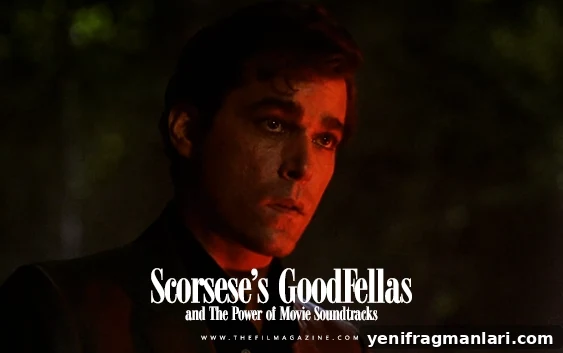
How Goodfellas Used a Pop Soundtrack to Shape Its Story
We’ve all walked down the street with music in our ears and imagined our lives as scenes from a movie. The beat drops and suddenly we’re walking into a ring, embracing on a sunlit dance floor, or pacing toward a dramatic moment—soundtracking our inner lives with familiar songs. Filmmakers have long used original scores for this purpose, but another powerful method is to craft a film’s emotional landscape from pre-existing popular music. Directors such as Quentin Tarantino and Edgar Wright have made this approach their signature, and its influence in American cinema is widely traced back to Easy Rider and to the work of Martin Scorsese. Scorsese’s 1990 gangster masterpiece Goodfellas remains one of the most celebrated examples of how a carefully curated soundtrack of period songs can propel narrative, establish tone, and deepen character.
Goodfellas deploys tracks from the 1950s through the 1970s to remarkable effect. According to the film’s music editor, Scorsese had selected many of the songs long before shooting began, a preparation that allowed music and image to intertwine in almost cinematic choreography. The result is a film where each music cue functions as narrative shorthand—signalling shifts in era, mood, and character—while also forging powerful, memorable moments.
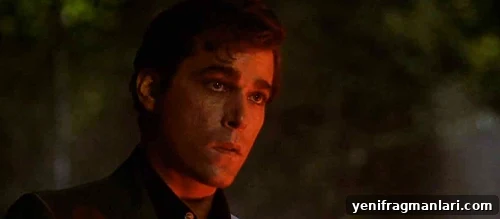
The film opens in media res: Henry Hill, Jimmy Conway and Tommy DeVito are driving with a corpse to dispose of—only to discover the man is still alive. They finish the job, and Henry’s iconic voiceover begins: “As far back as I can remember, I always wanted to be a gangster,” as the trunk slams shut. The needle-drop for this scene is Tony Bennett’s “Rags to Riches.” The song’s buoyant brass and Bennett’s lush voice immediately immerse us in the glamourous surface of the gangster life, giving Henry’s narration a wistful, almost childlike quality. Those musical cues quickly establish the film’s central arc: the intoxicating ascent into power and the inevitable moral and personal decline that follows.
Scorsese’s own youth in 1950s Italian-American neighborhoods informed the film’s authenticity. Early sequences are soundtracked with Italian-language songs that evoke family tradition and cultural identity, grounding Henry’s rise in a specific community and time. As the story moves into the 1960s, the soundtrack reflects broader musical shifts. Phil Spector’s Wall of Sound production style—thick, orchestral, jukebox-ready pop—introduces a more polished sheen to the film’s soundscape.
A standout set piece is the unbroken long take through the Copacabana nightclub. Henry escorts Karen through the kitchen and out onto the floor; the waiter produces a table from thin air; the camera tracks the couple in a single fluid movement. The Crystals’ “Then He Kissed Me” plays over the scene, underscoring the romantic thrill and underscoring Henry’s social elevation. The music and the uninterrupted shot work together to sell the illusion of effortless glamour and privilege.
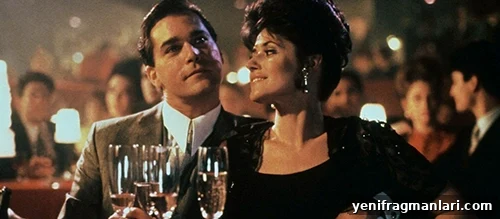
Throughout Henry and Karen’s wedding montage and early married life, doo-wop and classic crooner tunes—like The Harptones’ dreamy “Life Is But a Dream”—underscore the surreal, too-good-to-be-true quality of their world. Later, hits by Dean Martin and Aretha Franklin add texture to everyday scenes, combining the breeziness of popular music with the film’s focused attention on mob routine. Even moments that might read as procedural are given color and personality by the soundtrack; Bobby Darin’s “Beyond the Sea” softens the tone of a prison sequence and contributes to the film’s ambivalent moral register.
But as Henry’s life deteriorates, the music hardens with him. When he becomes involved in drugs, Scorsese turns to darker, more urgent music—The Rolling Stones’ “Gimme Shelter” is used to signal danger and moral collapse. This song, recurring across Scorsese’s work, pulls the film away from the nostalgic palette of early hits and toward a more urgent, threatening sonic atmosphere. Key violent set pieces are accompanied by iconic rock tracks: a piano outro from Derek and the Dominoes’ “Layla” punctuates one murder, while Cream’s “Sunshine of Your Love” accompanies another calculated execution. Scorsese even used on-set playback of music like “Layla” to coordinate camera movement and actor blocking, integrating sound and motion at a production level.
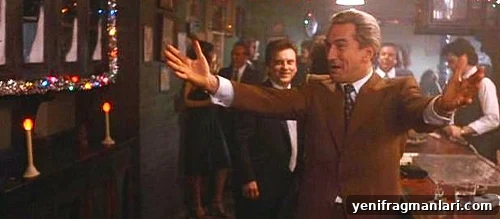
By the film’s climax, we race into the 1980s as Henry’s double life unravels. The soundtrack turns toward high-energy rock and gritty blues—artists such as Harry Nilsson, The Rolling Stones, The Who, George Harrison and Muddy Waters ratchet up the tension as Henry’s family, criminal ties and drug dealings implode. The glamour has evaporated and rock’s raw immediacy marks the end of an era for Henry.
For the film’s final beat, Scorsese chooses Sid Vicious’s defiant punk cover of “My Way.” The choice is both ironic and devastating: a once-flamboyant gangster reduced to living anonymously in witness protection, singing a distorted tribute to a crooner whose image epitomized the style and status Henry craved. The performance reframes Henry as a hollow echo of his former self—loud, resentful, and reduced.
Goodfellas demonstrates how a timeline of well-selected popular songs can do much more than fill silence. Scorsese’s selections provide historical texture, motivate emotional shifts, underline character development, and create indelible cinematic moments. The soundtrack’s power lies in its ability to make music an active storyteller: a way to signal time, mood and fate without adding a single line of dialogue.
Alexa, play “Gimme Shelter.”
Written by Grace Laidler
Follow Grace Laidler on Twitter: @gracewillhuntin