
The Crow (1994)
Director: Alex Proyas
Screenwriters: David J. Schow, John Shirley
Starring: Brandon Lee, Rochelle Davis, Ernie Hudson, Michael Wincott, Bai Ling, Sofia Shinas, Michael Massee, David Patrick Kelly, Tony Todd, Jon Polito
It is impossible to discuss The Crow without acknowledging the tragic death of its lead actor, Brandon Lee. At just 28, Lee was fatally wounded by a prop firearm on set—a loss that turned what was meant to be his breakout role into a memorial. When the film premiered in the summer of 1994, Lee’s presence seemed to haunt every frame, giving the movie an overwhelming sense of grief and absence that still lingers. The Crow reads now as both a dark fantasy and an unintentional elegy for a young performer whose promise was cut short.
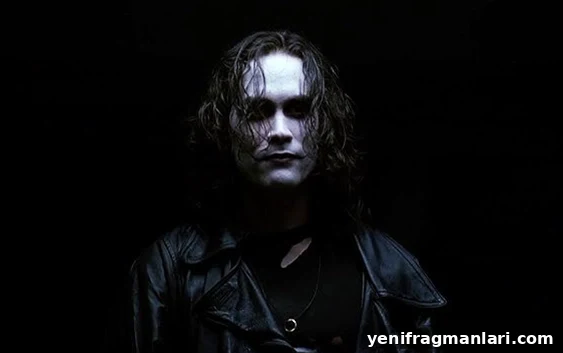
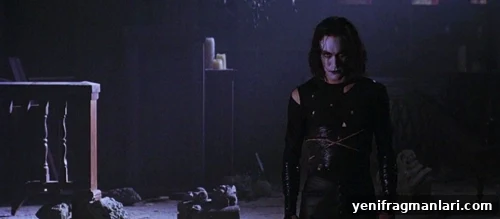
The film opens on a grim urban landscape—a gothic, rain-soaked Detroit where crime and decay have taken hold. A young girl narrates an old legend about a crow that guides souls to the afterlife, but sometimes, when a death is too unjust to rest, the crow can bring a soul back “to put the wrong things right.” The story centers on musician Eric Draven (Brandon Lee), who was murdered on Devil’s Night along with his fiancée, Shelly Webster (Sofia Shinas). One year after their deaths, Eric rises from his grave in a torrential storm. Returning to his apartment, he becomes a pale, painted revenant clad in black leather. Guided by a mysterious crow, Eric sets out to track down and punish the gang responsible for their murders, one by one.
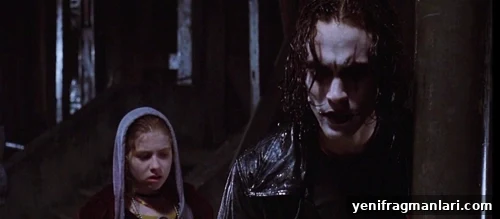
Brandon Lee’s performance is charged with contradiction: furious and tender, vengeful and devastated. He switches between moments of grim pleasure as he dispatches wrongdoers and brittle sorrow as he remembers the life and love he lost. There are many visceral moments where his resurrected body endures violence that, given the real-life circumstances, can feel uncomfortably raw. Some scenes required a stunt double after Lee’s death; Chad Stahelski, who later became known for his work on action films, filled in for several shots. Still, the heart of the role remains Lee’s—the quiet, intimate scenes where he mourns and consoles, such as his conversations with Sergeant Daryl Albrecht (Ernie Hudson) or his interactions with Sarah, a young girl who becomes like a daughter to him.
Because Lee died before production finished, the final film was reshaped to accommodate his absence. Although most of his scenes were completed, the reworking left a sense of Lee as a spectral presence in his own story—appearing and receding, never quite lingering as long as viewers might wish. That lack does not ruin the film, but it does leave a yearning for more of his performance, knowing what was lost.
Stylistically, The Crow is unmistakably mid-1990s: grunge-influenced costumes, a punk-tinged soundtrack, and a production design steeped in nocturnal decay. Alex McDowell’s production design and Graeme Revell’s score contribute heavily to the film’s atmosphere, crafting a world lit by smoldering orange fires and perpetual rain. The film is often compared to comic-book adaptations and darkly stylized superhero films, but it is darker in tone and more suffused with melancholy. The visuals remain some of the most imaginative in comic-to-film adaptations, blending romantic gothic imagery with urban grit.
The Crow is less interested in debating the ethics of revenge than it is in channeling raw emotion. This focus stems directly from the story’s origin as a comic by James O’Barr, who created the tale while processing his own grief after losing his fiancée to a drunk driver. That origin gives the movie a core of authentic, personal anguish—its fury and violence feel less sensational than cathartic. The film delivers a kind of dark release for its audience, allowing viewers to experience a vengeful fantasy that is rooted in bereavement rather than spectacle.
Where the film falters is in its peripheral character development. Sarah’s relationship with her unreliable mother, Darla (Anna Levine), is sketched only lightly, and crime boss Top Dollar (Michael Wincott) is rendered as an effective but underexplored adversary. Their motivations and connections to Eric do not always receive the depth needed to make every confrontation fully resonate, which slightly undermines the impact of the climactic moments.
The Crow did generate several sequels that failed to capture the original’s cultural or emotional weight, and while attempts to revisit the material continue, the 1994 film endures because of its striking visuals and the strength of Lee’s performance. The movie remains a powerful expression of loss, love, and unresolved grief—an elegy expressed through gothic cinema. Eric’s final choices suggest a form of peace, yet the film ultimately reminds us that certain wounds and longings endure. Above all, The Crow insists that love itself can be eternal, even amid sorrow.
Score: 20/24
Rating: 4 out of 5.
Recommended reading: 1990s Superhero Movies Ranked