

The Hunger Games franchise is one of the most iconic film series of recent decades.
Released between 2012 and 2015, the four films depict a dystopian near future defined by extreme class divides, spectacle, and a society numbed by violence. The story centers on Katniss Everdeen (Jennifer Lawrence), a young woman from District 12 who volunteers for the 74th Hunger Games, survives, and—largely against her will—becomes the symbol of a growing rebellion against the Capitol.
In the world of Panem, the Hunger Games are an annual, televised death match in which 24 tributes—one boy and one girl aged 12 to 18 from each district—are selected by lottery (the Reaping) and forced to fight until only one remains. The Games were imposed by the Capitol as punishment after the districts rebelled; District 13 was supposedly destroyed and the remaining districts were reminded of the consequences of uprising through this brutal tradition.
Tributes are paraded and styled as celebrities, interviewed on mandatory programs, and then sent to a themed arena where survival becomes a public spectacle. The victor receives housing, wealth, and immunity from future Games while their home district gets extra rations for a year. Victors later serve as mentors to future tributes from their district.
Across the quadrilogy, we follow Katniss’s transformation: from a reluctant tribute who wins the 74th Hunger Games to a reluctant leader and symbol of resistance who survives a second Games and is eventually drawn into full-scale rebellion. Along the way she navigates fraught relationships with Peeta Mellark (Josh Hutcherson), her fellow District 12 victor and complex ally, and Gale Hawthorne (Liam Hemsworth), her childhood friend and confidant. She also struggles to protect her family—especially her sister Primrose (Willow Shields)—and to survive the political machinations of President Snow (Donald Sutherland) and others who seek to use her for their own ends.
Follow @thefilmagazine on X (Twitter).
10. Katniss Adjusts Her Aim and Kills President Coin
The Hunger Games: Mockingjay – Part 2 (2015)
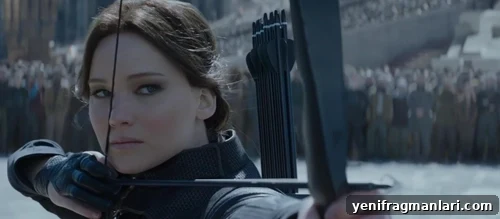
After the rebellion topples the Capitol, Katniss confronts the leaders who control Panem. She has witnessed devastating losses, including squadmates like Finnick Odair and, most painfully, her sister Prim. Tasked to execute President Snow, Katniss instead aims at President Coin and shoots her, exposing Coin’s willingness to seize power and continue oppressive practices under a new guise.
This decisive act represents Katniss reclaiming agency after being manipulated by both Snow and Coin. It is a moment of moral clarity and tragic resolution—she avenges Prim and prevents another authoritarian figure from taking control. The scene is jarring and emotionally heavy: a young woman from the poorest district reshaping the fate of an entire nation with a single arrow.
9. Finnick Odair’s Death
The Hunger Games: Mockingjay – Part 2 (2015)
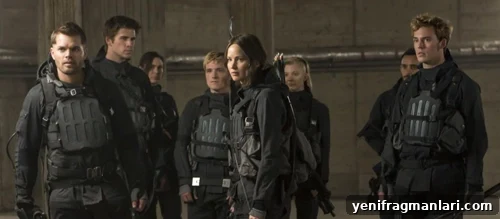
Finnick, a beloved and charismatic victor, dies in a harrowing sequence beneath the Capitol as Katniss and her squad attempt to flee through tunnels filled with genetically engineered mutts. He sacrifices himself to save Katniss and others, and she is forced to end his suffering. Finnick’s death is shocking and tragic because he had become a poignant symbol of survival and resilience after being victimized by Snow’s regime.
The loss underscores the human cost of the rebellion and deepens Katniss’s guilt and resolve. Finnick’s backstory—his exploitation and trauma despite being a victor—makes his death even more devastating, and it remains one of the franchise’s most discussed moments.
8. Peeta’s Live Interview with Caesar Flickerman
The Hunger Games: Catching Fire (2013)
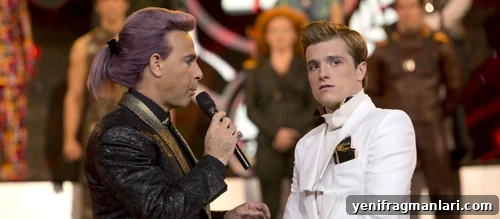
During interviews ahead of the Quarter Quell, Peeta Mellark appears to perform for the Capitol but uses his moment to stir the crowd. He makes comments that hint at a private life with Katniss and alludes to being a father, provoking shock and sympathy among Capitol citizens. The interview culminates with all the victors holding hands in a defiant, united gesture.
That spontaneous solidarity—victors from all districts physically linking together—signals an early, public crack in the Capitol’s control. It shows that even under the Capitol’s spectacle, people can express dissent and weaponize public feeling against oppression. The scene is an emotional high point and a turning point in the growing resistance.
7. Katniss Finds Her Voice in District 8
The Hunger Games: Mockingjay – Part 1 (2014)

In District 8, Katniss films propaganda footage for the rebels and confronts the devastation caused by Capitol bombings. Standing in a ruined hospital, she delivers a raw, unfiltered message: “If we burn, you burn with us.” This is the moment Katniss reclaims her voice—angry, direct, and authentic—and becomes a truly active symbol of the rebellion rather than a pawn manipulated by others.
Lawrence’s performance captures the character’s anger and pain, and the line resonates as a rallying cry that exposes the Capitol’s brutality while galvanizing the districts into action.
6. Katniss Threatens Suicide
The Hunger Games (2012)

After surviving the 74th Hunger Games alongside Peeta, Katniss reacts to a last-minute rule change that would force them to fight to the death. In a desperate bid to deny the Capitol a single victor, she produces poisonous nightlock berries and prepares to die with Peeta rather than endanger him. The Capitol rushes to call a halt and declare them both winners.
This act of defiance exposes the Capitol’s fragility and marks the first major public defeat for the regime. It’s the spark that begins a broader movement and shows how a small, courageous action by two teenagers can unsettle an oppressive power.
5. The Quarter Quell Reaping
The Hunger Games: Catching Fire (2013)
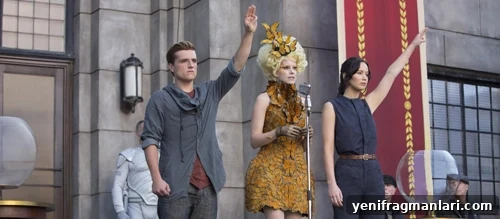
The Quarter Quell reaping upends the usual ritual: instead of children, previous victors are selected. When Effie announces Katniss’s name from the drawing, the moment is devastating. Haymitch is reaped and Peeta volunteers, returning Katniss and Peeta to the arena. The ceremony exposes the cruelty of the Capitol and deepens the emotional stakes for the protagonists.
Effie’s visible distress—her cheeriness cracked by the injustice she witnesses—signals a subtle shift among Capitol citizens as the rebellion’s influence spreads. The reaping’s emotional weight emphasizes how little control the districts’ inhabitants have over their lives and how the Games continue to tear families and communities apart.
4. Katniss Enters the Quarter Quell Arena
The Hunger Games: Catching Fire (2013)

As Katniss prepares to enter the Quarter Quell, she watches Cinna—her ally and stylist—brutally beaten by Peacekeepers. Rushing forward into the arena, she is disoriented but quickly steels herself. The arena opens onto a hostile environment and the Games begin again, this time with a group of seasoned and determined victors.
The juxtaposition of Cinna’s assault and Katniss’s composed entry is powerful: grief transforms into focus and survival instinct. The technical choices—lighting, framing, and pacing—convey disorientation and urgency, making this entry a standout cinematic moment in the series.
3. Katniss Volunteers as Tribute
The Hunger Games (2012)
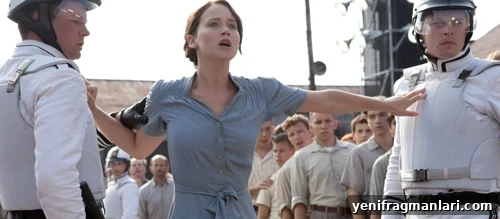
When Prim’s name is called at the Reaping, Katniss immediately screams that she will take her sister’s place and volunteers as tribute. The crowd falls silent, and Katniss’s family and friends salute her sacrifice. This impulsive, heroic choice introduces Katniss’s protective nature and sets the entire story in motion.
The scene is raw and immediate: a teenager’s love for her sibling triggers an act of courage that changes both her life and the fate of her district. It’s an emotional anchor for the series and establishes the moral core that motivates much of Katniss’s later behavior.
2. Katniss Honors Rue
The Hunger Games (2012)

Katniss forms an alliance with Rue, a young tribute from another district. When Rue is killed, Katniss mourns her and arranges flowers around her body, then raises her hand in salute. Rue’s death and Katniss’s public tribute humanize the victims of the Games and ignite sympathy and outrage across the districts.
Rue’s innocence and the parallel between her and Prim make the loss especially harrowing. The scene crystallizes the moral argument against the Capitol: the Games prey on the vulnerable and pit children against one another. Katniss’s response becomes a catalyst for broader resistance.
1. “There Is No District 12”
The Hunger Games: Catching Fire (2013)

After escaping the Quarter Quell, Katniss awakens on a Capitol transport and learns the shocking truth: District 12 has been destroyed by Capitol bombing. Haymitch and others confirm that the district is gone, leaving Katniss to realize the war is no longer theoretical but total and personal. This revelation propels her from survivor to committed participant in the rebellion.
This moment consolidates many revelations: that District 13 exists, that some victors were part of a larger plan, and that the cost of resistance is immense. The destruction of District 12 makes the conflict irrevocable—there is no going back.
Written by David Roskin
Which moments from the Hunger Games films had the greatest impact on you? Were you most moved by the political drama, the personal sacrifices, or the action set pieces? Share your thoughts and memories in the comments.
You can support David Roskin via davidroskin.com.