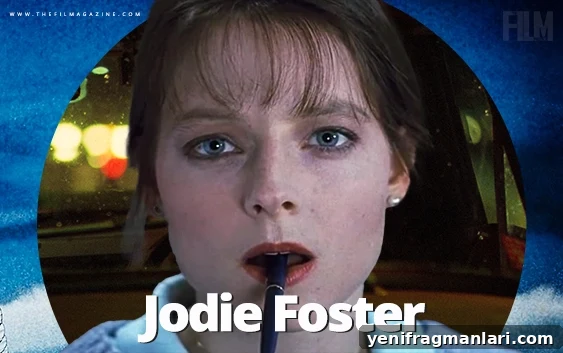
Alicia Christian “Jodie” Foster has been in front of a camera since she was three, appearing in commercials and Disney films throughout her early childhood. A prodigious industry child, by adolescence she was starring in major television productions such as Paper Moon (1974) and holding her own opposite Robert De Niro in Taxi Driver (1976). Paper Moon, adapted from Peter Bogdanovich’s 1973 film, cast Foster as Addie Loggins, a nine-year-old accomplice to a con man. That same period saw Foster emerge as a rare young performer whose gifts rivaled those of her adult colleagues, and as she took on progressively larger roles, her rise to stardom felt almost inevitable.
Her early success carried heavy burdens. The consequences of growing up in the spotlight intensified during her college years at Yale beginning in 1980, when she was stalked obsessively by John Hinckley Jr., the man later known for the attempted assassination of President Ronald Reagan. Despite this traumatic episode, Foster continued to act between semesters and completed her degree in 1985. Many of the projects she accepted during that transitional period did not achieve strong critical or commercial traction, and she spent the subsequent years reestablishing herself as an adult actress. Foster’s resilience and quiet strength, displayed both on- and off-screen, eventually led to roles that better reflected the woman she had become.
The career revival began in earnest with The Accused (1988), in which Foster portrayed a survivor of a brutal assault fighting for justice, and reached a new peak with The Silence of the Lambs (1991), where she embodied the determined FBI trainee Clarice Starling opposite Anthony Hopkins’ Hannibal Lecter. Foster earned Academy Awards for both performances. Throughout the 1990s she continued to deliver acclaimed work in films such as Nell (1994) and Contact (1997), and she made her directorial debut with Little Man Tate (1991). Her reputation among peers and audiences was firmly established, and by the early 2000s Foster was being recognized not only as a performer but as a filmmaker and trusted creative voice.
In the 2000s she continued to choose intriguing roles, including the calculating Madeleine White in Spike Lee’s Inside Man (2006). Foster also pursued a controversial and ultimately unrealized project exploring the complex life of filmmaker Leni Riefenstahl, a choice that prompted criticism from some quarters. Those critiques overlooked the long record of choices that reveal Foster’s willingness to take artistic risks and her ability to infuse even authoritative characters with vulnerability.
Foster has always guarded her private life carefully. Aside from personal essays and a memorable 2011 awards speech that addressed public speculation about her identity, she has largely let her work speak for itself. That discretion has not diminished the emotional honesty she brings to her characters. After a period focusing more on directing, Foster has returned to high-profile acting projects, including television and recent films such as Nyad (2023), demonstrating renewed momentum in her on-screen career.
In a 2021 interview with the New York Times she described herself as “a solitary, internal person in an extroverted, external job” and acknowledged that loneliness has been a recurring theme in her life. That inwardness helps explain the specificity and depth she brings to many of her roles. The following three performances capture the defining contours of Jodie Foster’s career and the qualities that make her one of the most compelling actresses of her generation.
1. Taxi Driver (1976)

Any account of Foster’s career must begin with her revelatory portrayal of Iris Steensma in Martin Scorsese’s Taxi Driver. Often cited among the best child performances in film history, Foster’s work in Taxi Driver earned her the first Academy Award nomination of her career at age thirteen. Already known for roles in films such as Napoleon and Samantha (1972) and Tom Sawyer (1973), Foster’s performance in Scorsese’s film made clear she would be far more than a former child star.
Foster had previously appeared in Scorsese’s Alice Doesn’t Live Here Anymore (1974), and by the time Taxi Driver was cast she and the director had an established rapport. Casting the then twelve-year-old Foster as a child prostitute opposite Robert De Niro’s troubled Travis Bickle generated concern, and the production implemented safeguards to protect Foster’s well-being, including mental health check-ins, social worker supervision, and using Foster’s older sister for some suggestive shots. Still, Foster later explained she understood the difference between acting and real life and approached the role as a profession.
Iris appears most prominently in the film’s third act, when Bickle attempts a violent rescue. But she is more than the object of his crusade; Iris is the film’s emotional center. Her mix of naiveté, resilience, and wounded humanity gives the movie moral and emotional complexity. Foster’s nuanced, fearless portrayal anchors the film’s critique of a fractured post–Vietnam America and helps make Taxi Driver an enduring cinematic work.
2. The Silence of the Lambs (1991)
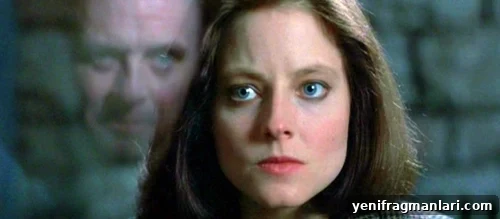
Foster’s second Academy Award arrived for her performance as Clarice Starling, the focused young FBI trainee who seeks insight from the incarcerated Hannibal Lecter to help capture a serial killer. Fresh from critical acclaim for The Accused, Foster delivered a performance that has since become iconic. Director Jonathan Demme’s frequent close-ups put Clarice front and center, and Foster’s ability to convey steadiness, intelligence, and vulnerability gave the film its moral and emotional spine.
Despite the film’s controversies regarding certain themes, Foster’s performance stands apart for its precision and humanity. Clarice is uncompromising yet exposed to a world that constantly evaluates and objectifies her, and Foster navigates that tension with remarkable control. Her Clarice is both a tough, competent investigator and a character who exposes the raw truths many women recognize about being watched and judged.
3. Contact (1997)
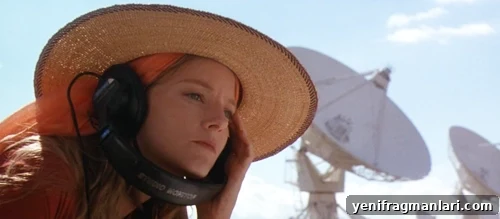
By the late 1990s, Foster was a bona fide movie star, and Contact (1997), directed by Robert Zemeckis and adapted from Carl Sagan’s novel, became one of the most memorable vehicles of that era. The film succeeds largely because Foster’s Dr. Ellie Arroway transforms what could have been a standard sci‑fi protagonist into a fully realized, emotionally complex person. She balances scientific curiosity and skepticism with a yearning for transcendence, giving the film its intellectual and emotional core.
Contact’s scope is cosmic, but Foster’s grounded performance keeps the audience invested in Dr. Arroway’s personal journey. As the world reacts to the confirmation of extraterrestrial life, Arroway remains human, searching for meaning. Foster later said that Ellie reflected aspects of how she sees herself or wishes to be seen, making the role resonate with particular authenticity.
Across genres and decades, Jodie Foster has consistently delivered performances that move and challenge viewers. Her filmography features a roster of determined heroines, troubled youths, and layered, complicated women, while her directorial work further demonstrates her artistic range. As she continues to take on new projects, Foster’s career remains a rich example of sustained creative excellence and emotional honesty.
Written by Connell Oberman
Support Connell Oberman:
Twitter: @ObermanConnell
Instagram: @connello_22
Substack: ConnellOberman