


The Hunger Games: The Ballad of Songbirds and Snakes (2023)
Director: Francis Lawrence
Screenwriter: Michael Lesslie, Michael Arndt
Starring: Tom Blyth, Rachel Zegler, Hunter Schafer, Josh Andres Rivera, Peter Dinklage, Jason Schwartzman, Viola Davis
Origin stories always carry appeal, but whether they deserve to be told depends entirely on how well they deepen our understanding of familiar characters and worlds. The Hunger Games: The Ballad of Songbirds and Snakes manages that balance, offering a thoughtful and visually striking prequel that stands on its own while honoring the tone and craft of the original series.
When the first Hunger Games film arrived more than a decade ago, its commercial and cultural impact helped launch a wave of young-adult dystopian adaptations. Few of those followed achieved the same combination of storytelling, performances, and production quality. The original franchise endured because of careful adaptation, strong direction, memorable performances, and production design that made the world of Panem feel lived-in and consequential. Its themes—oppression, spectacle, rebellion, and the human cost of power—remain resonant today.
The prequel returns to Panem six decades before Katniss Everdeen’s rise. The country is still recovering from war and rationing, and the Hunger Games themselves are in their tenth year. Dr. Volumnia Gaul (Viola Davis), the Head Game Maker, seeks ways to keep audiences engaged with a brutal televised ritual. Coriolanus Snow (Tom Blyth), years before becoming the dictator familiar to fans, is an ambitious academy student trying to prevent his family from financial ruin after his father’s death left them destitute. Living precariously with his grandmother (Fionnula Flanagan) and his cousin Tigris (Hunter Schafer), Coriolanus faces a final academy test: mentors must be assigned to upcoming tributes.
Assigned to Lucy Gray Baird (Rachel Zegler), a charismatic tribute and member of a traveling musical troupe called the Covey, Coriolanus must reconcile his ambition with unexpected compassion. Lucy Gray has little in the way of combat skills but transforms the arena into a stage where performance becomes survival. Their alliance grows into something complex and dangerous as political unrest in the districts collides with Snow’s rising hunger for control. The film follows their relationship through preparation, the games themselves, and the consequences that ripple outward, revealing the origins of a future tyrant.
Songbirds and Snakes benefits strongly from its creative continuity: Francis Lawrence returns to direct, reuniting much of the original creative team. Production designer Phillip Messina and cinematographer Jo Willems recreate the aesthetic continuity of the earlier films while giving this installment its own distinct, grittier palette. Where the Capitol of the later films gleams with polished excess and advanced technology, this Panem is rougher and more primitive—an unstable, dangerous place. The arena feels like a crumbling concrete dome rather than an overproduced spectacle, and the film’s visual language leans into a darker, more austere look that suggests how this world will evolve into the future viewers already know.
Costume and production design nod toward historical styles—particularly mid-20th-century militaristic influences—without resorting to caricature. Technology feels tactile and analogue, which adds to the film’s sense of plausibility and gradual institutional development. The result is a big-budget film that genuinely looks and feels expensive: every frame communicates deliberate choices that support story and theme.
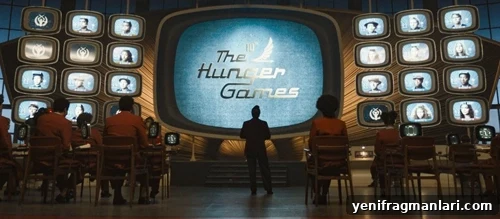
Adaptation fidelity is another strength. Suzanne Collins’ novel is translated with care: the screenplay preserves key characters, motivations, and structural beats that make the story compelling. Rather than rehashing scenes or leaning on nostalgia for the original series, the film charts its own course. It only lightly references the future—an affectionate nod when Lucy Gray calls a plant “Katniss”—but otherwise resists easy callbacks. James Newton Howard’s score occasionally employs the familiar Mockingjay motif at moments when emotional resonance calls for it, which connects the films subtly without distracting from the new narrative.
Structurally, the film is distinct from previous entries. The first act spends significant time on preparation and the mechanics of the games; the second half focuses on character unraveling and moral consequence. This choice shifts emphasis from arena action to psychological decline and political consequence. While the film occasionally loses momentum after the games conclude, it remains intellectually and thematically compelling throughout.

Performances carry the film. Tom Blyth inhabits the younger Snow with an unsettling combination of charisma, vulnerability, and nascent ruthlessness. He channels echoes of the older character without mimicking him, suggesting a trajectory from empathy to calculated cruelty. Rachel Zegler sparkles as Lucy Gray—magnetic, playful, and emotionally layered—and her musical gifts add authenticity to a role rooted in performance. Josh Andrés Rivera stands out as Sejanus Plinth, a classmate whose moral conscience leads to tragic consequences. Hunter Schafer brings presence to the smaller but pivotal role of Tigris. Jason Schwartzman provides sharply tuned comic grotesquery as Lucretius “Lucky” Flickerman, offering a satirical window into Capitol media culture, while Viola Davis lends gravitas to Dr. Gaul’s unsettling creative ambition.
Overall, The Ballad of Songbirds and Snakes is a worthy expansion of The Hunger Games universe. It does not simply repeat earlier formulas; it builds on established themes to explore how individuals and institutions coevolve into systems of oppression. While it may not achieve the emotional breadth of the original four films—those had time to develop multiple character arcs across installments—this single, self-contained film succeeds on its own terms. It deepens the franchise’s mythology and delivers a thoughtful, well-crafted origin tale that respects its source material and the intelligence of its audience.
Score: 22/24
Rating: 4 out of 5.