
It’s a Wonderful Knife (2023)
Director: Tyler MacIntyre
Screenwriter: Michael Kennedy
Starring: Jane Widdop, Joel McHale, Justin Long, Jess McLeod, Katherine Isabelle, Cassandra Naud
A film called It’s a Wonderful Knife practically announces its tone from the title, yet a review still matters because the film deliberately wears its influences on its sleeve. This slasher reimagining riffs on the structure of the 1946 Frank Capra classic It’s a Wonderful Life, trading its earnest small-town sentimentality for holiday horror. Jane Widdop plays Winnie, who one year after stopping a masked killer in Angel Falls finds herself trapped in an alternate timeline where she never existed. In this new reality the killer is free and far more prolific—if Winnie fails to stop him by dawn, she cannot return to her original life. The premise is familiar but the execution aims to blend seasonal warmth with gruesome thrills.
Michael Kennedy, who wrote the screenplay, previously worked on other slasher-tinged material that mixes satire with genre beats, so Knife leans into its source inspiration without apologizing for it. The film embraces camp at times, fully committing to the idea of teen outsiders thrown together under ridiculous and violent circumstances. The cast seems to know what kind of movie this is and they play to those strengths—some performances tilt into delightful excess rather than subtlety. Justin Long, as the slick corporate antagonist Henry Waters, chews scenery in a deliberately exaggerated fashion, channeling a caricature of callous capitalism. His manic presence contributes to the film’s darkly comic energy.
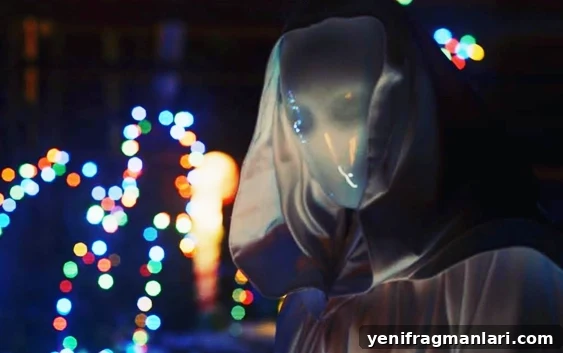
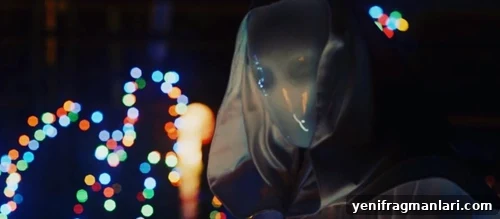
Visually the film is striking. Cinematographer Nicholas Piatnik uses Christmas lights, neon accents, and carefully placed practicals to create a rich contrast between brightness and shadow. The film repeatedly draws on this visual dichotomy: festive, warm colors clash with bleak, violent action, and the resulting imagery is memorable. Art director Louisa Birkin and set dressers Matt Carson and Jan Sikora deserve credit for crafting locations that read simultaneously cozy and unnerving. When blood stains snow or the killer’s white costume, the effect is visceral precisely because of the careful attention to color and lighting.
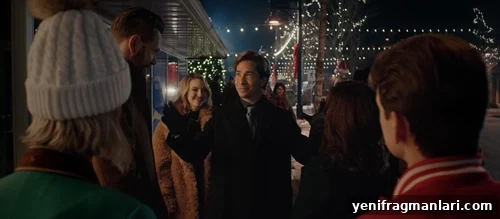
Beyond the aesthetic, the movie makes an explicit political point: it frames corporate greed and the culture that enables brutality as an almost contagious mindset. The film doesn’t stop at a generic “capitalism is bad” line—its metaphor suggests that dehumanizing systems feed on grief, vulnerability, and silence, turning ordinary complicity into harm. That idea elevates the story beyond a simple holiday slasher and gives it thematic teeth, even if that message is delivered with little subtlety.
There are technical flaws. A handful of scenes suffer from blunt, expository dialogue that repeats information the audience already understands, and a few kills feel under-edited or awkwardly handled, as though effects work was intentionally obscured. At times the performances that aim for camp slide into overacting; some viewers will find that energizing, others may see it as excessive. Pacing occasionally stumbles when the script lingers on setup at the expense of sustained scares, but the film largely moves briskly over its roughly 90-minute runtime.
Still, Knife earns affection in other ways: the leads are committed, the production design and lighting create a distinct holiday-horror mood, and the film’s willingness to be unabashedly festive while also brutal results in an entertaining tonal mix. The conclusion is satisfying in a cozy, genre-friendly way that leans into redemption and catharsis rather than nihilism. For viewers tired of conventional Hallmark holiday fare and looking for a sharper, darker seasonal diversion, this picture offers a compact, spirited alternative.
Score: 16/24
Rating: 3 out of 5