
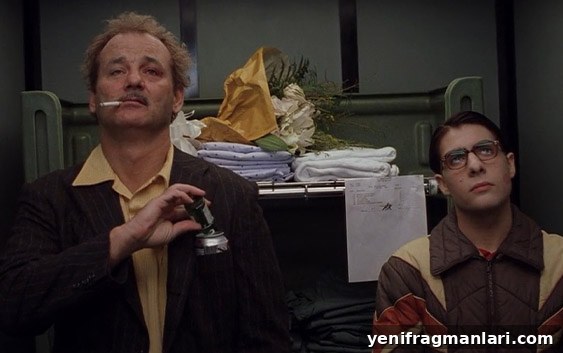
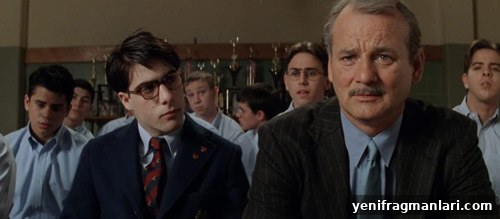
Rushmore (1998)
Director: Wes Anderson
Screenwriters: Wes Anderson, Owen Wilson
Starring: Jason Schwartzman, Bill Murray, Olivia Williams, Brian Cox, Luke Wilson
Following the modest success of his debut, Bottle Rocket, Wes Anderson returned with the more assured and unmistakably idiosyncratic Rushmore. Released in 1998, the film introduced Jason Schwartzman in his screen debut as Max Fischer, an eccentric fifteen-year-old whose life is consumed by extracurricular pursuits at the elite Rushmore Academy. Max’s passionate, overloaded schedule and lackluster academic performance create tension with the school’s faculty and drive much of the story’s conflict.
Rushmore marked a turning point for Anderson. It was his first film to earn consistently strong praise from critics and audiences and, despite only modest box-office returns relative to mainstream blockbusters, the film steadily grew into a cult favorite. Reviewers celebrated the film’s quirky tone, crisp dialogue, and distinct visual style. Bill Murray’s performance as Herman Blume—an adult who forms an unlikely friendship with Max—was singled out as a career-redefining turn that began a long and fruitful collaboration between Murray and Anderson.
The central triangle between Max, Herman, and schoolteacher Rosemary Cross (Olivia Williams) forms the emotional core of the film. Max’s earnest, often grandiose schemes clash with Herman’s jaded desperation and Rosemary’s quiet steadiness, creating a bittersweet love triangle that oscillates between comic absurdity and genuine heartbreak. Schwartzman’s energetic lead anchors the film, while Murray brings a rueful warmth and comic restraint that complements Max’s urgency. Olivia Williams provides the moral center, reacting to both men with increasing frustration and sympathy in equal measure.
Supporting performances add texture and friction. Brian Cox appears as Dr. Guggenheim, Rushmore’s principal, whose exasperation with Max’s wasted academic potential is both believable and quietly comic. Luke Wilson and other ensemble players contribute to the film’s rich atmosphere of private ambitions and petty rivalries, emphasizing how Max’s outsized imagination collides with adult expectations.
One of the film’s most distinctive elements is its soundtrack. Anderson’s use of period music—songs by artists such as The Kinks, Cat Stevens, The Faces, and John Lennon—imbues the film with emotional resonance and a nostalgic color that underlines key scenes. Initially considering a Kinks-only soundtrack, Anderson ultimately diversified the musical palette, a choice that added depth to the film’s tone and helped establish the director’s signature approach to song placement.
The screenplay, co-written by Anderson and Owen Wilson, showcases the pair’s emerging voice: droll, precise, and slightly off-kilter. The dialogue crackles with wit while remaining grounded in character detail, turning eccentric behavior into sympathetic human drama rather than mere affectation. This film represents an early and clear shift toward the whimsical, deadpan sensibility that would become a hallmark of Anderson’s later work.
Visually, Rushmore announces Anderson’s developing aesthetic. Cinematographer Robert Yeoman’s compositions and color choices contribute an autumnal, storybook quality that complements the film’s offbeat humor and emotional currents. The careful framing and palette create a sense of composed artificiality that heightens the film’s blend of earnestness and irony.
Though the movie did not dominate the box office on release, its influence and reputation have grown steadily. It now stands as a defining early work in Wes Anderson’s filmography—a film that bridges the grounded beginnings of Bottle Rocket and the more stylized later entries like The Royal Tenenbaums and The Grand Budapest Hotel. Above all, Rushmore remains a compelling coming-of-age tale: funny, tender, and oddly humane. For viewers exploring Anderson’s films, it is a strong and accessible starting point that reveals the director’s developing themes—loneliness, flawed mentorship, and the messy collision of childhood ideals with adult disappointment.
19/24