Invasion of the Body Snatchers (1978)
Director: Philip Kaufman
Screenwriter: W. D. Richter
Starring: Donald Sutherland, Brooke Adams, Veronica Cartwright, Jeff Goldblum, Leonard Nimoy
This 1978 adaptation of Jack Finney’s The Body Snatchers is at once a straightforward science-fiction horror film and a much subtler commentary on social and cultural anxieties. On the surface it tells the story of an extraterrestrial life-form that arrives on Earth and reproduces by growing exact physical replicas of human beings inside pods. These replicas are indistinguishable in appearance but stripped of emotional depth, leaving behind a hollow, efficient imitation of humanity. Beneath that premise, the film explores paranoia, identity, and the fear of losing what makes us human.
Unlike the original novel and the 1956 Don Siegel adaptation that take place in a small-town setting, Philip Kaufman’s version relocates the invasion to downtown San Francisco. That urban update is a key creative decision: the city’s density and anonymity amplify the sense of being surrounded by potential impostors. Where a small town might offer the possibility of outside help or escape, the city setting makes the spread feel immediate and inexorable. The idea of contamination in a metropolis—where services, institutions and entire communities can be swallowed—gives the film a modern, corporate-readiness spin on the classic invasion story.
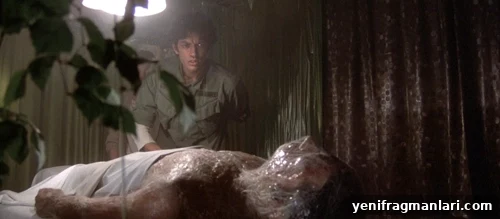
One of the most effective thematic threads in this adaptation is its critique of conformity and the loss of individuality in late-capitalist society. The pod-grown duplicates are calmer, more orderly and efficient; they do not feel love, anger or pain. In the film these qualities read like a warning about social systems that prioritize productivity over humanity. Visual choices reinforce this theme: the pod-people in their growth stages appear tissue-like and organic, emphasizing an ecological horror in which living processes have been perverted into a kind of mechanized reproduction. The movie thus sits comfortably alongside other seminal sci-fi-horror texts that worry about identity and assimilation.
The film’s atmosphere is tightly controlled. San Francisco’s architecture and the cramped streets create a sense of being boxed in; the camera frequently places characters in close proximity, increasing tension by making you suspect every passerby. Small, almost throwaway visual elements—trash compactors, indistinct background figures, repeated shots of empty pods—compound the growing sense of dread. These details accumulate quietly, so that when the larger pattern becomes clear, the revelation feels devastating rather than merely sensational.
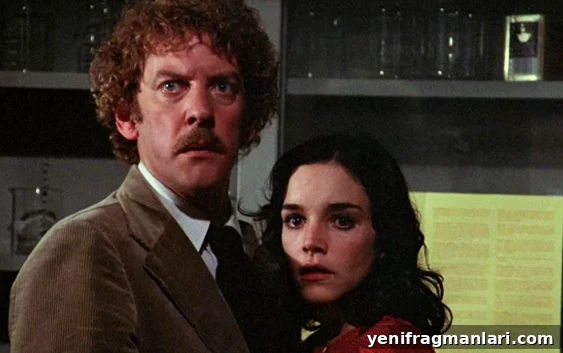
Performance-wise, the cast is a major strength. Donald Sutherland, Brooke Adams, Veronica Cartwright, Jeff Goldblum and Leonard Nimoy bring credibility and emotional weight to a story that relies on escalation and the slow dawning of horror. Each actor contributes to the mounting paranoia, and moments of subtle behavioral change are made more chilling by the strong ensemble work. Cameos and nods to the original—such as Kevin McCarthy’s brief, frantic appearance—add a layer of continuity and resonance without detracting from Kaufman’s distinct vision.
The film’s sound design and its ending are particularly memorable. As the story progresses, the world’s noise level diminishes: street chatter, spontaneous laughter and ambient clamor slowly fade. That hollowing-out of sound becomes a chilling indicator of the takeover. The final sequences use silence and minimal, stark audio cues to drive home the idea that something fundamental to human life—our capacity for spontaneous sound, emotion and surprise—has been erased. That approach to the finale is as powerful as the famous scream-driven last image of the 1956 film, but it achieves impact through a different sensory route.
Kaufman’s direction is largely effective, though the film occasionally resorts to exaggerated camera moves that feel at odds with the otherwise measured tone. These moments can seem like remnants of B-movie aesthetics, but they are infrequent and do not derail the overall experience. The movie’s strongest quality is its consistent, enveloping mood: a slow-burning terror that turns everyday urban life into a landscape of existential threat.
Invasion of the Body Snatchers (1978) remains a landmark of science-fiction horror. It updates a classic story for a later era without losing the original’s thematic core, and it offers unforgettable scenes, a committed cast, and a quietly devastating conclusion. Even with a few directorial missteps, it stands as an enduring and influential exploration of what it means to lose oneself to an unfeeling, orderly system.
Score: 20/24
⭐️⭐️⭐️⭐️
Rating: 4 out of 5.