Foe (2023)
Director: Garth Davis
Screenwriters: Garth Davis, Iain Reid
Starring: Paul Mescal, Saoirse Ronan, Aaron Pierre
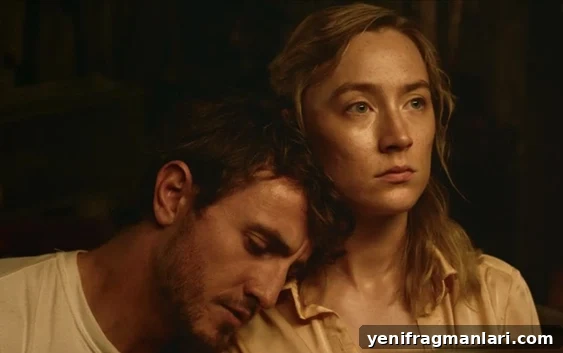
Paul Mescal and Saoirse Ronan headline Foe, an adaptation of a novel by the author of I’m Thinking of Ending Things. Directed by Australian filmmaker Garth Davis, Foe blends science fiction, psychological suspense, and relationship drama. The film evokes elements of Marriage Story, Her, Passengers and several Black Mirror episodes, but its ambitions don’t always pay off.
Set in 2065 in an American Midwest ravaged by climate collapse, Foe imagines a near future where environmental damage and advances in artificial intelligence push humanity to find alternatives off Earth. Routine manual work is increasingly automated by AI, and a new space-station colony offers a means of survival for a select few. The story focuses on a young couple, Hen (Saoirse Ronan) and Junior (Paul Mescal), whose ordinary life is upended when a government official, Terrence (Aaron Pierre), arrives with startling news: Junior has been shortlisted to leave Earth for two years to work on the colony.
Junior reacts with shock and resistance, primarily because leaving would mean separating from Hen. Initially the couple tries to adapt to the uncertainty, but a year later Terrence returns with Junior’s conscription papers confirming he must go. To ease the fear of separation, Terrence proposes an unusual solution: he will stay with Hen to observe them both and help create a perfect AI replica of Junior. That promise to recreate what Junior represents begins to erode the couple’s fragile stability.
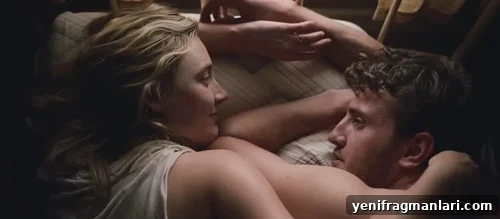
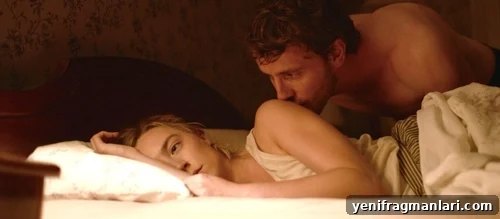
What unfolds is an intimate, tension-driven study of a relationship under scrutiny. The film places Hen and Junior under a microscope, exposing fissures and resentments that simmer beneath their love. There are tender, passionate moments, yet the emotional atmosphere often feels chilled, as if the warmth of the couple’s past has been gradually frozen. The script frequently gives space for silence and small gestures, producing a restrained, claustrophobic portrait of a man terrified of being replaced.
Visually, the film leans into that restraint. Although filmed in Australia, Foe convincingly suggests a desiccated American heartland: dusty, half-abandoned and somewhere between a wasteland and a livable home. Cinematography favors muted palettes, nighttime exteriors, and the stark green glow of Terrence’s headlights whenever he arrives. The minimalist score by Park Jiha further reinforces the atmosphere—eerie, sparing and both futuristic and organic.
Yet the film’s quiet spaces often leave the viewer wanting more clarity or momentum. The pacing is deliberative to the point of frustration at times: mysteries are teased out slowly, and the narrative circles certain ideas without fully resolving them until the final act. When the truth finally emerges, the revelation is effective, but the emotional payoff feels partly unearned because the build-up never entirely convinces.
The performances are a constant strength. Ronan portrays Hen’s simmering dissatisfaction with a controlled, understated sadness that suggests deeper currents of disappointment and endurance. Mescal’s Junior is rawer and angrier—he brings jagged edges and vulnerability in equal measure, a combination that feels familiar from his previous work yet well-suited to this role. Aaron Pierre’s Terrence cuts a quiet authoritative figure; his presence is chilling in its composure, conveyed often through looks rather than exposition.
Given the small cast, dialogue-heavy scenes and concentrated emotional stakes, Foe sometimes reads like a play adapted for the screen. That theatrical quality can be an asset—intimacy and tension translate powerfully in close quarters—but in this case the film occasionally suffers from being too contained, the cinematic medium unable to expand the story’s conceptual ambitions fully.
Foe has the makings of something memorable: striking ideas about identity, reproduction, and what it means to be replaced are threaded through its intimate marital drama. However, the film’s attempt to balance large, speculative concepts with a subdued relationship focus results in an uneven middle ground. It’s compelling while you watch and lingers afterward, prompting thought and conversation, but beyond an initial viewing and perhaps one more rewatch to catch foreshadowing, it may not be a film many will return to often.
Score: 13/24
Rating: 2 out of 5.
Written by Rehana Nurmahi
You can support Rehana Nurmahi at the following profiles:
Twitter – @Han_notsolo
Letterboxd – hana_banana97
Portfolio – Authory