
Return to Seoul (2022)
Director: Davy Chou
Screenwriter: Davy Chou
Starring: Ji-Min Park, Oh Kwang-rok, Guka Han, Kim Sun-young, Yoann Zimmer, Louis-Do de Lencquesaing, Hur Ouk-Sook
Davy Chou’s Return to Seoul is a carefully observed character study that explores identity, displacement, and the fraught process of reconnecting with one’s origins. Inspired by a personal encounter the director witnessed while visiting South Korea—an emotionally charged, often awkward reunion between an adopted woman and her birth family—the film examines how language, culture, and time can widen the divide between people who share blood but not history.
The story follows Freddie (Park Ji-min), a French-Korean woman whose sharp, survival-driven personality has been shaped by years living between two cultures. Freddie is impulsive, fiercely independent, and resistant to emotional vulnerability. She treats relationships casually, preferring to remain on guard: “You do realise that I could erase you from my life at the drop of a hat?” she tells her boyfriend in a moment that lays bare her reluctance to rely on others.
Chou developed the screenplay over three years, drawing on both the real-life meeting that inspired him and his own bicultural experience. The film spans eight years and is divided into three acts plus an epilogue, tracing Freddie’s hesitant journey from a spontaneous return to South Korea to a more complicated reintegration into the city she left behind.
Park Ji-min, a newcomer who arrived in France from Korea as a child, brings authenticity to Freddie. Chou worked closely with her to shape the character, allowing Park’s own perspective on femininity and cross-cultural life to inform Freddie’s choices and interactions. The performance avoids common cinematic clichés about Asian women—Freddie is neither fragile nor defined solely by inward suffering. Instead, she is bold, provocative, and unpredictable, often challenging social conventions and forcing others out of their comfort zones.
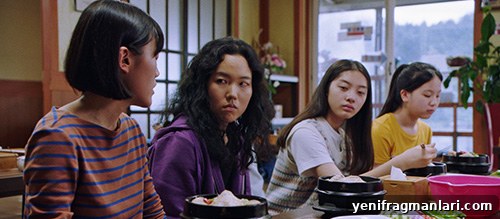
One memorable sequence captures Freddie’s drive to break social restraint: tired of a stilted dinner, she ignites a spontaneous communal celebration in the restaurant, dissolving the formal barriers between strangers and becoming a catalyst for laughter and noise. That scene highlights her desire to belong while simultaneously underscoring her distance from traditional expectations.
Freddie’s attempt to locate her birth family begins with a visit to an adoption agency. Armed with only a childhood photo and a social security number, she eventually finds her father (Oh Kwang-rok). Their reunion is awkward and strained, echoing the director’s original inspiration: conversations quickly turn to relocation, marriage prospects, and physical appearance, leaving Freddie uncomfortable. The language barrier compounds the friction—Tena (Guka Han) often mediates, smoothing or censoring Freddie’s sharp remarks, and Freddie’s father remains withdrawn, burdened by shame and guilt. When he overreaches in a drunken attempt at reconciliation, his intrusive behavior destroys any chance of a meaningful bond.
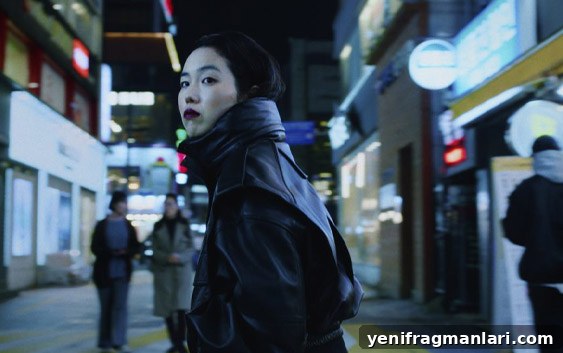
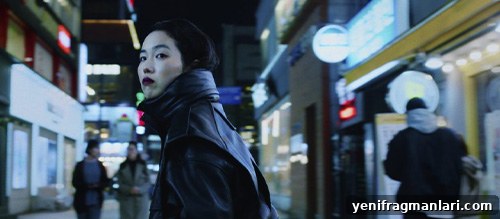
As the film progresses into its second and third acts, Freddie’s relationship with Seoul evolves. Two years after her first return, she becomes more embedded in the city’s nocturnal life. Cinematographer Thomas Favel shifts the visuals from pastel daylight to neon-lit nights, capturing Seoul’s vibrant yet shadowed undercurrent. Freddie embraces that world—slick hair, crimson lipstick, and a hardened sense of belonging—yet the deeper emotional fractures remain unresolved. The film’s structure becomes more episodic in these later sections, and though this yields a slight loss of narrative momentum, the portrait of Freddie’s continuing struggle stays compelling.
Return to Seoul asks what is lost when a child is removed from their homeland and how difficult it is to rebuild ties years later. The movie excels in mood and detail: its urban imagery renders Seoul both intimate and alien, and Park Ji-min’s performance gives Freddie an urgent, restless energy. While the film’s three-act design makes some sections feel self-contained, the collection of powerful performances and nuanced scenes sustains engagement throughout Freddie’s uncertain path.
Ultimately, Freddie stands as a lone survivor shaped by displacement—someone who continues to trust her instincts above all else. Return to Seoul is an understated, resonant exploration of how identity, memory, and belonging intersect for those who move between worlds.
Score: 16/24
Written by Jake Gill