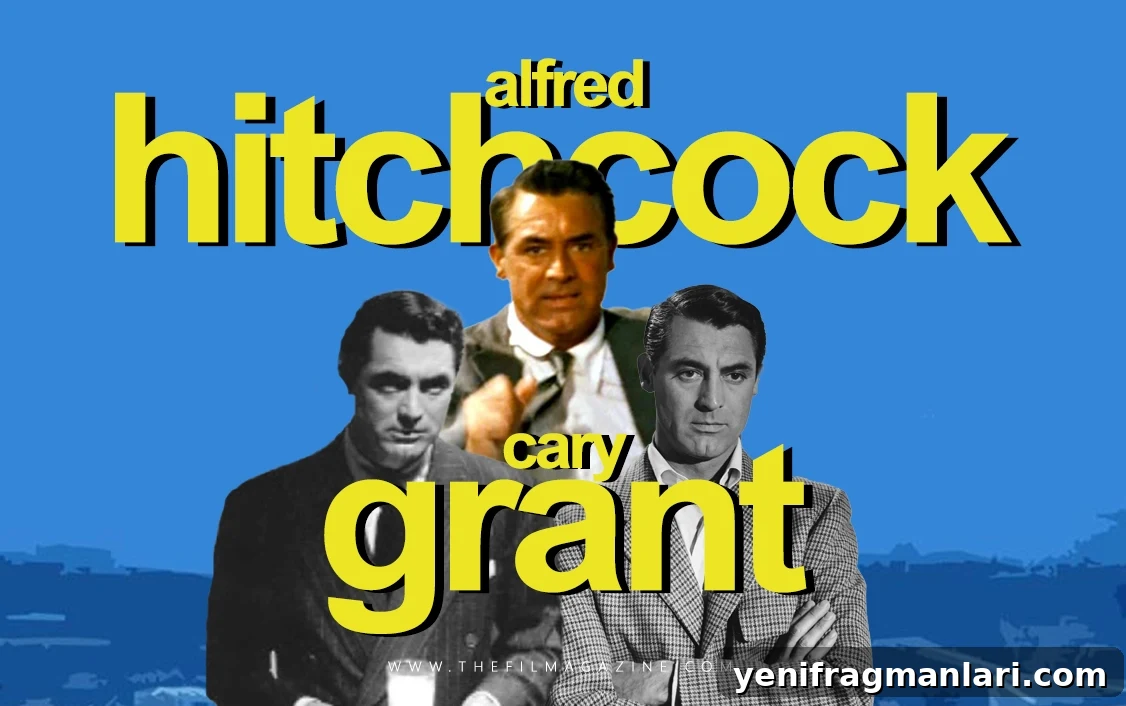
It is almost uncanny to think that Alfred Hitchcock began directing his first film, Number Thirteen, as early as 1923. That first attempt was never completed—only a few scenes were shot before funding ran out. Hitchcock persisted, however, and in 1925 he released his first completed feature, The Pleasure Garden. From that point on he evolved into a director who transformed cinema. He gave Britain its first major sound picture with Blackmail in 1929, repeatedly redefined the thriller, directed Rebecca, the 1940 Best Picture winner, and created Vertigo (1957), a film that decades later topped Sight & Sound’s Best Films poll. His ability to create tension—sometimes with something as simple as a shower scene or a piercing violin motif—made him a household name. Through his television series Alfred Hitchcock Presents, his silhouette became one of the most recognizable in film and television. A top-earning director in his day, Hitchcock’s influence endures.
Across more than 50 feature films, Hitchcock moved from silent to sound, from Britain to Hollywood and back, and often reunited with actors he trusted. His leading women frequently fit the archetype critics call the “Hitchcock Blonde,” with stars such as Tippi Hedren and Grace Kelly appearing in multiple films. He also formed memorable partnerships with male actors, including Peter Lorre and James Stewart—who appeared in Rope, The Man Who Knew Too Much, Rear Window, and Vertigo. Another vital creative partnership was with Cary Grant, who worked with Hitchcock on four feature films and helped define an era of suspense and style.
By 1941 Cary Grant was already a major star, known for his charm and comedic timing. He debuted on screen in 1932 and by the late 1930s his work in Topper, Bringing Up Baby, and The Philadelphia Story established him as the quintessential romantic leading man: debonair, witty, and irresistible. In 1941, Hitchcock cast him in Suspicion, the first of their four collaborations. That same year Grant also delivered a performance in Penny Serenade that earned him his first Academy Award nomination.
Grant’s blend of warmth and rakishness made him an ideal match for Hitchcock’s mix of suspense, romance, and dry humour. Hitchcock often enjoyed practical jokes and a sly comedic touch in his films; many of his most tense moments are leavened by wry, unexpected laughs. Grant’s screen persona—handsome, magnetic, and capable of both mischief and sincerity—made audiences root for his characters even when they appeared to be in moral or physical peril. Together, Hitchcock and Grant created a series of films that showcase their complementary strengths.
This article revisits their four feature collaborations—Suspicion (1941), Notorious (1946), To Catch a Thief (1955), and North by Northwest (1959)—and explores the qualities that made their partnership one of cinema’s great pairings.
Spring: Suspicion (1941)
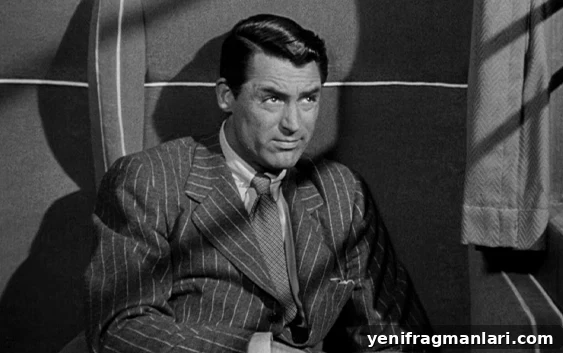
Suspicion adapts Anthony Berkeley Cox’s novel Before the Facts and stars Cary Grant opposite Joan Fontaine, who won an Academy Award for her performance—the only acting Oscar awarded for a Hitchcock-directed film. Fontaine plays Lina McLaidlaw, a naïve young woman who marries the charismatic but troubled Johnny Aysgarth, played by Grant. As Lina gradually discovers Johnny’s gambling, debts, and dishonesty, she begins to fear that he may even be capable of murder—perhaps even willing to kill her to secure her inheritance.
Grant’s star image presented a dilemma for filmmakers: audiences found him so likable and charismatic that making him plausibly murderous posed a challenge. Studio pressure led to a softened ending compared with the source novel, a change Hitchcock resented for the rest of his life. Despite that compromise, Grant gives a compelling, ambiguous performance: his charm becomes a tool that masks darker motives, and Hitchcock stages small, chilling moments to build suspense. A key scene near the film’s climax—Johnny bringing Lina a glass of milk she suspects is poisoned—demonstrates Hitchcock’s mastery of visual storytelling. In a dimly lit room, the director lights the glass so it seems to glow, heightening the sense of danger. Suspicion proved to be an effective first collaboration between director and star, successful even with the studio-mandated alterations.
Summer: Notorious (1946)
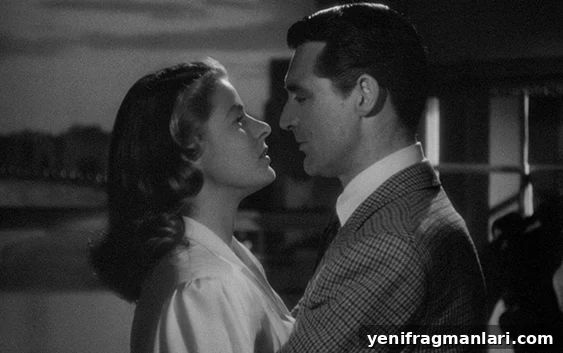
Notorious follows in the shadow of World War II and marks a maturing of Hitchcock’s craft. Starring Ingrid Bergman and Cary Grant, the film centers on Alicia Huberman (Bergman), the daughter of a convicted Nazi collaborator, who is recruited by Grant’s agent, Mr. Devlin, to infiltrate a group of ex-Nazi scientists in Rio de Janeiro. Claude Rains plays the enigmatic Alexander Sebastian, Alicia’s former lover and the film’s romantic antagonist.
Although often classified as a noir thriller, Notorious functions primarily as a love triangle. The emotional tension between Devlin, Sebastian, and Alicia fuels the espionage plot and keeps the audience invested: Devlin’s professional duty continually collides with his personal feelings for Alicia. Grant’s performance shows restraint and depth—a man of duty capable of deep feeling—creating a character who balances romance and moral complexity. One of the film’s most celebrated sequences takes place at a glamorous party where Alicia and Devlin sneak into a wine cellar; Hitchcock’s fluid camera work and precise cross-cutting build suspense brilliantly as servants rush to replenish wine, masking the real danger beneath the surface. Notorious stands as one of Hitchcock’s most sophisticated achievements and one of Grant’s best dramatic turns.
Autumn: To Catch a Thief (1955)
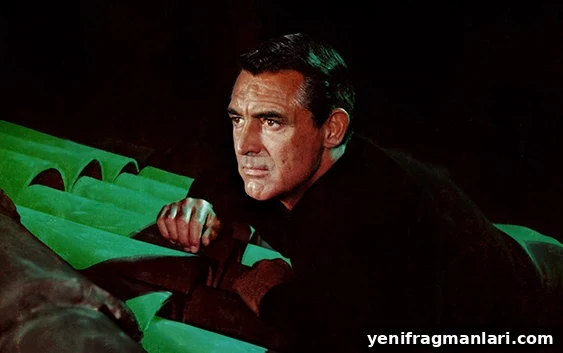
To Catch a Thief reunites Grant with Grace Kelly, who had starred in Rear Window and Dial M for Murder. Set on the sunlit French Riviera, Grant plays John Robie, a retired jewel thief known as “the Cat.” When a new string of jewelry thefts mimics Robie’s old methods, he must evade the police, clear his name, and protect the wealthy social circle that includes Kelly’s Francie.
This film luxuriates in style and color: sweeping helicopter shots, luminous Vistavision cinematography, and elegant costume and production design create an intoxicating visual experience. Unlike the darker tone of Notorious, To Catch a Thief is playful and romantic, a caper with genuine suspense but delivered with a light, sophisticated touch. The chemistry between Grant and Kelly is a major attraction—flirtatious, humorous, and tinged with danger. The film’s leisurely glamour and memorable finale make it a joyful, stylish entry in both men’s filmographies and a precursor in tone and spectacle to later Hitchcock adventures.
Winter: North by Northwest (1959)
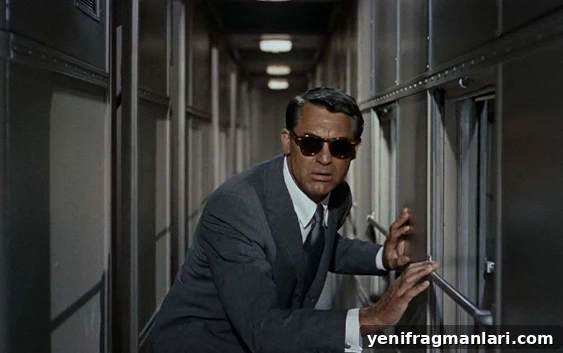
North by Northwest is often cited as Hitchcock’s most exuberant and thoroughly entertaining film, and Grant’s final collaboration with the director. The film famously inspired Hitchcock’s quip that he had already made “Dr. No” when he made this picture. The plot casts Grant as Roger Thornhill, an advertising executive mistaken for a government agent named George Kaplin. Framed for murder, Thornhill is pursued across the country, entangled with a mysterious woman, assaulted by a crop duster in an isolated field, and ultimately chased across Mount Rushmore in a climactic, high-stakes showdown.
North by Northwest combines action, comedy, romance, and suspense, and it may be Hitchcock’s wittiest film. The script brims with sly jokes and visual gags—most famously the suggestive cut from a couple getting into bed to a train entering a tunnel. Grant’s suave performance unites elements from his earlier Hitchcock roles: the rakishness of Johnny in Suspicion, the world-weary duty of Devlin in Notorious, and the adventurous criminality hinted at in To Catch a Thief all resonate in Thornhill. The film’s confident blend of spectacle and charm makes it a fitting capstone to their collaboration.
Cary Grant and Alfred Hitchcock created four films that remain cornerstones of classic cinema. Their partnership combined Grant’s effortless charisma with Hitchcock’s precise storytelling and visual inventiveness, producing movies that entertain while showcasing craft and invention. Students and lovers of film will find much to study and enjoy in Suspicion, Notorious, To Catch a Thief, and North by Northwest. These works stand as timeless examples of collaboration between a director who mastered suspense and an actor who embodied the golden-age leading man.