
Few films have shaped the cultural imagination as quietly and deeply as Blade Runner. When it opened in 1982 it received mixed reviews and modest box office returns, yet over time it has seeped into the cultural subconscious. Ridley Scott’s proto-cyberpunk neo-noir—following Harrison Ford’s Rick Deckard, a bounty hunter in 2019 assigned to track down four rogue humanoid replicants—faced a slow road to recognition but ultimately became one of the most influential science-fiction films of its era.
Over the years the film has appeared in multiple versions—the original theatrical cut, the Director’s Cut, and the Final Cut—bringing audiences closer to Scott’s vision of Philip K. Dick’s Do Androids Dream of Electric Sheep?. The neon towers, Vangelis’s atmospheric synth score, Syd Mead’s design work, and the perpetual fog and rain create an unforgettable urban dreamscape. In 2017 Denis Villeneuve returned to that world with Blade Runner 2049, a sequel that earned Roger Deakins his first cinematography Oscar and won for visual effects. Like its predecessor, it initially underperformed at the box office but has since been hailed as one of the standout films of the 2010s.
Blade Runner is rich with iconic visuals, memorable lines, and subtle details that reinforce its themes and endure across generations. This Movie List highlights ten of the film’s best moments—scenes that define its style, questions, and emotional power.
Follow @thefilmagazine on social platforms for more film coverage.
10. A Hard Copy
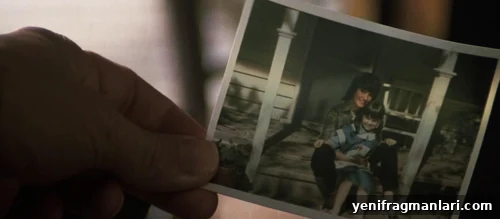
One early moment that reveals how the film imagines near-future technology is Deckard asking a computer to examine a photograph, instructing it to pan, zoom and rotate until a hidden tattoo comes into view. The effect—both in sound and in the Vangelis-recorded audio that made it onto the soundtrack—underscores Blade Runner’s postmodern concerns: the line between the real and the artificial is fluid. A single photographic perspective no longer guarantees the truth; technology can reframe memory, perception and identity. This small piece of detective work advances the plot while reinforcing the film’s deeper themes about shifting viewpoints and the instability of apparent binaries.
Recommended reading: ‘Blade Runner’ at 40 – Review
9. Gotta Shoot Straight
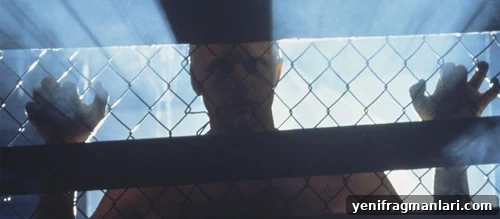
The final chase between Deckard and Roy Batty is an unusually restrained sequence for a film that might otherwise be mistaken for an action picture. Set in the decaying Bradbury Building, the pursuit favors mood and character over spectacle. Ford says little; Batty’s presence is enormous—part predator, part tragic figure—as he pursues Deckard through dark, dripping corridors. The sequence avoids big shootouts in favor of psychological pressure and physical exhaustion. Batty’s erratic, almost Christ-like determination to keep going—piercing his hand to maintain motion—conveys rage, sorrow and acceptance as he approaches his own end. Ultimately, Batty’s decision to save Deckard becomes an act that reframes both characters, making their final rooftop encounter feel like a modern, Shakespearean reckoning.
8. Spinner Flight
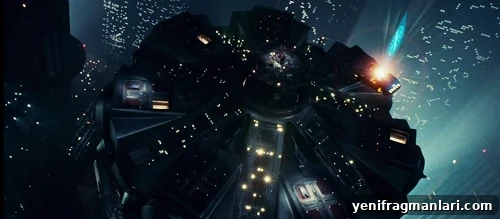
Blade Runner is often described as deliberate or slow, and sequences like the spinner flight to the police station explain why. Ridley Scott pauses to showcase his future city: practical effects, layered miniatures and careful compositing create a cityscape that remains startling decades later. The spinner’s descent, the interior lighting, and Vangelis’s score combine to create a moment of pure cinematic wonder. That evocative city design has gone on to define cyberpunk cityscapes and influenced architects, filmmakers and visual artists for generations.
Recommended reading: Six Decades of Steven Spielberg
7. What’s a Tortoise?
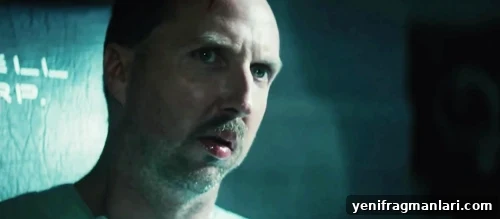
Inside the Tyrell Corporation, Deckard administers a Voight-Kampff test to screen for emotional responses. The questioning of Leon—starting with innocuous lines about animals and escalating into existential territory—establishes the film’s neo-noir atmosphere and sets up its central philosophical tension. When Leon asks what a tortoise is, the answer offered conflates biological distinctions; this subtle confusion introduces a recurring idea: things that differ can sometimes be indistinguishable. That theme—blurred boundaries between human and replicant—permeates the story. The scene’s descent into violence after probing questions about motherhood and murder drives home the moral ambiguity at Blade Runner’s core: birth and death are entwined, and identity is fragile.
6. Crashing Glass
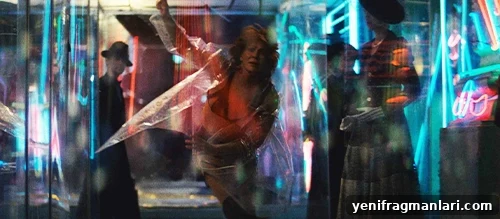
Midway through the film Deckard finally confronts Zhora, one of the replicants, in a tense chase that culminates in a shower of broken glass and neon. The sequence is striking for its beauty: slow motion punctuated by gunfire and shards of glass reflecting city lights. Scott frames Zhora’s fall with vivid color and texture, turning a moment of violence into a haunting image about the city’s indifference. The urban environment that created her also consumes her—Blade Runner’s city judges and disposes of those it deems expendable.
5. Hades Landscape
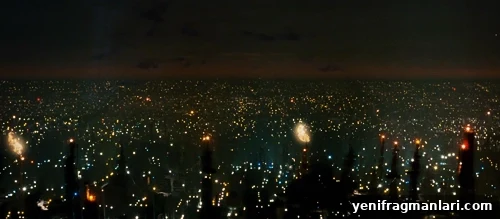
The film opens with a panoramic, industrial vista—towers of machinery, fire and smoke—an expanse the creative team dubbed the Hades Landscape. It’s a vision of urban hell: mass industrialization rendered as a scorched, mechanical underworld. A fleeting image, mirrored in the curvature of an eyeball, the Hades Landscape sets the tone for Blade Runner’s world-building. It represents the cost of progress and frames the city as an oppressive, consuming force that shapes and ultimately diminishes life.
4. Memories of Green

In later cuts of the film Ridley Scott restored a unicorn dream sequence and paired it with Gaff’s origami unicorn. Together these images imply that Deckard might himself be a replicant with implanted memories—dramatically shifting how viewers interpret his character and the film’s moral universe. The unicorn, an unreal creature born of fantasy, becomes a symbol for manufactured memory and identity. Introducing the dream sequence in the Director’s and Final Cuts added a new layer of complexity: if Deckard’s memories are contrived, then the film becomes less about a detective hunting monsters and more about a man confronting the possibility that his whole life might be constructed.
Recommended reading: More Human Than Human: An Introduction to Cyberpunk
3. To Meet One’s Maker
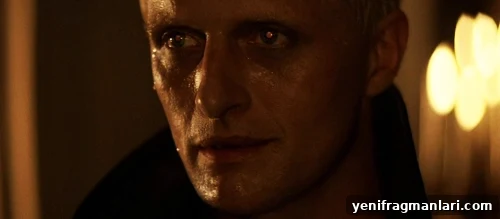
Roy Batty’s confrontation with Eldon Tyrell reads like a modern Frankenstein moment: creation confronting creator. Batty proves himself intellectually equal to Tyrell and then demands more life. Tyrell’s answer—“We made you as good as we could, but not to last”—is devastating. Batty’s anger at being denied a longer span of existence humanizes him and makes his rage painfully understandable. The scene is theological and literary, an exploration of mortality, hubris, and the cruelty of engineered limitations. Batty’s plea—“I want more life, Father”—is at once desperate and profoundly human.
2. Blush Response
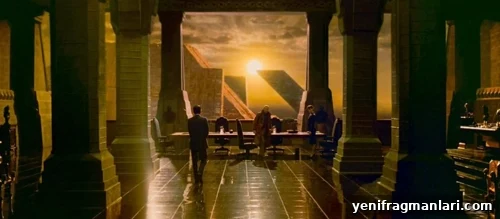
Deckard’s second administration of the Voight-Kampff test, this time performed on Rachael at Tyrell’s request, is one of the film’s most memorable exchanges. Rachael discovers she possesses implanted memories—fictional childhood recollections meant to stabilize her emotional responses—forcing a crisis of identity: a machine that believes it might be human. This scene crystallizes Blade Runner’s central question: what defines humanity when technology blurs the line between organic and artificial? The dialogue, the shimmering light on Tyrell’s golden walls, and the quiet revelation about memory and selfhood make this a standout moment.
1. Tears in Rain
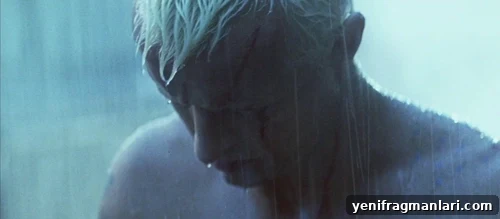
Roy Batty’s final moments remain cinema’s most affecting meditation on memory, mortality and compassion. After pursuing Deckard to the rooftop and holding his life in his hands, Batty chooses mercy. Shirtless, rain-soaked and clutching a white dove, Rutger Hauer delivers a short, devastating monologue that distills the film’s deepest truths. His closing lines—about moments and memories that will be lost “like tears in rain”—transform the film from a futuristic thriller into an urgent human story about the desire for more time and the grief of inevitable endings.
In those final beats, Blade Runner reveals its true focus: not technology or spectacle, but the simple, universal longing to live and to be remembered. Batty’s act of saving Deckard reframes the narrative: the film is less about the hunter and more about the hunted, less about policing life than about recognizing the value of it. A moment shared between two beings—human, machine, or somewhere between—becomes one of the most human moments in cinematic history.
Recommended reading: Ridley Scott Films Ranked
Which Blade Runner moments resonate with you? Do you prefer the Final Cut’s ambiguity or the original theatrical version’s voiceover? Share your thoughts and favorites to explore how this film continues to spark conversation about identity, memory and what it means to be human.