
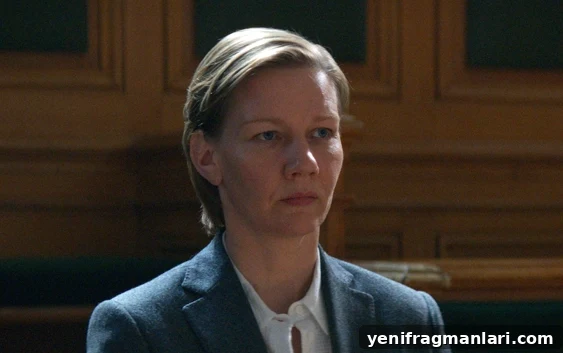
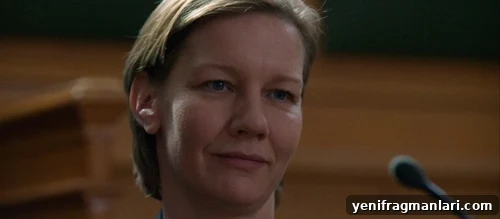
Anatomy of a Fall (2023)
Director: Justine Triet
Screenwriters: Justine Triet, Arthur Harari
Starring: Sandra Hüller, Samuel Theis, Milo Machado Graner, Swann Arlaud, Antoine Reinartz
Justine Triet’s Oscar-nominated courtroom drama, Anatomy of a Fall, dissects entrenched systemic misogyny in a multilayered, multilingual film. It is a deliberately wordy picture that centers on character, language, and perspective, and it contains one of the most compelling performances of 2023.
Triet, a French director and co-writer, made history by winning the Cannes Palme d’Or, becoming only the third woman to claim that prize. She tells much of this story in English, a language that is not her first, yet the film’s delivery is precise and assured. The cast is primarily French, but the lead is Sandra Hüller, a German actress whose striking, exact performance anchors the entire film. Every inflection, pause, and cadence matters in this tightly constructed drama about a woman who must defend herself against a charge of murder.
Triet treats the screenplay with forensic care: sentences are examined like evidence, small details are scrutinized like traces at a crime scene, and every fragment of the case is laid out to be analyzed and judged. The film asks the audience to reflect on belief and judgment, and it turns our appetite for true-crime spectacle back on us. Rather than rewarding viewers for identifying the culprit, Triet interrogates why we are drawn into these narratives and how our cultural biases—especially gendered biases—shape what we see and decide.
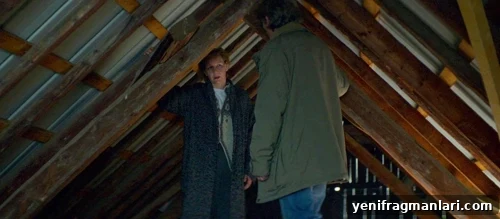
Sandra Hüller, nominated for Leading Actress at major awards for this role, delivers a performance of rare intensity and nuance. Her character—also named Sandra—is complex in every scene: fierce and fragile, commanding and wounded, evasive and deeply human. Triet’s writing gives Hüller rich material, and Hüller inhabits it so fully that a single scene can feel like the core of several films. A prolonged, intimate argument between Sandra and her husband stands out as one of the year’s most powerful exchanges; Hüller’s range and commitment render the moment unbearably real and true to life.
The film positions Hüller’s character as singular and isolated: a German woman among French interlocutors, often framed alone in a cold house surrounded by snow. That physical and linguistic separation amplifies the scrutiny she faces. As the story progresses, the audience is led deeper into her private life, and then forced to confront its own readiness to judge. Triet deliberately exposes how everyday sexism and cultural prejudice can endanger women regardless of their social standing—whether they are famous or obscure, rich or modest.
Visually, the film is carefully composed. The cinematography and shot construction are purposeful, and the score supports the narrative tone without overwhelming it. Still, the film’s chief energy comes from its script, direction, and performances rather than flashy visual showmanship. Triet uses genre convention—a death, an investigation, a trial—to probe larger questions about exposure, privacy, and public judgment. Instead of delivering a conventional whodunnit, the film interrogates why we put people on display for our curiosity and entertainment.
This is thoughtful, provocative filmmaking from a director who places women’s experiences at the center of a broader conversation about power and perception. It may not be as stylistically ostentatious as some contemporary blockbusters, nor as relentless as other prestige dramas, but it is an artful, layered work with a clear moral purpose. The film challenges viewers to examine how quickly they form verdicts and how those judgments reflect deeper cultural assumptions.
Score: 20/24