
The Wonderful Story of Henry Sugar (2023)
Director: Wes Anderson
Screenwriter: Wes Anderson
Starring: Ralph Fiennes, Benedict Cumberbatch, Dev Patel, Richard Ayoade, Ben Kingsley
Wes Anderson’s adaptation of Roald Dahl’s short story “The Wonderful Story of Henry Sugar” arrives on Netflix as a polished, theatrical short film. Clocking in at around 40 minutes, this piece blends Anderson’s unmistakable visual style with Dahl’s sly, slightly dark humor, producing a work that feels like a staged reading brought vividly to life.
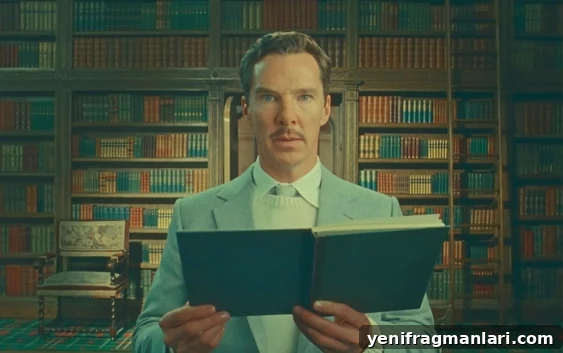
The film follows the titular Henry Sugar (Benedict Cumberbatch), a wealthy, self-absorbed man who discovers a way to see through objects. What begins as a selfish pursuit for fortune evolves into a moral journey: after learning to use his new ability, Henry ultimately decides to use it for the greater good. Anderson stages this transformation with playful artifice, presenting performers who at times address the camera directly, removing and changing costumes in view, and moving between set pieces as if curtains were rising and falling on a theatre stage.
Anderson treats Dahl’s text with reverence, often preserving the story’s original voice by having actors read sections almost as if they were narrating from the page. This approach emphasizes language and rhythm, and it fits the short’s format: objects and sets rotate into frame, actors step in and out of roles, and the film’s deliberate theatricality becomes its defining charm. The result is less a conventional cinematic adaptation and more an experiment in storytelling that blends film and stagecraft.
Performances are uniformly committed. Cumberbatch’s Henry moves convincingly from arrogant playboy to contemplative benefactor. Dev Patel appears as Dr. Chatterjee, a storyteller within the story whose account of mystical practices provides the crucial method Henry learns to master. Ralph Fiennes plays Roald Dahl himself in a framing device, and also takes on another small role, while Ben Kingsley and Richard Ayoade appear in multiple parts. This rotation of performers reinforces the theatrical conceit and showcases Anderson’s preference for ensemble interplay and precise, stylized acting.
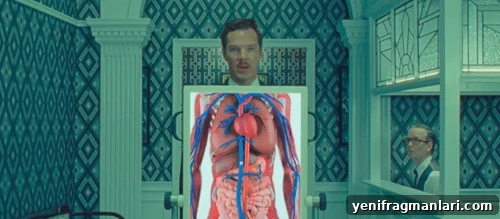
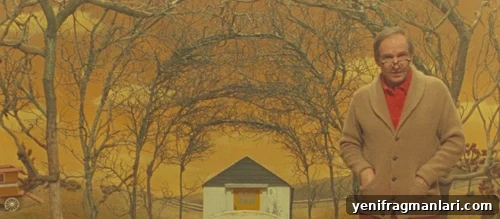
Technically, the short is a high-quality production. The sets are meticulously designed and often whimsical, evoking Dahl’s oddball imagination while remaining unmistakably Andersonian: carefully composed frames, symmetrical compositions, and pastel palettes. Makeup and costume design are used playfully, with actors repeatedly changing wigs and garments on camera, underlining the performative aspect of identity in the story. Anderson’s editing choices—brief, rhythmic cuts and framed transitions—help maintain momentum and highlight emotional beats, while also making the piece feel like a succession of staged vignettes rather than a single continuous narrative.
There’s an argument to be made that a film like this exists because of the combined reputations involved. Netflix’s investment and willingness to back distinct directors has enabled filmmakers like Anderson to experiment in formats that might not be commercially viable elsewhere. The short’s cast and production values reflect that backing: it’s a high-budget short with name talent and meticulous craft. That said, the film doesn’t aim for blockbuster spectacle; instead, it prioritizes fidelity to Dahl’s tone and Anderson’s aesthetic sensibilities.
The film won’t convert viewers who dislike Anderson’s signature style—its artifice and stylization are front and center—but it will satisfy fans of both Anderson and Dahl. Those seeking a straightforward, deeply analytical take on Dahl’s themes won’t find it here; the short prefers to enchant and amuse rather than dissect. Its moral core is simple and sincere: a selfish man learns to put his abilities to benevolent ends. That tidy ethical turn fits Dahl’s tradition of mixing mischief with moral insight, while Anderson’s staging highlights the tale’s theatrical and fantastical elements.
As a contender for awards, the film benefits from the strength of its collaborators: Dahl’s enduring reputation as a storyteller, Anderson’s distinctive direction, and a cast of established actors. Whether it will take home major awards remains uncertain, but as a piece of creative filmmaking it demonstrates the value of supporting auteur-driven short work. For viewers with a Netflix subscription and about forty minutes to spare, this is an elegant, charming watch—carefully produced, cleverly staged, and emotionally satisfying in its small, deliberate way.
Score: 18/24
Rating: 3 out of 5
Related reading suggestion: Wes Anderson movies ranked (recommended for fans interested in exploring the director’s other work)