

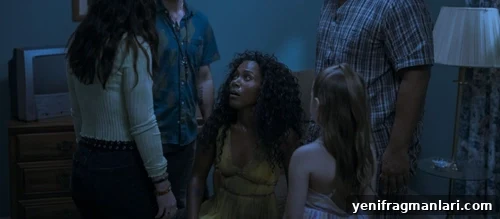
Imaginary (2024)
Director: Jeff Wadlow
Screenwriters: Jeff Wadlow, Greg Erb, Jason Oremland
Starring: DeWanda Wise, Tom Payne, Betty Buckley, Taegen Burns, Pyper Braun, Matthew Sato, Veronica Falcón
It’s wise not to judge a film before watching it. Jeff Wadlow’s previous Netflix effort, The Curse of Bridge Hollow, wasn’t a masterpiece but delivered a cozy, family-friendly Halloween mood. Likewise, Blumhouse—one of the production companies behind Imaginary—has a mixed record: many forgettable releases alongside some striking successes. Like other production houses that churn out low-budget genre work, Blumhouse occasionally produces something surprising; art and horror both retain the ability to surprise.
But once the lights dim and the story begins—with a family moving into the stepmother’s childhood home, a house she fled at the age of five and can barely recall—suspicions arise. The youngest stepdaughter, Alice, discovers a big stuffed bear in the basement and names it Chauncey. Before the opening quarter hour is over, complete with a dreamlike cold open, it becomes clear this is a particular kind of studio horror: familiar, manufactured, and heavy on convention.
That’s not to say Imaginary is without merit. The central trio—Jessica (DeWanda Wise) and her stepdaughters Alice and Taylor (Taegen Burns and Pyper Braun, respectively)—deliver solid moments when the script permits nuance rather than relying on clichés. Pyper Braun, especially for someone so young, shows a commendable range. The film’s final otherworldly location contains a few striking design choices and shots that recall the winding, surreal spaces of classic fantasy-horror movies. Those sequences hint at the potential for memorable visuals.
Unfortunately, much of that potential is smothered by a reluctance to commit to the strange or surreal. The film largely flattens its fantastic elements into a scaffolding for routine jump scares and familiar beats instead of exploring them. The environments could have been used to evoke true unease or wonder, but they serve mostly as backdrop for predictable shocks. The result is a film that often feels content to move from one genre check-box to another without taking creative risks.
The central problem with Imaginary is ironic given its title: a lack of imagination. The movie assembles recognizable parts from other films into a patchwork that rarely offers anything new. Throughout the runtime, echoes of recent hits and well-known genre works are apparent. Story beats, visual motifs, and tonal shifts will likely feel derivative to viewers familiar with contemporary horror. The score, too, leans on familiar cues that at times feel overly referential, signaling uncertainty about original direction. When a film resorts to such obvious musical callbacks, it reads as a lack of confidence in its own identity.
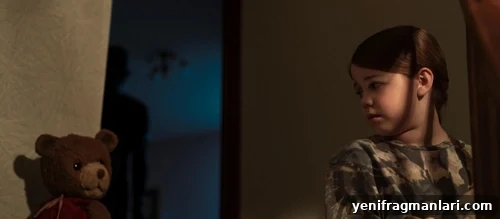
Even if you’re not steeped in recent horror releases, many of Imaginary’s beats are easy to anticipate. Twists reveal themselves long before their formal unveiling, and some intended surprises feel unmoored because the narrative doesn’t provide adequate clues or motivation. A key reveal in the latter portion of the film lands with less impact than it promises on paper; it collapses under scrutiny, proving less satisfying once you consider its internal logic.
The dialogue is another major shortcoming. Reworking familiar ideas can be acceptable when characters speak believably and scenes allow actors to create honest moments. Sadly, some of the film’s lines are stilted and expository, stripping scenes of energy. A seasoned performer like Betty Buckley, who has a long history in the genre, is given material that often reads as lifeless exposition rather than meaningful character work. The blame lies with the script rather than the performers; these actors do what they can with limited and often cringe-inducing dialogue.
The most painful aspect of Imaginary is watching a production where craft and talent strain against a script that feels carelessly assembled. Costumes, sets, and several performances suggest creators eager to explore interesting territory, but the pacing, scene construction, and writing curtail those impulses. Direction is uneven: some sequences avoid cheap shocks, yet too many rely on poor lighting or murky framing so that viewers struggle to understand whether they’re witnessing something supernatural or merely a shadow. When a film’s scares depend on obscurity rather than invention, it becomes harder to engage with the intended dread.
In short, Imaginary shows flashes of promise—capable actors, moments of appealing production design, and an atmosphere that could have been richer—but it is undermined by derivative plotting, awkward dialogue, and hesitant execution. Viewers seeking a fresh take on haunted-house tropes will likely be disappointed; those looking for a comfortably familiar studio horror experience may find enough here to pass the time, though not without frustration.
Score: 7/24
Rating: 1 out of 5