


Dune: Part Two (2024)
Director: Denis Villeneuve
Screenwriters: Denis Villeneuve, Jon Spaihts
Starring: Timothée Chalamet, Zendaya, Rebecca Ferguson, Josh Brolin, Austin Butler, Florence Pugh, Dave Bautista, Christopher Walken, Léa Seydoux, Souheila Yacoub, Stellan Skarsgård, Charlotte Rampling, Javier Bardem
Overview
In Dune: Part Two, Paul Atreides (Timothée Chalamet) and his mother Jessica (Rebecca Ferguson) are taken in by the Fremen after the devastating fall of House Atreides depicted in the first film. The destruction of their house and the death of Duke Leto leave Paul and Jessica in exile on Arrakis. As Paul wrestles with the weight of Bene Gesserit prophecy and his growing role among the Fremen, he vows vengeance against the Harkonnens and the imperial powers that enabled them.
“Your father didn’t believe in revenge,” Jessica tells him.
“I do,” Paul replies.
Tone and Themes
Denis Villeneuve’s continuation is a darker, more deliberate chapter: less about clear-cut heroes and more about the corrosive effects of prophecy, power, and myth. Adapted from the second half of Frank Herbert’s novel, the film expands the scope established in the first installment and leans heavily into mood and atmosphere. Its visual and sound design are exceptional, producing immersive environments that range from the harsh ochre deserts of Arrakis to the industrial bleakness of Giedi Prime. Yet that focus on grandeur sometimes comes at the cost of intimate character detail, leaving emotional beats less examined than they might be.
Plot and New Characters
The story resumes immediately where the previous film left off. With House Atreides shattered, Paul assumes a leadership role among the Fremen and orchestrates sabotage against the Harkonnen spice operations. He also begins a relationship with Chani (Zendaya), the warrior he foresaw in visions. Their bond is central to the narrative but is condensed in the film compared with the novel’s broader timeline.
The sequel introduces important figures who influence the balance of power: the Emperor (Christopher Walken), Princess Irulan (Florence Pugh), the Baron’s violent nephew Feyd-Rautha (Austin Butler), and Margot Fenring (Léa Seydoux), another Bene Gesserit operative. These additions expand the political landscape and raise the stakes beyond Arrakis.
Performances
Zendaya brings a fierce, self-possessed presence to Chani, giving the character agency and moral clarity often absent in adaptations. Her Chani is a warrior and a conscience, unafraid to challenge destiny. Timothée Chalamet’s Paul remains quieter and more inward, often portrayed as resigned to the unfolding path he fears. While he is more active in this film than in the first, some of his motivations feel underexplored; moments that could reveal internal conflict are sometimes sacrificed for spectacle.
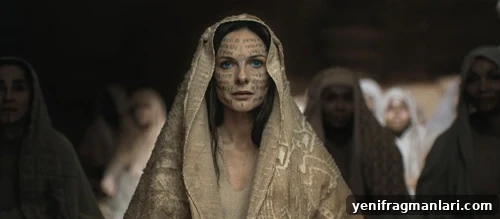
Austin Butler commits fully to the physical intensity of Feyd-Rautha, playing the character’s volatility and menace with convincing ferocity. Rebecca Ferguson strengthens Jessica’s transformation into a dangerous, ritualized figure, balancing maternal concern and political calculation. Other cast members, including Javier Bardem as Stilgar, help convey the fanaticism and devotion that complicate Paul’s leadership.
Strengths
The film’s production design, cinematography, and costumes are outstanding, amplifying the original film’s oppressive tone. Battle set pieces and large-scale sequences are staged with precision and clarity, delivering visceral cinematic moments. Villeneuve’s decision to emphasize the tragic, inevitable nature of the prophecy gives the film a tragic weight that asks the viewer to confront our own cultural hunger for saviors and myths.
Weaknesses
By prioritizing mood and spectacle, the film sometimes sidelines quieter character development. Paul and Chani’s romance, compressed compared to the novel, lacks enough tender, revealing moments to fully anchor the emotional core. Princess Irulan, while present, is not given enough screen time here to leave a lasting impression despite her importance in later events. These trade-offs make several characters feel like strategic pieces on a board rather than fully rounded people.
Interpretation and Impact
Dune: Part Two reads as a subversion of the traditional hero’s journey. Villeneuve highlights how prophecy, manipulation, and systemic oppression can masquerade as destiny, producing followers who are willing to believe in absolute leaders. The film frames Paul’s ascent as both tragic and terrifying: the better angels of liberation are shadowed by the violence such movements can unleash.
Technically and visually, the film establishes itself among modern science-fiction achievements. It carries the sweep of a major blockbuster while maintaining a brooding, contemplative core. Even where it falters in emotional intimacy, its ambition and craft command attention.
Conclusion
Dune: Part Two is a bold continuation that deepens the universe Denis Villeneuve created in the first film. It is immersive, often stunning, and thematically rich—though at times it sacrifices emotional clarity for scale and atmosphere. The result is a monumental, if sometimes distant, cinematic experience that both honors Frank Herbert’s darker questions and cements Villeneuve’s adaptation as a major entry in contemporary sci-fi cinema.
Score: 21/24
⭐⭐⭐⭐
Rating: 4 out of 5.