The Beast (2023)
Director: Bertrand Bonello
Screenwriter: Bertrand Bonello
Starring: Léa Seydoux, George MacKay
Bertrand Bonello’s The Beast arrived at the 2024 Glasgow Film Festival with high expectations: a star-studded cast led by Léa Seydoux and George MacKay, a bold premise that blends period romance with near-future science fiction, and a runtime that promises an immersive experience. Loosely inspired by Henry James’s “The Beast in the Jungle,” the film spans three separate eras—1910, 2014, and 2044—exploring obsession, reincarnation, and a society that seeks to numb emotional life. This review examines how Bonello’s ambitious structure, the central performances, and the film’s visual design succeed and where they falter.
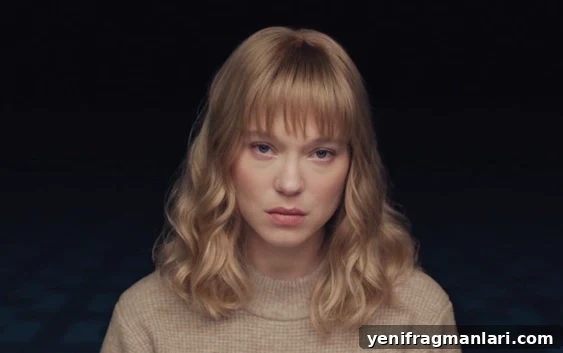
Set most prominently in 2044, The Beast imagines a future in which emotion is treated as a biological flaw. Seydoux’s character, Gabrielle, undergoes a radical procedure intended to rid her DNA of feelings. The process, however, triggers vivid regressions into past lives where she repeatedly encounters Louis, played in various incarnations by George MacKay. Those recurring connections form the emotional core of the film: a love story that mutates across decades, sometimes tender and repressed, other times violent and dangerous.
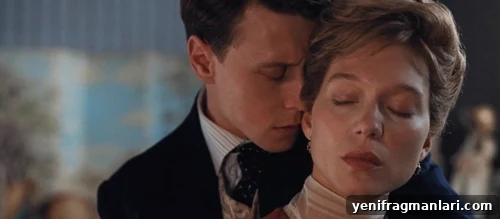
Bonello divides the narrative across three distinct sections. The 1910 segment leans into period drama, portraying a restrained, intimate romance between Gabrielle and Louis. The production design and costumes in this section are sumptuous, and the chemistry between Seydoux and MacKay is palpable. A single, quiet scene in which the two characters hold hands encapsulates the restraint and longing that define this strand of the film. This early sequence stands out as the film’s emotional high point, aided by meticulous art direction and a classical approach to pacing and composition.
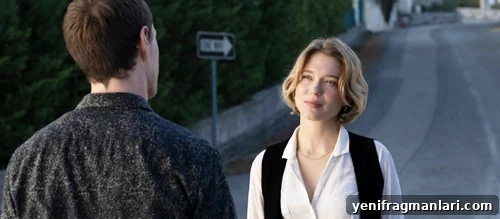
In stark contrast, the 2014 segment adopts a modern, handheld aesthetic. MacKay’s 2014 incarnation, Louis Lewinsky, is shown as a volatile, Elliot Rodger–inspired figure stalking Seydoux’s character through Los Angeles, a portrayal that shifts the film into psychological thriller territory. This section is raw and unsettling by design, and MacKay’s performance is arresting: he disappears into the role with a physical intensity that propels the film forward whenever the narrative leans on him.
The 2044 timeline brings the film into speculative science fiction. Gabrielle’s attempts to purge emotion via DNA editing raise ethical and existential questions about identity and the cost of emotional detachment. Visually, the future world is muted and sterile—a convincing contrast to the lush 1910 sequences. However, the repetition of Gabrielle across lifetimes, while thematically coherent, results in a central performance that feels comparatively static. Where MacKay transforms from incarnation to incarnation, Seydoux’s Gabrielle remains emotionally similar throughout, which undercuts the dramatic shifts the screenplay attempts to stage between eras.
Bonello is skilled at creating striking individual scenes and atmosphere. The film’s strength lies in its atmospheric contrasts, production values, and one of the year’s most compelling lead turns from George MacKay. The director’s willingness to blend genres—period romance, contemporary psychological thriller, and near-future sci-fi—creates an intriguing structure that rewards close attention and repeat viewings. For viewers who appreciate bold, unconventional storytelling and strong central performances, the film offers much to admire.
Yet the film’s ambition also exposes its weaknesses. The narrative jumps between eras rather than sequencing them, which can fragment emotional continuity. The deliberate stylistic resets between timelines sometimes feel like full stops rather than chapter breaks, weakening the sense that these lives are truly continuous iterations of the same souls. The connective tissue that should bind Gabrielle’s experiences—emotional evolution or decisive thematic through-lines—remains thin at points, leaving the audience more aware of structure than of an organic character arc.
There are also moments of heavy-handed symbolism and foreshadowing that read as red herrings rather than meaningful motifs. These elements, combined with an uneven emotional trajectory for the central character, make the film feel less cohesive than its premise promises. Still, when the film works—especially in its 1910 sequences and in MacKay’s unnerving 2014 performance—it delivers memorable cinematic moments that demonstrate Bonello’s gifts as a visual storyteller.
In summary, The Beast is an ambitious and visually arresting film that blends romance, obsession, and speculative ideas about emotion and identity. It excels in production design and in George MacKay’s chameleonic performances, while its structural experimentation and inconsistent emotional through-line hold it back from fully realizing its promise. For festival audiences and fans of challenging cinema, the film is worth seeing, though it may frustrate those seeking a tighter narrative payoff.
Score: 12/24
Rating: 2 out of 5.