
Kong: Skull Island (2017)
Director: Jordan Vogt-Roberts
Screenwriters: Dan Gilroy, Max Borenstein, Derek Connolly
Starring: Tom Hiddleston, Samuel L. Jackson, Brie Larson, John C. Reilly, John Goodman, Jing Tian, Toby Kebbell, Thomas Mann
After Legendary Pictures revived Godzilla in 2014, the studio quickly followed up by reintroducing another titan of the monster cinema: King Kong. The intent was to fold Kong into a modern shared monster universe, a logical extension of the studio’s ambitions. While Peter Jackson’s 2005 Kong remains a well-regarded take, the contemporary trend toward frequent reboots and fresh interpretations made another Kong film unsurprising. Audiences want spectacle and familiar icons given new life, and Kong: Skull Island aimed to deliver exactly that.
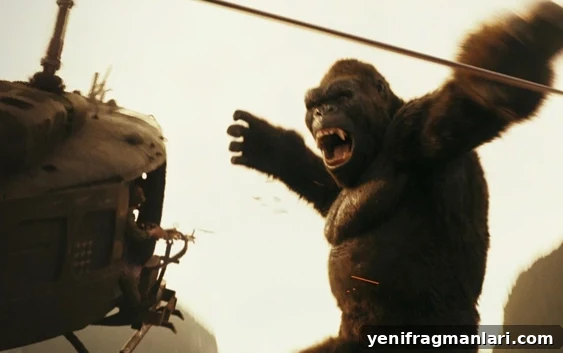
The film assembles a large cast to mount an expedition to the mysterious Skull Island—officially for geological study, but unofficially to test a “Hollow Earth” theory that posits vast subterranean networks and hidden ecosystems. The narrative sends helicopters and teams into the island’s dense environment where they quickly encounter deadly, unknown life forms. One of these creatures, a colossal ape who rules the island, violently defends its domain by tearing the helicopters from the sky, setting the tone for an escalating series of monster confrontations.
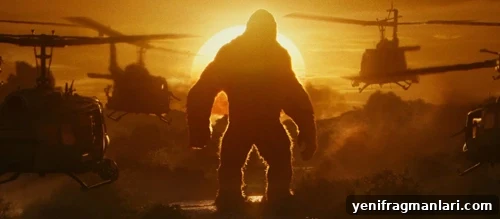
There is effort and craft visible in the film’s production choices. The creative team leans into well-known influences—especially Francis Ford Coppola’s Apocalypse Now—with visual callbacks like colored smoke and helicopter formations moving against the sun. Those references are used to frame the arrival on Skull Island and to create an ominous, cinematic atmosphere. The best sequence in the film is Kong’s initial confrontation with the air assault: a prolonged, tightly directed set-piece that captures panic and destruction, including a memorable sequence that stays inside one doomed aircraft as it hurtles toward the jungle and the inevitable explosion.
Where the movie falters is in its character work. The large ensemble falls into familiar blockbuster archetypes, and many roles remain underdeveloped. The strongest performances are the most defined: Samuel L. Jackson’s Colonel Packard and John C. Reilly’s Hank Marlow. Marlow’s character is an explicit nod to Joseph Conrad’s Marlow from Heart of Darkness, channeling the stranded, world-weary raconteur who has been shaped by experiences on the island. Reilly brings humanity and a sense of history to the role, including a tragic backstory that grounds him—though occasional attempts at levity undercut some of the emotional weight.
Jackson’s Colonel Packard is presented as an obsessive Ahab-like figure driven by duty and vengeance. The film, however, rarely pauses to explore the interior motivations or vulnerabilities that would elevate him beyond a single-minded plot device. His rage and grief are conveyed mainly through forceful orders and terse declarations rather than through moments of reflection that might have made his obsession compelling. The movie prefers to keep the tempo moving toward the next spectacle rather than linger on character complexity.
The creature design is one of the film’s strengths. Many of the monsters are imaginative—small, clever touches such as the bamboo-like spider add distinctive flavor—but they are often employed as episodic threats rather than integrated into a sustained sense of danger. Aside from the principal antagonist group, the Skullcrawlers, few of the creatures ever feel like an existential threat to the protagonists. The leads repeatedly survive near-impossible situations with minimal consequence, shielded by the narrative’s protective plot mechanics. This reduces suspense and weakens audience investment in the characters’ fates.
The film’s tonal approach also leans toward a superhero-style invincibility for its main characters. They are modern action heroes here to move the plot between monster encounters, trade quips, and demonstrate resilience in the face of catastrophe. That approach satisfies the desire for escapist entertainment but sacrifices the chance to portray characters as fragile, complex people whose emotional struggles would make their confrontations with the island’s terrors more compelling. Other recent monster films have chosen a more human, vulnerable perspective—characters marked by doubt and loss who nonetheless keep fighting—and those films achieve a different, often more affecting resonance.
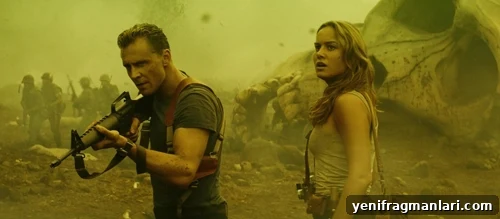
Visually, Kong: Skull Island is impressive. It’s a handsome production with strong cinematography, well-executed visual effects, and sequences of scale and spectacle that deliver enjoyable monster set-pieces. Yet the film ultimately lacks sustained emotional depth. When it does attempt pathos, the audience has not been given enough prior reason to care deeply about the characters, so the emotional beats land unevenly. The result is a film that entertains on a surface level with stunning images and thrilling confrontations, but that leaves a hollowness where deeper engagement might have been.
Score: 12/24
Rating: 2 out of 5.
Recommended for fans of blockbuster spectacle and creature design. If you prefer deeply character-driven monster stories, you may find this film wanting.