Sherlock Jr. (1924)
Director: Buster Keaton
Screenwriters: Clyde Bruckman, Jean Havez, Joseph A. Mitchell
Starring: Buster Keaton, Kathryn McGuire, Ward Crane
Buster Keaton’s Sherlock Jr., released in 1924, remains one of the silent era’s most inventive and influential comedies. Keaton—often ranked alongside Charlie Chaplin and Harold Lloyd as one of the three masters of silent slapstick—combined astonishing physical stuntwork with sharp visual storytelling. Many of the film’s stunts were performed for real, a testament to the era’s willingness to push the limits of safety in pursuit of spectacle and laughter. That commitment to authentic danger and precision stuntcraft is part of what has kept Keaton’s work alive in cinema history.
Contemporary reactions to Sherlock Jr. were mixed, but over time the film’s reputation has steadily risen. It was preserved by the Library of Congress and is today celebrated for its technical creativity, comedic timing, and the ingenuity of its visual effects. Modern critics and filmmakers often cite the film for its daring sequences and for how it anticipated later film techniques that blur on-screen and off-screen realities.
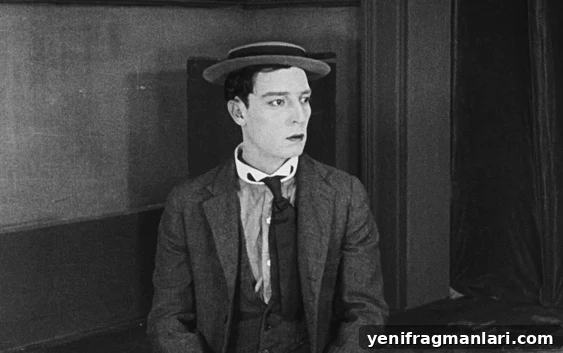
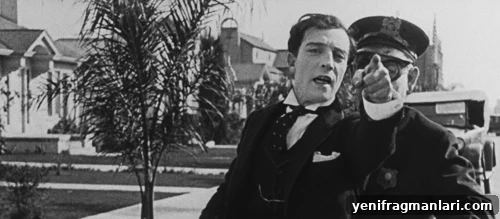
The plot is simple but effective, serving as a springboard for Keaton’s daring visual ideas. Keaton plays a movie projectionist who aspires to be a great detective, studying a manual titled How to Be a Detective. He is in love with a young woman (Kathryn McGuire), but a suave rival (Ward Crane) plants evidence to make the projectionist appear guilty of stealing a watch. Humiliated and wrongly accused, the projectionist returns to the theater, falls asleep, and slips into a dream in which he becomes the heroic detective Sherlock Jr.
In this dream world, Keaton’s character literally steps into the film screen. The narrative shifts into a dazzling display of pratfalls, visual trickery, and escalating physical comedy. Scenes change location instantaneously and absurdly; sets transform around him; and Keaton navigates a labyrinth of moving backdrops and props with deadpan resolve. The fantasy culminates in a string of breathtaking stunts: a rooftop chase across trains and cars, leaps from moving vehicles, a collapsing automobile sequence, and an iconic run with a bicycle in front of an oncoming train. Even small, cleverly staged gags—like an exploding billiard ball or a perfectly timed suitcase jump—display a mastery of cinematic timing and mechanical ingenuity.
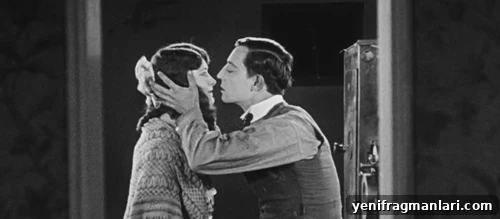
The film’s structure divides into two clear halves. The opening section sets up character and motivation: the projectionist’s romance, the rival’s deception, and the social Comedy of errors that propels him toward the theater. This portion is charming and full of Keaton’s subtle humor, but it intentionally paces itself to prepare the audience for the second half’s kinetic, effects-driven imagination. The dream sequences that follow are where Sherlock Jr. truly takes off, and they remain astonishing even by modern standards.
One reason Sherlock Jr. continues to feel modern is its self-reflexive use of cinema as a storytelling device. Keaton treats the movie screen as a literal portal between realities: the protagonist’s inner desires and fantasies are enacted through cinematic machinery. This metatextual approach—where film comments on its own mechanics and potential—was unusually sophisticated for the 1920s. Keaton staged scenes in which the projected image changes locations and environments around him, letting comedy arise from the character’s attempts to navigate a world that obeys the logic of editing rather than real-world physics. Critics often point to these moments as early examples of cinema exploring its own nature and playful relation to reality.
Beyond formal innovation, the film displays Keaton’s signature performance style. His impassive face—so often called “stone” or deadpan—creates a contrast with the escalating chaos around him. That calm center makes the stunts feel simultaneously casual and miraculous, heightening both the humor and the tension. Keaton’s control of physical comedy and his precise timing with practical effects give even small bits of business a satisfying mechanical elegance.
While the film runs roughly 45 minutes and the first acts are comparatively quieter, the entire piece works as an integrated whole: character, motive, spectacle, and cinematic experimentation complement each other. Sherlock Jr. is not only a highlight of Keaton’s career but a compact lesson in how film can merge comedy, action, and formal invention into an enduring work of art.
Score: 20/24
Rating: 4 out of 5.