
The Strangers: Chapter One (2024)
Director: Renny Harlin
Screenwriters: Alan R. Cohen, Alan Freedland
Starring: Madelaine Petsch, Froy Gutierrez, Gabriel Basso, Ema Horvath
Somewhere along the decision-making chain, after the second film in the series, Prey At Night, was relegated to vague collective memory, someone evidently concluded that the original The Strangers deserved another run. The producers appear to have hit on a commercial formula: retell the first movie closely, introduce a few new elements that can be used to justify future sequels, and market it as the opening chapter of a trilogy. The result is a film that feels less like a fresh reimagining and more like a near shot-for-shot replication with a handful of connective scenes added to seed later installments.
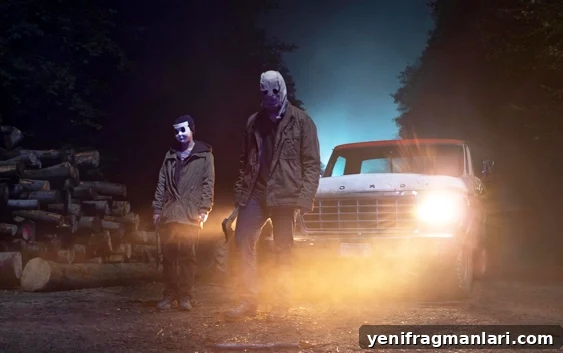
On the surface the plot is familiar and simple: a young couple stranded at an isolated Airbnb after car trouble are terrorized by masked intruders. The film retains the basic beats of the 2008 original — knocking at the door with an odd question about a non-existent Tamara, a masked man slipping in the back, and two masked women who stalk and terrorize the pair. That bare-bones premise was the original’s strength: it functioned as a blank, psychological slab onto which viewers could project fears about relationships, strangers, and vulnerability. Here, however, the creators choose to thicken the outline instead of preserving the unsettling minimalism that made the first film so effective.
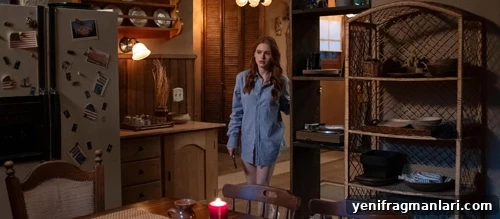
By expanding the setting to include a small nearby village and introducing several of its residents, the new film forces viewers into a more conventional whodunit mindset. That change narrows the psychological openness that once made the antagonists so unnerving; once the story supplies contexts and suspects, audiences instinctively start to assign motives and identities. The masks were previously effective because they obscured everything you might want to know; here, the narrative gives you places to point and people to blame, which diminishes the elemental dread.
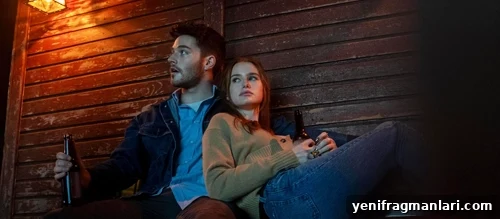
The central couple, fortunately, are mostly likable and their chemistry helps the film in places. They feel authentic as people in a relationship, and their slow slide from normality into terror is handled with competent performances. But the film’s pacing undermines any real sense of mounting fear. Scenes lurch from one beat to the next without building the tension necessary for a true home-invasion thriller. Moments that could have been quietly unnerving instead come off as mechanical recreations of the original film’s scares, lacking the subtlety and surprise that once made them effective.
Complications also arise from practical choices: with previous antagonists killed off in earlier franchise entries, the production had to rework the trio’s identities. Costume and hair choices make it difficult at times to distinguish the new masked figures from earlier iterations, especially in dimly lit exterior sequences. When visual clarity is compromised, and tempo is uneven, suspense struggles to take hold.
Where the original felt austere and haunting precisely because it offered a sparse, interpretive experience, this new Chapter One aims for expansion and setup. That shift may satisfy producers aiming to build a longer arc, but it frustrates viewers hoping for a return to the original’s raw impact. If the intention was to create a reliable foundation for two more films, the first installment ends up doing most of the heavy lifting for the sequels while sacrificing the concise, oppressive atmosphere that made the original so memorable.
Stylistically the film tries to pay homage to its source while plotting a course forward, but the result is uneven. There are flashes of effective filmmaking — strong performances and a handful of well-composed images — yet these moments are scattered among more derivative, less inspired choices. The final act arrives without the proper accumulation of dread, and the climax feels abrupt rather than inevitable. At ninety minutes, the movie is brief enough to avoid outright tedium, but its abbreviated runtime also highlights how little new ground is broken.
This film’s primary function appears to be creating narrative scaffolding for sequels. That commercial rationale is understandable, but the creative cost is clear: the taut minimalism that made the original influential has been traded for a more conventional, franchise-oriented approach. Unless subsequent chapters recover the original’s psychological clarity while also delivering fresh ideas, the trilogy risks diluting what made the first film resonate in the first place. As a standalone experience, The Strangers: Chapter One offers competent performances and a few effective moments, but it ultimately feels like a cautious retread rather than a necessary reinvention.
Score: 7/24
Rating: 1 out of 5.