In a Violent Nature (2024)
Director: Chris Nash
Screenwriter: Chris Nash
Starring: Ry Barrett, Andrea Pavlovic, Charlotte Creaghan, Cameron Love, Liam Leone, Alexander Oliver, Reece Presley
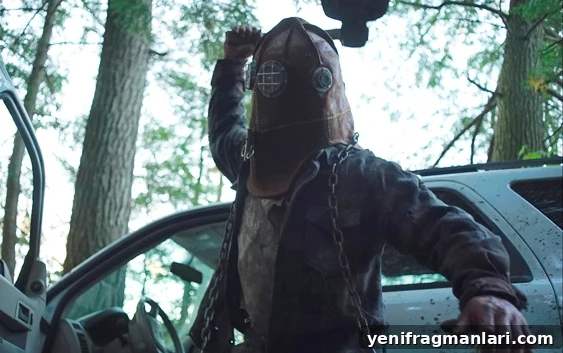
Chris Nash’s In a Violent Nature arrives as a deliberate, visceral iteration of the slasher film. It embraces the familiar ingredients—a masked killer bent on revenge, an isolated forest setting, probing questions about morality and sexuality, abundant practical gore, and the archetypal “final girl”—but the film reorders the usual priorities. Rather than centering on a group of young adults as the main emotional core, Nash follows the predator, forcing the audience into an unsettling alignment with the killer’s single-minded perspective.
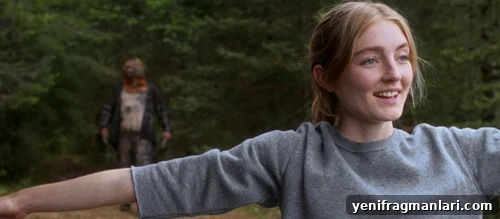
The film is told largely through the third-person vantage of Johnny (Ry Barrett), an undead, vengeance-driven figure. The group he hunts is presented at a distance: their conversations are often overheard rather than shown in close detail, and the movie resists offering deep emotional access to them before they become victims. This choice makes the friends feel less like characters and more like targets, which is intentional—Nash composes the camera around Johnny, tracking his movements through the forest and foregrounding the sound of his steps as a metronomic instrument of dread.
At first Johnny moves slowly; each footfall in the dense woods registers as a weighty, deliberate act. That patient pacing and spare cinematography evoke arthouse influences and set a contemplative tone that feels distinct for a slasher. As the body count rises, however, Johnny’s gait quickens—he grows more confident and enraged—and the camera follows more aggressively, turning his pursuit into a propulsive, unstoppable force. When the story pauses for moments that could be read as Johnny’s “emotional” beats, the editing stretches time and lingers on details, producing an almost excruciating stillness that heightens the viewer’s discomfort.
The visual strategy at times recalls other intense portraits of violence in cinema, where the camera creates a claustrophobic proximity to a dangerous individual. Nash does not necessarily explore the inner psychology of his antagonist to the same degree as some predecessors, but his cinematography and sound design work together to make Johnny’s presence palpably immediate and disturbing.
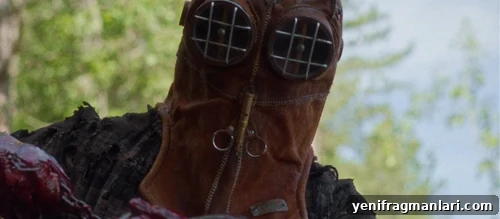
Horror fans who appreciate practical effects will find much to admire. The kills are elaborately staged and often indulge a blackly comic edge that helps modulate the film’s atmosphere; a moment of absurd, grotesque humor can undercut the forest’s melancholic tone in a way that keeps the pacing dynamic. That balance generally succeeds: the contrast between the ridiculousness of certain on-screen decisions and the bleakness of the woodland setting adds texture rather than undermining the film’s core tension.
The movie’s main shortcoming is an occasional lack of faith in the audience’s ability to infer and interpret. Expository beats explaining Johnny’s backstory arrive at awkward moments, and some visual callbacks are telegraphed so clearly that they feel heavy-handed. Nash seems to straddle two ambitions—deconstructing slasher conventions while also indulging them—and as a result the film never fully commits to either route. It reaches for a self-aware, almost tongue-in-cheek energy reminiscent of films that play with genre expectations, while also attempting to maintain a slow-burning, haunting mood. The hybrid works in parts but prevents the film from fully realizing either extremity.
Where Nash does commit to restraint and observation, the results are striking. The final quarter-hour shifts the film’s focus subtly but meaningfully: the spectacle of violent rampage gives way to a more reflective inquiry into cruelty, complicity, and the ways environment shapes behavior. The forest functions as more than a backdrop; it’s an active, oppressive presence that binds characters to their fates, suggesting that their ties to the land are inseparable from the violence that unfolds. That thematic link—human impulse mapped onto a hostile, indifferent nature—adds a philosophical undertow to the finale and rewards viewers willing to sit with the film’s uneasy questions.
Technically, Nash and his collaborators deliver strong craft. The practical effects are inventive and vividly realized, sound editing heightens immersion, and the deliberate camera rhythms—alternating between languid observation and urgent pursuit—create an embodied viewing experience. Even when the film’s tonal choices don’t land perfectly, its formal ambitions and technical execution remain commendable.
In short, In a Violent Nature is not a conventional slasher but a bold, occasionally uneven hybrid: part gore-driven shocker, part austere meditation on violence. It may frustrate viewers seeking a more straightforward horror experience, but for those who appreciate methodical direction, inventive practical effects, and a willingness to blur genre boundaries, it is an engrossing theatrical experience.
Score: 15/24
Rating: 3 out of 5.
Written by Lauren Frison
You can support Lauren Frison in the following places:
X (Twitter): @paranoidzpark
Letterboxd: /suspiriaz