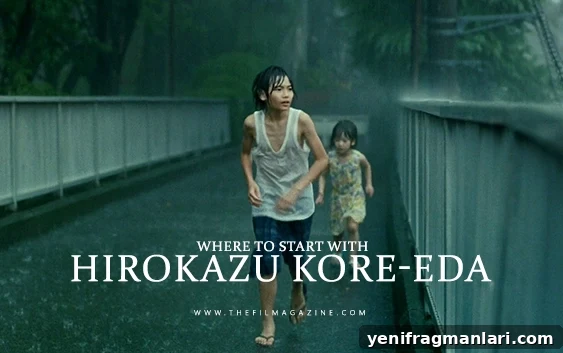
Born in Tokyo in 1962, acclaimed Japanese filmmaker Hirokazu Kore-eda developed a love of cinema early on. His mother nurtured that passion by sharing classic films on television throughout his childhood, creating the foundation for a career built on careful observation of everyday life.
Kore-eda began his film career working as an assistant director on television documentaries before making his narrative feature debut in 1995 with Marborosi, which immediately drew festival attention. Over the next three decades he rose to international prominence, becoming one of the most critically respected and influential directors of his generation. His films have cemented his reputation as a leading voice in contemporary cinema, both in Japan and abroad.
Best known for quiet, realist dramas that explore unconventional family arrangements and marginalized communities in modern Japan, Kore-eda also demonstrates range. His filmography includes works of magical realism (After Life), semi-autobiographical reflections (Still Walking), moral mysteries and courtroom dramas (The Third Murder, Monster), and offbeat satires (Air Doll). Across these varied projects he preserves a humane, empathetic eye and an unwavering interest in how people care for and fail one another.
Throughout his career Kore-eda has relied on a close-knit group of collaborators. Actors who recur in his films include Susumu Terajima, Arata Iura, Yui Natsukawa, Kirin Kiki and Lily Franky, and he often works with cinematographer Yutaka Yamasaki. Kore-eda is known for choosing everyday locations that feel lived-in, for meticulous attention to detail, and for maintaining tight creative control, including personally overseeing the editing of his films.
Kore-eda has also shown that his sensibility travels beyond language and borders. In recent years he has worked successfully outside Japan, directing films in other countries and languages while retaining his distinct voice. For newcomers wondering where to begin with his body of work, the following guide highlights three essential films that showcase his themes, style, and emotional range.
1. Nobody Knows (2004)
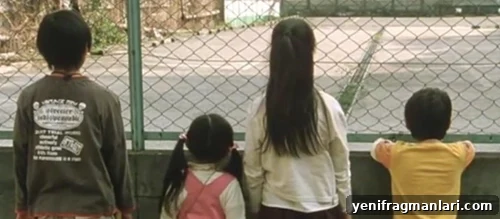
Perhaps Kore-eda’s most searing family drama, Nobody Knows places the viewer in the emotional orbit of abandoned children and refuses any easy consolation. The film is based on a distressing real case from the 1990s and is unflinching in its depiction of neglect, yet it also captures moments of innocence and quiet resilience.
The story follows an immature single mother who repeatedly abandons her children in a cramped Tokyo apartment. Her eldest, Akira (Yuya Yagira), is left to care for his three younger siblings who were brought into the home without the landlord’s knowledge. As food, money, and clean clothes run short, Akira struggles to protect and provide for the family. He attracts the attention of a bullied high school girl, Saki (Hanae Kan), and faces painful decisions to preserve his siblings’ welfare.
Kore-eda extracts astonishingly natural performances from his child actors; Yuya Yagira became the youngest winner of the Cannes Best Actor prize for his portrayal of Akira. The film’s power comes from small, authentic moments—children inventing games to make scarcity bearable, fleeting calm between crises—that sharpen the emotional stakes and make the film’s heartbreak all the more devastating. Nobody Knows honors the endurance of family bonds under unbearable strain while refusing to romanticize the children’s suffering.
2. Like Father, Like Son (2013)
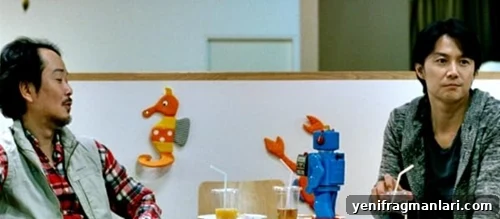
Like Father, Like Son, which won the Cannes Jury Prize, examines the uneasy questions that arise when two families discover their sons were switched at birth. The film frames this moral dilemma as a social experiment, exploring class differences, parenting styles, and what truly defines a family.
Two families—the affluent Nonomiyas and the working-class Saikis—must decide whether to return the boys to their biological parents or continue raising the children who have been part of their lives for six years. Kore-eda treats the scenario with emotional intelligence and restraint, letting the characters’ doubts and small gestures reveal their values.
The film’s heart lies in the interactions between the parents, especially the two fathers who struggle with pride, responsibility, and the desire to do right by their children. Through these intimate confrontations Kore-eda raises larger questions about nature versus nurture, social expectations, and the pressure to preserve family reputation over family well-being. The result is a humane, thought-provoking drama that asks viewers to reconsider what makes a family real.
3. Shoplifters (2018)
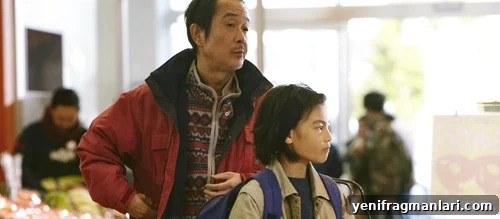
Shoplifters won the Palme d’Or at Cannes and earned an Academy Award nomination, and it brought Kore-eda broader international recognition. The film centers on a makeshift family in Tokyo that survives by shoplifting and by relying on one another’s devotion, revealing both warmth and moral complexity.
When a neglected little girl is brought into the household, the group teaches her how to survive through petty theft while also offering a surprising amount of care and affection. Each member of the family has a distinct role: Osamu (Lily Franky) is the unofficial leader with complicated motives; Nobuyo (Sakura Ando) provides protection and emotional steadiness; the elderly Hatsue (Kirin Kiki) is content in her later years to have companionship; and the younger members wrestle with conscience and loyalty.
Kore-eda devotes time to everyday details—shared meals, bath time, idle conversation—that build empathy and make the family’s bonds believable. The film balances tenderness and quiet humor with anger at the social systems that leave many people without adequate support. Shoplifters is visually accomplished, emotionally rich, and thematically universal: it asks how society should respond to those pushed to the margins and whether family is defined by blood or by care.
If you wish to continue exploring Kore-eda’s work after these three films, consider Our Little Sister for a warm coming-of-age story, Air Doll for a surreal, inventive misfit comedy-drama, and Monster for a suspenseful moral puzzle with an emotionally devastating conclusion. Together, these films illustrate Kore-eda’s lasting strengths as a filmmaker: a deep humanism, a focus on ordinary lives, meticulous craft, and a persistent willingness to confront social issues with compassion.
Kore-eda’s films have resonated beyond film festivals because they tell stories that feel universal—stories of families in all their imperfect forms, of people coping with inequality and isolation, and of the everyday acts of love that sustain us. His cinema is politically conscious yet fundamentally humanist, offering both critique and hope. For viewers seeking emotionally honest, thoughtfully made films about what it means to belong, Hirokazu Kore-eda remains an essential filmmaker to discover.