
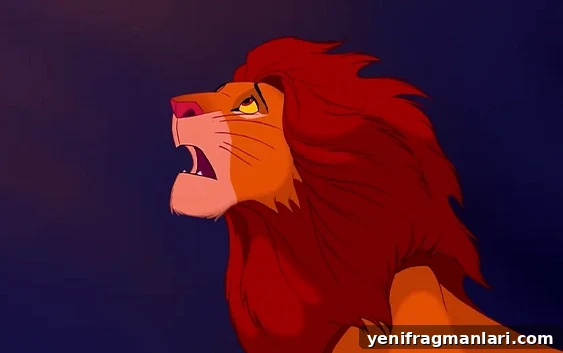
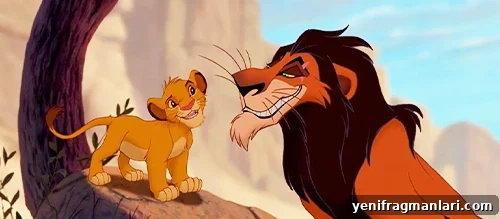
The Lion King (1994)
Directors: Roger Allers, Rob Minkoff
Screenwriters: Irene Mecchi, Jonathan Roberts, Linda Woolverton
Starring: Matthew Broderick, James Earl Jones, Jeremy Irons, Jonathan Taylor Thomas, Moira Kelly, Niketa Calame, Nathan Lane, Ernie Sabella, Robert Guillaume, Rowan Atkinson, Whoopi Goldberg, Cheech Marin, Jim Cummings, Madge Sinclair, Frank Welker
Regarded as one of the crowning achievements of the Disney Renaissance, The Lion King has endured as a cultural touchstone since its 1994 release. Alongside other celebrated Disney features of the era, the film combined classical hand-drawn animation, a powerful musical score, and a dramatic story drawn from universal archetypes. Its popularity with audiences who grew up in the 1990s turned the home release into one of the best-selling VHS tapes of the time, and the stage adaptation that debuted in 1997 expanded the film’s influence even further. Three decades on, its themes, imagery and music continue to resonate across generations.
The story follows Simba, the young prince of the Pride Lands, who is forced into exile after his father, King Mufasa, is betrayed and killed by Mufasa’s jealous brother, Scar. Simba grows up away from his homeland with new companions and must eventually face his past, return to confront Scar and reclaim his rightful place. The narrative is straightforward but archetypal, borrowing elements from folklore and classic dramatic sources, and it is told with emotional clarity and cinematic confidence.
From its opening “Circle of Life” sequence, the film draws viewers into an elevated version of the natural world through luminous hand-drawn animation and a stirring musical arrangement. That sequence, announced by an orange sunrise and an ecstatic Swahili vocal refrain, remains one of the most instantly recognizable moments in animated cinema. The film balances sweeping spectacle with quieter, intimate character moments, and it uses animation to capture both animal behaviors and human emotions in a way that serves the story.
Although many of the animators initially treated the project as secondary to other studio work, the film quickly grew into something far greater than its circumstances suggested. Lead animators focused on individual characters, bringing personality and nuance to every performance. Small gestures and subtle facial expressions convey a surprising depth of feeling: Mufasa shifts from regal authority to warm, approachable father in almost imperceptible beats; Scar’s posture and timing reveal resentment and cunning; even secondary characters display tailored movement that supports the film’s tone. This careful attention to performance makes the characters feel alive and emotionally credible without relying on literal realism.
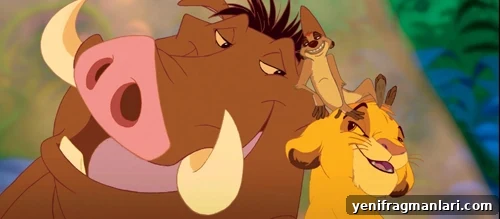
Scar, who was refined during early development from a concept into the film’s primary antagonist, stands out as one of Disney’s most charismatic villains. Jeremy Irons’ voice work shaped the role, giving Scar a theatrical menace that the animators echoed in his mannerisms. The casting across the board is strong: James Earl Jones lends Mufasa a towering dignity; Matthew Broderick and Jonathan Taylor Thomas capture Simba’s innocence and evolving responsibility; Nathan Lane and Ernie Sabella provide buoyant comic relief as Timon and Pumbaa; and voice actors like Rowan Atkinson and Frank Welker round out a cast that brings distinct life to each role.
Musically, the film benefits from a remarkable team. The collaboration of Elton John and Tim Rice produced songs that are both catchy and emotionally resonant, while Hans Zimmer’s score adds cinematic depth and atmosphere. The soundtrack draws on pop, Broadway and African influences, creating a musical identity that supports the storytelling at every turn. Musical set pieces range from celebratory to sinister to introspective, each staged with visual inventiveness, memorable choreography and strong melodic hooks.
On the technical side, the film pushed animation forward with several innovations. The wildebeest stampede sequence combined traditional hand-drawn methods with new digital techniques to create a dynamic, large-scale action set piece. This sequence used early crowd-simulation tools to populate the scene and to coordinate movement so that animals avoided collisions, producing a chaotic yet coherent visual that heightens the drama. Lighting, perspective and a simulated camera movement elevate the moment into something operatic, and Zimmer’s choir-stoked score intensifies the sense of peril.
While the narrative borrows familiar beats and echoes other works—some critics and viewers have noted parallels with earlier animated stories and with Shakespearean tragedy—the film’s emotional clarity and artistic execution make it feel original and immediate. Its themes of loss, responsibility and redemption are presented in plain, powerful terms that resonate with both children and adults, allowing the film to function as a family drama with universal appeal.
The Lion King remains more than a nostalgic favorite. It stands as a carefully crafted example of storytelling in animation: visually rich, musically ambitious and emotionally exact. Its influence extends beyond the screen through stage adaptations and continued cultural references, and it remains a benchmark for how animation can combine artistry, innovation and heartfelt narrative to create a lasting work. For many viewers, the film’s images, songs and characters are indelibly embedded in memory, passed down from one generation to the next.
Score: 23/24
⭐⭐⭐⭐⭐
Rating: 5 out of 5.
Recommended for you: Disney Renaissance Movies Ranked