
Kinds of Kindness (2024)
Director: Yorgos Lanthimos
Screenwriters: Yorgos Lanthimos, Efthimis Filippou
Starring: Emma Stone, Jesse Plemons, Willem Dafoe, Margaret Qualley, Hong Chau, Mamoudou Athie, Yorgos Stefanakos
Only months after the release of Poor Things, Yorgos Lanthimos returns with another bold and unsettling film. At first glance the rapid turnaround might suggest a lesser effort, but the creative team behind Kinds of Kindness includes many of the same trusted collaborators—actors like Emma Stone, Margaret Qualley and Willem Dafoe, cinematographer Robbie Ryan, and composer Jerskin Fendrix—so the film quickly proves its own worth. This is a director working confidently within his distinct vision.
Presented as a “triptych fable,” Kinds of Kindness is made up of three separate but thematically connected stories: “The Death of R.M.F.”, “R.M.F. Is Flying”, and “R.M.F. Eats a Sandwich”. The title itself is the clearest hint at the film’s preoccupation: each segment examines different expressions of kindness, often twisted, performative, or absent entirely. Lanthimos assembles a rotating ensemble whose members reappear in different roles across the three pieces, creating an eerie echo that ties the vignettes together even when plot links are minimal.
The film feels indebted to dystopian and existential traditions. Echoes of George Orwell’s bleak social critique mingle with Kafkaesque absurdity and Stephen King–style dread, not in the form of direct adaptation but as tonal influences that help shape Lanthimos’s uniquely disquieting world. The result is a series of darkly humorous, disturbing parables about the costs of trying to please others.
Efthimis Filippou, Lanthimos’s longtime co-writer, returns to co-author the screenplay, and his voice is unmistakable. Filippou and Lanthimos have a history of exploring taboo and extreme subjects, and here they push those instincts further: sex cults, necromantic elements, and cannibalistic imagery surface alongside quieter cruelties. For viewers who found some of Lanthimos’s previous films too explicit or unnerving, this film will likely provoke a strong reaction. Yet the excesses are not gratuitous; they serve the film’s examination of longing, control, and self-erasure.
The emotional core of Kinds of Kindness is not shock for shock’s sake, but the psychology behind the actions. The stomach-churning moments gain their power because they arise from deeply human desires: the need to be liked, to belong, to be seen. Lanthimos and Filippou have amplified those impulses to an extreme degree, and by doing so they expose how dangerous and hollow performative kindness can be. The film often asks us to consider how far we will go to earn approval, and what we lose in the process.

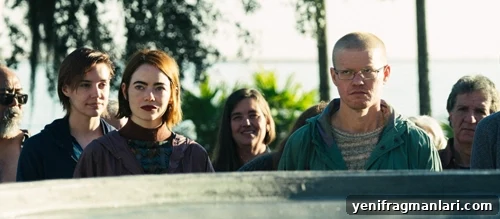
The cast is a major reason the film works. Margaret Qualley, Hong Chau, and Mamoudou Athie deliver memorable turns as the recurring supporting faces who populate the triptych. But the movie’s emotional anchors are Emma Stone, Jesse Plemons, and Willem Dafoe. Each approaches Lanthimos’s often deadpan, mannered style with a commitment that makes their performances both unnerving and strangely authentic. The actors speak and move in ways that downplay overt emotion, which paradoxically deepens the impact of the story’s darker beats.
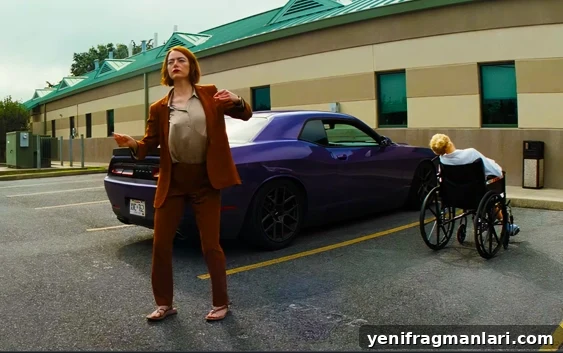
Emma Stone, prominently featured in the film’s marketing for a standout dance sequence, brings vulnerability and controlled oddness to her role. Though her segment may feel slightly less robust than the others, her work remains compelling. Jesse Plemons and Willem Dafoe turn in some of the most disciplined and quietly powerful performances of their careers, navigating the film’s moral absurdities with a steady, disarming calm.
Lanthimos’s direction is clinical and precise. He arranges the three narratives nonlinearly, teasing revelations and allowing thematic connections to build gradually. Robbie Ryan’s cinematography and Fendrix’s haunting, idiosyncratic score further shape the film’s peculiar atmosphere. Visual choices—lenses, framing, and controlled compositions—reinforce the world’s off-kilter reality, making the bizarre feel ordinary and the ordinary feel menacing.
Ultimately, Kinds of Kindness is a return to Lanthimos’s darker impulses while maintaining the polished craft of his later work. It is a provocative, sometimes uncomfortable meditation on how humans perform kindness and the price paid for forced conformity and approval. Those who appreciate provocative, uncompromising cinema will find much to admire here; those expecting lighter fare will likely be challenged.
Score: 21/24
Rating: 4 out of 5.