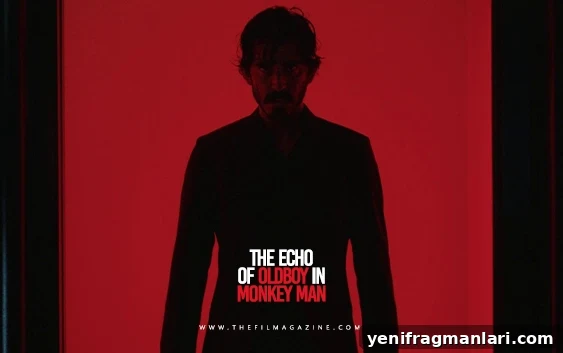
The drive for revenge can transform ordinary people into their most intense, vulnerable, and sometimes violent selves. This theme has fueled storytelling across cultures and eras — from ancient myths and religious texts to Shakespeare and contemporary cinema. In many beloved action films, revenge becomes the engine that compels characters to heal past wounds by any means necessary. In Dev Patel’s directorial debut, Monkey Man (2024), that motivation is central and ever-present. Every shattered pane of glass and bloodied brawl pulls the audience toward a grim, theoretical sense of justice. While revenge narratives are familiar to the genre, Monkey Man stands out because it combines that drive with a deeply personal and culturally specific point of view.
One of the film’s most distinctive strengths is its vivid portrayal of Indian life and communities — a perspective rarely showcased at this scale in mainstream international cinema. Patel foregrounds stories often marginalized even within Indian popular culture, including the experiences of transgender and hijra communities and the realities faced by lower-caste workers. Rather than relying solely on spectacle, the film invests in character development and motive, allowing viewers to form authentic emotional connections. Patel’s narrative choices invite audiences into a textured world of joys and hardships, offering an intimate look at Indian urban life that feels both specific and universal.
Inevitable comparisons emerged soon after Monkey Man’s release, with many commentators labeling it the “Indian John Wick.” That shorthand likely arises from the familiar arc of trauma-driven vengeance present in both franchises. However, these surface-level comparisons miss the deeper influences and cultural nuance embedded in Patel’s film. Reducing Monkey Man’s unnamed protagonist to an “Indian John Wick” overlooks the movie’s origins in a different cinematic tradition and the uniquely Indian elements that shape its story.

More than borrowing from Hollywood archetypes, Monkey Man owes much to the tonal and narrative force of South Korean action cinema. Patel has acknowledged the influence of films such as Oldboy, The Man from Nowhere, A Bittersweet Life, and I Saw the Devil — works known for blending psychological depth with uncompromising violence. South Korean filmmakers often fuse brutal physicality with emotional complexity, producing cathartic and unsettling cinema. Traces of Park Chan-wook’s Oldboy are especially apparent in Patel’s film, not just in style but in the way both movies interrogate memory, captivity, and the corrosive effects of vengeance.
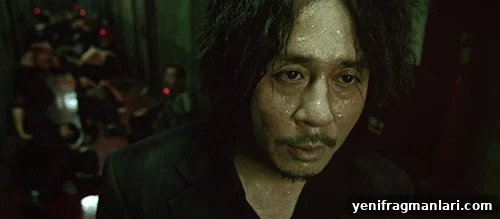
Oldboy’s influence on Monkey Man goes beyond homage to a particular scene or aesthetic. South Korean revenge films often force viewers to confront uncomfortable truths about identity, guilt, and social structures, and Patel channels that intensity to deepen his own story. Oldboy follows Dae-Su, a man inexplicably imprisoned for fifteen years, who emerges determined to uncover the reason for his captivity and take revenge. The emotional and moral ambiguity of Dae-Su’s journey — the way violence and revelation blur the lines between victim and perpetrator — echoes throughout Monkey Man’s narrative and its depiction of a protagonist shaped by trauma.
Visually and thematically, both films use tight, claustrophobic spaces to heighten brutality and tension. Oldboy’s now-iconic long take through a narrow corridor mirrors Monkey Man’s willingness to stage shocking, intimate violence in confined environments such as elevators and stairwells. These settings force the camera and the viewer into an uncomfortably close proximity with the action, emphasizing the physical and psychological cost of revenge. Patel’s decision to depict such scenes without restraint reflects his admiration for the unflinching storytelling found in South Korean cinema while remaining rooted in his own cultural context.

Both films also interrogate wealth and class. South Korean movies have repeatedly examined inequality and elitism, and Oldboy foregrounds these themes by positioning its antagonist as a figure of privilege. Monkey Man similarly situates its story in a city modeled on Mumbai, where stark class divides shape access, dignity, and safety. The film’s narrator — credited as “the kid” — bluntly observes that the wealthy fail to see the poor as fully human. That sentiment is dramatized through disputes over land, abuse by authorities, and the daily indignities that lower-caste and marginalized communities endure. By embedding its revenge plot within a context of systemic injustice, Monkey Man transforms personal vengeance into a commentary on social cruelty.

Narrative surprises and moral ambiguity are another shared trait. Oldboy’s shocking revelations subvert the viewer’s sense of right and wrong, and Monkey Man similarly ends on an ambiguous, unsettling note that invites reflection. The film’s final moments imply the narrator’s death without explicitly depicting it, leaving audiences to grapple with the consequences of the protagonist’s actions and the limits of retribution. Such endings are designed to linger, prompting viewers to question what justice truly means and whether violence can ever resolve deeper societal wounds.
By drawing on South Korean cinema’s emotional rigor while centering Indian cultural specificity, Dev Patel crafts a revenge film that transcends formula. Monkey Man combines visceral set pieces with nuanced character work and a strong sense of place, resulting in an action movie that is thematically rich and culturally grounded. Calling it merely an “Indian John Wick” flattens the film’s influences and ignores its complex dialogue with multiple cinematic traditions. Patel’s debut is an ambitious, personal statement that marries brutal action to empathetic storytelling, highlighting how revenge can expose both the strength and fragility of the human spirit.
Written by Jake Fittipaldi
You can support Jake Fittipaldi in the following places:
Instagram: @jakefittipaldi
Letterboxd: /jakefittipaldi