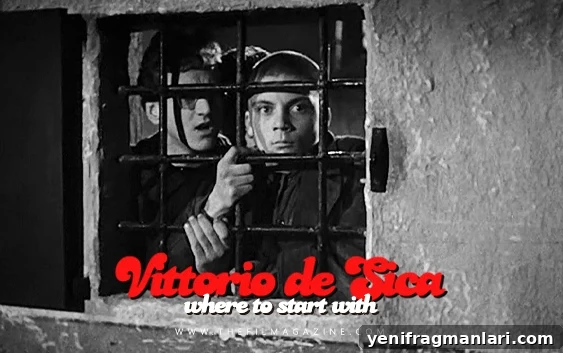
Director, actor, and writer Vittorio De Sica remains one of the most influential figures in the history of Italian cinema. His work as a filmmaker reshaped narrative realism on screen, and his performances established him as a celebrated actor across several decades.
Born in 1901 in Sora, then part of the Kingdom of Italy, De Sica grew up in what he later described as “tragic and aristocratic poverty.” His father, Umberto De Sica, worked as a journalist and at the Bank of Italy. After the family moved several times during World War I, they settled in Rome, where the young Vittorio was exposed to the world of theatre and cinema. By age 15 he was already performing in amateur plays staged for convalescing soldiers.
After completing an accounting degree in 1923, De Sica pursued a stage career and soon transitioned to film. He made his screen debut in Mario Almirante’s Beauty of the World (1927) and by the early 1930s had become a popular comic actor. Even after he began directing, De Sica continued to act throughout his life, appearing in numerous Italian and international productions. His acting and directing earned him several awards and broad recognition across European and global cinema circles.
De Sica’s first feature as a director was Red Roses (1940), but his lasting reputation stems from his work during and after World War II. Initially associated with the so-called “white-telephone” comedies that echoed American films of the 1930s and 1940s, his style changed dramatically after meeting screenwriter Cesare Zavattini in 1943. That collaboration ushered De Sica into the Italian Neorealist movement, a filmic approach that focused on everyday life, nonprofessional actors, and stories rooted in social reality. Today, De Sica is most often remembered for his pivotal role in that movement.
With more than 35 directorial credits and dozens of acting roles, beginning to explore De Sica’s body of work can seem daunting. A practical entry point is to watch three of his most significant films, which together highlight his evolution from early melodrama to mature social and historical drama: The Children Are Watching Us (1943), Shoeshine (1946), and The Garden of the Finzi-Continis (1970).
The Children Are Watching Us (1943)

The Children Are Watching Us represents De Sica’s decisive turn toward socially engaged filmmaking and marks his first collaboration with Cesare Zavattini. The film centers on Pricó (Luciano de Ambrosis), a young boy whose life is upended when his mother Nina (Isa Pola) runs off with a former lover, leaving Andrea (Emilio Cigoli) to raise their son alone. Though the mother eventually returns, the family’s emotional balance is permanently damaged, and the film follows the lasting consequences of that rupture.
This work is frequently cited as a bridge from the polished escapism of prewar “white-telephone” films to the more humanistic, observational style of Neorealism. It addresses delicate topics—infidelity, family breakdown, and emotional trauma—while showcasing emerging actors who would become key figures in postwar Italian cinema. The film’s compassionate focus on childhood and its psychological fallout was groundbreaking for Italian cinema at the time.
Shoeshine (1946)
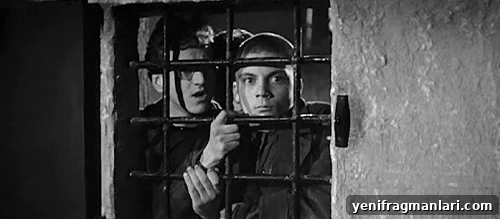
Released in 1946, Shoeshine is widely regarded as one of the foundational films of Italian Neorealism and is often considered De Sica’s first fully realized neorealist achievement. The film follows two orphaned boys, Pasquale (Franco Interlenghi) and Giuseppe (Rinaldo Smordoni), who save their earnings from shining shoes to buy a horse. When they are drawn into a criminal scheme that promises quick money, their dream ends in tragedy as they are separated in a juvenile detention system.
Shoeshine presents the realities of postwar poverty and social dislocation with an unvarnished empathy. Its use of location shooting, naturalistic performances, and focus on the consequences of economic desperation make it an archetype of the movement. The film’s emotional purity—described by some viewers as the camera “disappearing” to leave only life on the screen—helped Shoeshine secure international recognition and contributed to its lasting legacy.
In recognition of its artistic and cultural importance, Shoeshine received an Honorary Academy Award in 1948 and later earned a place among films deemed essential to Italy’s cultural memory.
The Garden of the Finzi-Continis (1970)

Although De Sica is most closely associated with Neorealism, his later work demonstrates a wider range. The Garden of the Finzi-Continis, one of his final major films, is a lyrical and elegiac adaptation of Giorgio Bassani’s novel. Set in Ferrara beginning in 1928, the story follows the Jewish aristocratic Finzi-Contini family, who shelter their children and friends from the increasing anti-Semitism and exclusionary laws of the era by hosting gatherings at their private estate and tennis court.
The film’s evocative cinematography and production design transform the gardens and estate into a central, symbolic character. De Sica’s direction combines formal beauty with a mournful examination of historical denial and the gradual encroachment of fascism. The Garden of the Finzi-Continis received major international honors, including the Academy Award for Best Foreign Language Film and the Golden Bear at the Berlin Film Festival, and it remains one of De Sica’s most acclaimed achievements.
Across these three films—The Children Are Watching Us, Shoeshine, and The Garden of the Finzi-Continis—De Sica’s strengths are clear: a humane attention to marginalized lives, a talent for directing both professional and nonprofessional actors, and a visual approach that is at once honest and artistically refined. His work helped define Italian Neorealism and left an enduring mark on global cinema.
For viewers new to De Sica, these films offer a concise introduction to his artistic range, thematic concerns, and lasting influence. They demonstrate why he is remembered as one of the central figures in 20th-century filmmaking and why his films continue to be studied and admired for their emotional depth and social insight.