
To a Land Unknown (2024)
Director: Mahdi Fleifel
Screenwriter: Fyzal Boulifa, Mahdi Fleifel, Jason McColgan
Starring: Angeliki Papoulia, Mahmood Bakri, Mohammad Ghassan
At the world premiere of To a Land Unknown at the Cannes Film Festival in 2024, director Mahdi Fleifel expressed disbelief that the film had reached such a prestigious stage so quickly. Shot in Greece and completed within months, the production’s rapid turnaround reflects a sense of urgency that runs through the film itself. That urgency is matched by a compassionate and restrained filmmaking approach that foregrounds human experience and moral complexity.
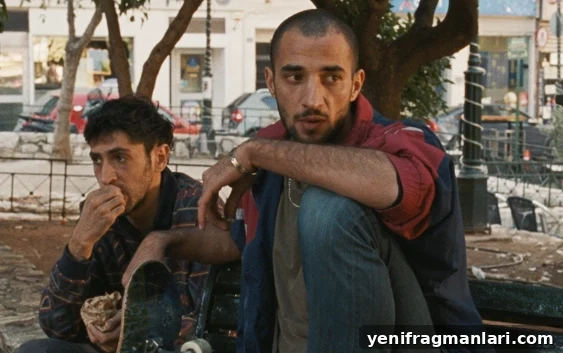
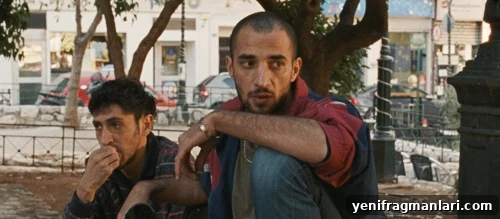
Set in Athens, To a Land Unknown follows two Palestinian refugees: Chatila (Mahmood Bakri) and his cousin Reda (Aram Sabbah). Living on the margins of Greek society, they hold onto a shared dream of reaching Germany to open a restaurant alongside Chatila’s wife, who remains in Lebanon with their son. The journey is fraught: smugglers, steep fees, and the daily indignities of displacement turn their aspiration into an almost impossible quest. When they encounter a young Palestinian refugee boy alone in the city, Chatila and Reda decide to help him reach his aunt in Italy. The act of helping the child is driven by both compassion and self-interest, revealing the complicated moral decisions refugees must navigate in order to survive.
The performances are the film’s beating heart. Bakri and Sabbah bring a layered, lived-in quality to their roles, letting small gestures and silences convey the weight of loss, responsibility, and hope. Their chemistry anchors the story and makes the characters’ choices feel inevitable rather than contrived. The supporting cast, including the young refugee and local Palestinians who form a makeshift community, enriches the portrait of a population that supports one another in the face of systemic neglect.
To a Land Unknown adopts a character-first perspective, allowing viewers to meet these people on intimate terms before broader political meanings emerge. This human-focus recalls other contemporary films that highlight individual resilience under pressure, and it calls to mind the moral complexity of works like Nadine Labaki’s Capernaum. While Fleifel’s film does not rely on melodrama, it shares with such films a documentary-like immediacy and an insistence on seeing refugees as fully realized individuals rather than symbols.
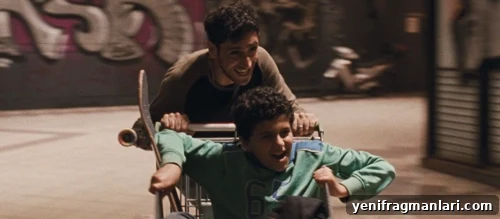
One of the most compelling storylines involves the refugee child. Alone and vulnerable in a foreign city, he finds protection and solidarity among fellow Palestinians who, despite their own precarious circumstances, look after one another. This portrayal strengthens the film’s thematic core: community can be both a refuge and a moral testing ground. The narrative forces viewers to reconsider easy judgments about right and wrong when people are confronting survival, family obligations, and bureaucratic obstacles.
Stylistically, the film draws on elements associated with realist cinema. Fleifel favors naturalistic performances, unobtrusive camera work, and modest production design that together create a lived-in world. The result is a film that feels immediate and earned, allowing audiences to inhabit the characters’ daily realities without the distraction of stylistic excess. These choices heighten the emotional impact: when the film asks us to feel for Chatila, Reda, or the child, it does so through concrete detail and human interaction rather than rhetoric.
Importantly, To a Land Unknown resists caricature. Characters are neither saintly nor villainous; they are complex people reacting to constrained choices. This balanced depiction matters in the current political climate, where refugees are often subjected to dehumanizing narratives. By portraying its protagonists with nuance and dignity, the film contributes to a more humane public conversation about migration and displacement.
Some scenes are stark and unsettling, and that discomfort is deliberate. The film does not aim to soothe but to illuminate—showing the indignities and dangers refugees face in Europe and the specific hardships experienced by Palestinians. Such moments are essential to the film’s honesty and to the urgency of its message.
Overall, To a Land Unknown is a quietly powerful and heartbreakingly humane film. It balances a strong moral sensibility with restraint, offering a portrait of endurance, loyalty, and the compromises imposed by exile. While the central story of Chatila and Reda is fictional, the situations and emotions it depicts will resonate as authentic for many viewers. The film’s greatest strength lies in its ability to turn broad political issues into intimate human stories that linger long after the credits roll.
Score: 20/24
Rating: 4 out of 5.