
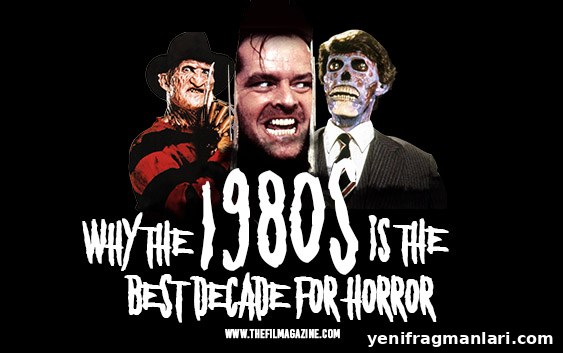
Let’s say you’re a horror fan — you clicked on this article after all — and imagine all horror films vanished except for one decade’s output. Which decade would you save?
The 1950s delivered enduring ghost stories, the 1990s offered witty, self-aware chiller cinema, and the 2000s produced a high point for J‑Horror. Still, most fans would choose the 1980s. That decade kept iconic franchises like A Nightmare on Elm Street and Friday the 13th, gave us genre-defining anthologies such as Creepshow and Tales from the Darkside, and even brought Hellraiser. But the appeal of ’80s horror isn’t only about a handful of great films. The decade represents a rare convergence of artistic ambition, cultural tensions and technological advances that together raised the genre to unparalleled heights.
A Nightmare on Elm Street (1984)
First, 1980s horror simply looks striking. Prosthetic and practical effects had matured to a point where filmmakers could realize grotesque, detailed visions on modest budgets, and the synthesizer offered an eerie, synthetic musical language that matched those visuals. The film stock itself—brighter, punchier—helped create an unsettling clarity. Movies like Hellraiser, The Fly and The Thing are design classics: they balance the handmade with the futuristic, producing imagery that still registers as bold and unforgettable. Whereas the 1970s saw major leaps in effects with films like Jaws and Alien, the 1980s normalized advanced effects, making inventive gore and body transformation a genre staple. Re‑Animator’s outlandish creations were achieved for less than a million dollars; that resourcefulness and tactile creativity remain central to the decade’s aesthetic. Unlike much later CGI-heavy horror, where poor digital effects can undermine scares, the texture of 1980s effects often deepened fright rather than lessened it.
Even when ’80s horror looks dated or campy—films like Critters or Creepozoids—those flaws frequently enhance memorability rather than erase it. But to understand why so many of these movies still intrigue, we should place them in their political and cultural moment.
In the Anglo‑American world the 1980s were defined by renewed geopolitical tension and social anxieties: the Cold War’s escalation, the emergence of the AIDS crisis and pervasive political paranoia. If horror translates unspoken fears into spectacle, the era’s atmosphere of repression and dread was fertile ground. Freddy Krueger, after all, literally invades unconscious minds. The decade’s reactionary politics, combined with a widening gap between material abundance and social unease, produced films that channelled moral panic into visceral imagery. Brian Yuzna’s Society, for example, turns class and social disgust into an extravagant, grotesque finale—an indictment of consumerism wrapped in revulsion.
They Live (1988)
That cultural unease also shaped the decade’s gender and sexual politics on screen. Frequent gratuitous nudity and explicit sexual content contribute to a sleazy, fevered tone in many films. At times this functions as satire and at other times as mere titillation: the ending of They Live simultaneously critiques the commodification of bodies while exploiting the female figure for cheap thrills. Many horror scenes pair sexual vulnerability with physical threat—Creepshow 2’s “The Raft” sequence places a heroine between sexual aggression and a monstrous death—underscoring how surviving horror on screen often meant returning to the everyday horrors of misogyny and harassment.
On matters of sexual and cultural identity, much 1980s horror reflects the period’s blind spots and moral panics. Films like Sleepaway Camp feature endings that now read as transphobic, and A Nightmare on Elm Street Part 2 suffers from confused portrayals of homosexuality. These movies map social anxieties about difference directly onto monstrous violence, which makes them unsettling when revisited today. Even ostensibly family‑oriented films from the decade—Gremlins or The Goonies—have an undercurrent of nastiness; children in these films inhabit worlds where unexpected cruelty is plausible and adults’ reassurances are thin. Even Stephen King adaptations of the era tend toward sharper, less sentimental tones than many of his later works. To put it bluntly: part of why ’80s horror is compelling is that the decade itself could be an ugly, anxious place.
The Shining (1980)
But the decade was not simply reactionary. Countercultures proliferated across music, fashion and underground publishing, and horror benefited from that creative ferment. Independent auteurs such as David Cronenberg and John Carpenter produced work that pushed the genre in daring directions, combining political subtext with striking formal choices. In short, many talented artists believed horror was a serious form with untapped possibilities. Subsequent decades have seen the genre fractured into countless subgenres and aesthetic homages, but much contemporary “prestige” horror ends up referencing or imitating the 1980s rather than out‑innovating it. Films like It Follows and Hereditary openly borrow from the decade’s mood and techniques; as accomplished as they are, they sometimes feel like horror films about horror films rather than wholly new inventions.
Horror as a genre also suffers from connoisseurship: once certain tropes and styles become canonical, new works struggle to surprise. The 1980s managed to be consistently frightening in ways that still land. Even some of the decade’s more self‑consciously dated movies contain moments of genuine terror, and new generations of fans continue to rediscover overlooked gems—Pumpkinhead being an example of a film that remains haunting despite years of exposure. Later eras have had to contend with the benchmark the 1980s set in portraying suburban paranoia, erotic unease and sudden, messy bursts of gore. While contemporary filmmakers should not emulate the era’s problematic social politics, they can draw inspiration from its boldness and practical inventiveness. Modern horror can be indebted to the 1980s or move away from it entirely, but it’s hard to surpass that decade on its own terms.
Written by James Harris
You can support James Harris in the following places:
Twitter – @jamesharrisnow