
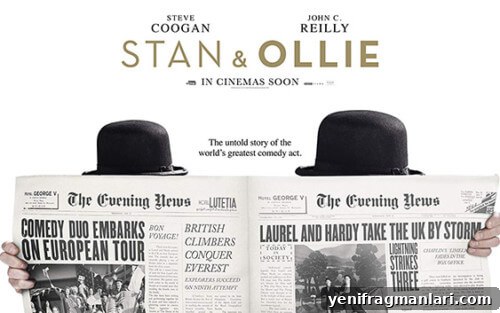
Stan & Ollie (2019)
Director: Jon S. Baird
Screenwriter: Jeff Pope
Starring: John C. Reilly, Steve Coogan, Shirley Henderson, Nina Arianda, Danny Huston, Rufus Jones
Stan & Ollie is a gently crafted 2019 biographical drama that chronicles the twilight years of Laurel and Hardy as they return to the stage for a farewell tour across the British Isles. Directed by Jon S. Baird and written by Jeff Pope, the film focuses less on a comprehensive life story and more on the emotional truth of two performers bound together by friendship, dependency and the particular pain of fading fame.
The film’s central strength lies in its leading performances. Steve Coogan and John C. Reilly inhabit the legendary comedy duo with a blend of physical accuracy and emotional depth. Coogan captures Stan Laurel’s nimble, childlike physicality and expressive face, while Reilly brings a warm, melancholy dignity to Oliver Hardy. Their chemistry feels lived-in: small gestures, habitual tics and the rhythm of their comic timing create a believable life-long partnership. Subtle prosthetic work enhances the likenesses without ever feeling gimmicky, allowing the actors to breathe humanity into two icons of early cinema.
Supporting roles play an important part in grounding the story. The wives, Lucille and Ida, are more than narrative props; Shirley Henderson and Nina Arianda bring nuance and resilience as women who share the men’s stage life and private struggles. Their presence introduces narrative counterpoints that highlight domestic strain, loyalty and the sacrifices made for career and companionship. The ensemble, including Danny Huston and Rufus Jones in smaller but effective turns, helps maintain a textured world behind the central pair.
Tonally, Stan & Ollie leans toward gentle melancholy rather than broad comedy. The screenplay emphasizes the emotional stakes of aging entertainers who still love their craft but must confront changing public tastes, personal health issues and financial worries. This focus creates a poignant undercurrent: the film examines how much of each man’s identity was bound up in the other, and how loss—slow, inevitable, almost bureaucratic—can feel devastating even after a life of public laughter.
Visually and rhythmically the movie opts for restraint. Scenes of stagecraft, small-town audiences and backstage camaraderie are filmed with a kind of quietly affectionate clarity that complements the performances. Rather than dramatizing scandal or inventing sensational conflicts, the film privileges quiet moments—a backstage conversation, a missed cue, a private apology—that together build a moving portrait of partnership. At times this restraint works beautifully; other times it contributes to the film’s modest ambitions, keeping the story from expanding into bolder territory.
Where Stan & Ollie excels is in fidelity to character and feeling. It honors Laurel and Hardy’s legacy through attention to detail and through performances that understand the rhythm and soul of old-fashioned comedy. Yet the film also reveals its limits: despite strong acting and attentive production values, it rarely surprises. The narrative progression and emotional beats frequently follow familiar biopic patterns, which can make the film feel more like a lovingly made television drama than an innovative cinematic statement.
For viewers seeking a thoughtful portrait of artists in their later years, a showcase for two exceptional lead performances, or a respectful tribute to classic screen comedy, Stan & Ollie will be satisfying. It offers warmth, occasional laughter and genuine sadness, and it keeps the focus squarely on the human bond behind the vaudeville routines and film shorts that made Laurel and Hardy household names. If you expect a revelatory reappraisal or a stylistic reinvention of the biopic form, however, the film may feel too familiar. Still, its craftsmanship and the chemistry between Coogan and Reilly make it an emotionally rewarding watch.
15/24