Hercules (1997)
Directors: Ron Clements, John Musker
Screenwriters: Ron Clements, John Musker, Don McEnery, Bob Shaw, Irene Mecchi
Starring: Tate Donovan, Susan Egan, James Woods, Danny DeVito, Rip Torn, Bobcat Goldthwait, Matt Frewer, Hal Holbrook, Barbara Barrie, Paul Shaffer
After their long development efforts on projects such as Treasure Planet, directors Ron Clements and John Musker were entrusted with a high-profile animated feature that drew loosely on Greek myths. The result, Hercules, reimagines classical mythology as a bright, sitcom-influenced epic with a superhero twist set in sandals. Released in 1997, the film received mixed reviews and underperformed relative to expectations at the time. Two and a half decades later, it’s worth revisiting to see how it holds up.
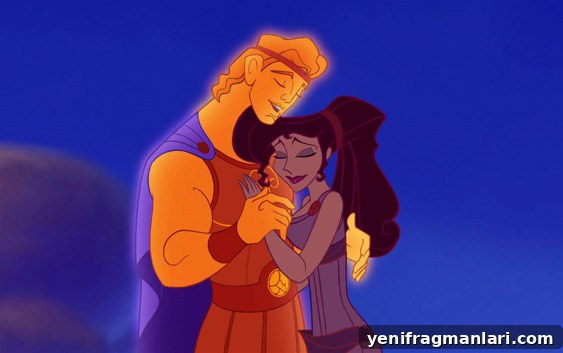
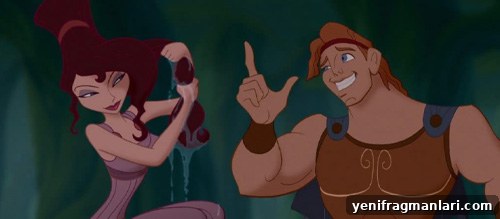
The story follows Hercules (Tate Donovan), the god-born son of Zeus (Rip Torn), who is kidnapped as an infant and made mortal when his scheming uncle, Hades (James Woods), plots to overthrow Olympus by unleashing the Titans. Raised on Earth as a clumsy but extraordinarily strong outsider, Hercules must prove himself a true hero to reclaim his divine status. To learn how, he seeks the guidance of Philoctetes, or Phil (Danny DeVito), a grizzled trainer of heroes. Their quest grows more complicated—and more emotional—when Megara (Susan Egan) enters Hercules’ life with a past that complicates trust and love.
From the opening narration—intended as a playful nod to classic biblical and sword-and-sandal epics—the film signals its genre mash-up. The storytellers opted for an authoritative, gravelly voice to set the scene, capturing the reverent tone of old epics while quickly spinning it into a modern, witty reinterpretation.
Musically, Hercules stands out among Disney’s Renaissance-era soundtracks for its gospel-infused energy. The Muses open the film with an expositional number that efficiently delivers the backstory via an Aegean-style clay-pot animation. Alan Menken composed the score with lyrics by David Zippel, but it’s the powerhouse vocal performances of Lillias White, Cheryl Freeman, LaChanze, Roz Ryan and Vanéese Y. Thomas as the Muses that make the songs so memorable and elevate the film’s tone.
At a point when Disney had pursued Academy Awards and a more grown-up image with titles like Beauty and the Beast, Pocahontas and The Hunchback of Notre Dame, Hercules marks a deliberate return to lighter, crowd-pleasing entertainment. The film’s aim is less to court prestige and more to deliver fun, spectacle and heart.
Visually, the character designs draw inspiration from Gerald Scarfe’s caricatures blended with elements of ancient Greek art. The exaggerated, angular designs give characters distinct silhouettes and expressive range that suit the film’s comic sequences. The production also experimented with early CGI—most notably in a four-minute hydra battle—which, while ambitious for the time, shows its age compared with the hand-drawn animation that dominates the film.
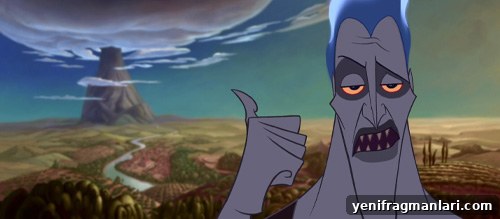
James Woods’ Hades is one of Disney’s most unforgettable villains: fast-talking, caustically funny and genuinely menacing. Woods’ performance balances comic timing and sinister intent, often overshadowing the protagonist by sheer force of personality. Danny DeVito’s Phil works well as the gruff, affectionate mentor, providing sharp comic counterpoint to Hercules’ earnestness. Susan Egan’s Megara is a highlight—complex, world-weary and full of conflicting loyalties—whose signature song, “I Won’t Say I’m in Love,” remains a standout moment in the Renaissance catalog.
At its core, Hercules embraces themes common to modern Disney films: identity, self-acceptance and the difference between fame and true heroism. The movie uses a mix of sports, superhero and celebrity tropes to construct Hercules’ journey, delivering broad, accessible beats rather than deep character study. While this keeps the film entertaining, it also leaves room for greater nuance in the protagonist’s development—he rarely undergoes a gradual, convincingly earned transformation during his labors, most of which are compressed into brief montages.
The film is not without flaws. Its tone can shift abruptly, bouncing from slapstick gags to darker moments that undercut emotional weight. Certain plot mechanics—Hades’ intricate timing and contrivances—feel manufactured to keep the storyline moving, and the pacing sometimes favors spectacle over interior growth. It’s also notable that Hades, such a vivid antagonist, never receives a full villain song; that absence is a missed opportunity given the character’s theatrical flair.
Despite these criticisms, Hercules remains an enjoyable family feature with infectious music, lively animation and memorable voice performances. It succeeds best when it leans into its strengths: comedic dialogue, energetic songs and bold visual design. The film’s message—that public recognition is not the same as moral courage—still resonates, even if the movie itself aims more to amuse than to probe deeply.
Score: 16/24
Recommended for you: Disney Renaissance Movies Ranked