
The Color Purple (2023)
Director: Blitz Bazawule
Screenwriter: Marcus Gardley
Starring: Fantasia Barrino, Danielle Brooks, Taraji P. Henson, Colman Domingo, Corey Hawkins
Over the decades, Alice Walker’s 1982 novel The Color Purple has inspired multiple adaptations across media. The book’s best-known early film version was released in 1985 under the direction of Steven Spielberg. Nearly forty years later, director Blitz Bazawule returned to the material with a new cinematic adaptation in 2023. This version builds on the stage musical that itself reimagined Walker’s novel for Broadway, where it earned wide recognition and multiple Tony nominations. The 2023 film reunites familiar industry figures in a different role: Spielberg and Oprah Winfrey appear as producers, while Bazawule brings his own visual sensibility and a commitment to telling the story from within the Black creative tradition.
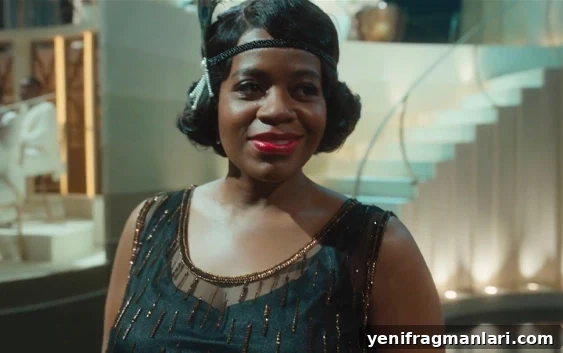
The Color Purple follows the life of an African American woman in the American Deep South in the early 20th century. The narrative opens on the Georgia coast in 1909, where Celie (Fantasia Barrino) lives with her younger sister Nettie (Halle Bailey) and their oppressive father Alfonso (Deon Cole). Celie is forced into marriage with Albert “Mister” Johnson (Colman Domingo). Stripped of agency and separated from her own children, she is compelled to raise Mister’s sons while enduring repeated abuse from her husband. Over time, Mister’s control isolates Celie from her sister and from the person she might have become. Despite this, Celie forges relationships that sustain and transform her: she befriends Sofia (Danielle Brooks), the proud and unbowed wife of Harpo, and Shug Avery (Taraji P. Henson), a charismatic singer whose independence and warmth open Celie to the possibility of a different life.
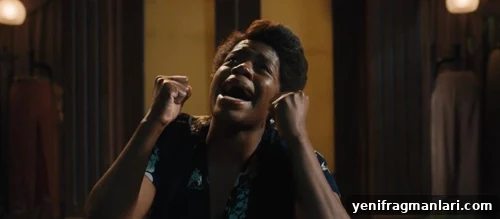
Adapting a stage musical for the screen presents distinct challenges and opportunities; music becomes a primary narrative device in this film. Songs give Celie a voice in a world where she is often silenced, and musical sequences externalize her inner life—her hopes, griefs, and dreams. The film uses musical numbers to visualize Celie’s imagination, providing insight into who she is and who she aspires to be. This technique is central to the musical genre, where song and dance express emotions and ideas cinema alone might struggle to convey.
Cinematically, The Color Purple works best when its visual language supports the musical performances. The camera movement during musical scenes frequently follows choreography, drawing the audience into the flow of motion and allowing us to experience the full scope of the dance. Costuming and production design reinforce the period setting, while color palettes in those sequences enhance the sense of theatrical exuberance. These choices help the film translate theatrical spectacle into a cinematic experience without losing the immediacy of live performance.
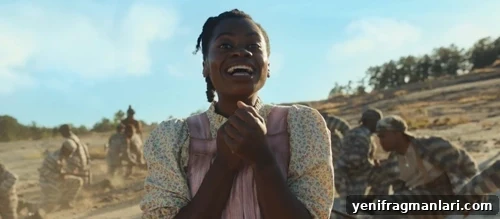
Musically the film draws heavily on gospel traditions and the blues, reflecting the soundscapes of the American South and anchoring the story in a specific cultural and historical context. Gospel influences are particularly evident in the film’s opening passages, while the blues inflect many of the quieter, more intimate moments. The use of these genres is not merely decorative; they underscore character motivations and ground the film’s emotional register in musical forms born of the communities the film depicts. Choreography leans toward a Broadway aesthetic, designed to honor the musical’s roots while adapting its movement vocabulary for the camera.
Though the plot confronts trauma—racial oppression, domestic abuse, and generational harm—the adaptation also carves out space for joy, resilience, and humor. Many scenes celebrate community, sisterhood, and personal transformation, counterbalancing darker episodes. This tonal range is an important strength: the film does not reduce its characters to victims but allows them moments of playfulness, defiance, and tenderness. These lighter sequences stand in sharp contrast to the more menacing portrayals of the film’s primary male antagonists, such as Mister and Celie’s father. Direction, lighting, and sound design collaborate to mark these men as sources of fear and control, often framing them in shadow and at low angles to convey dominance and threat.
The Color Purple uses contrast deliberately. Bright, kinetic musical numbers alternate with quieter, more harrowing scenes to create a dynamic rhythm that reflects the characters’ inner lives. Such shifts in tone emphasize the resilience of Celie and those around her: where violence and silence would otherwise obscure identity, music and companionship restore voice and dignity. The film’s ability to move between these modes—celebration and sorrow, spectacle and stillness—helps the central themes resonate more fully.
This 2023 adaptation is a fresh, cinematic reimagining of a story that has remained culturally significant for decades. By translating Broadway numbers into film language effectively and centering Black creative leadership behind the camera, the production represents both an artistic and symbolic step forward. It honors the source material while exploring new possibilities offered by cinema: immersive camera work, evocative sound design, and intimate close-ups that reveal subtle shifts in character. Ultimately, the film stands as a testament to the enduring power of Walker’s story and to the ways musical cinema can renew familiar narratives.
Score: 20/24
★★★★
Rating: 4 out of 5.
Written by Clotilde Chinnici
You can support Clotilde Chinnici in the following places:
Portfolio: Clotilde Chinnici
Twitter: @filmswithcloe