
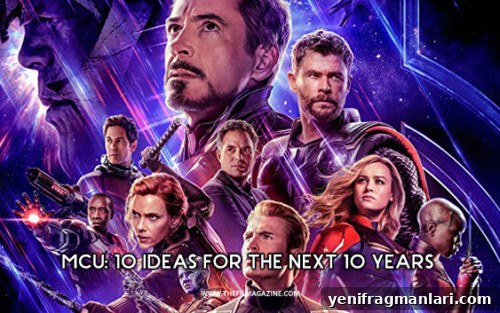
Avengers: Endgame represents the culmination of a decade-long plan Marvel has been building toward since the early days of the MCU — back to Thor, when the Tesseract first appeared in a post-credits scene. Over the years Marvel reshaped how audiences think about film franchises by turning individual movies into an interconnected cinematic universe. While the idea of a shared universe existed before in expanded franchises like Star Wars, Marvel’s deliberate, comics-style approach to film continuity created one of the most cohesive and far-reaching canons in modern cinema.
Now, as the MCU moves beyond Endgame, many questions arise: how will the roster of heroes change without Steve Rogers and Tony Stark as central figures? What will be the next large-scale event? How will Disney+ and other streaming strategies influence how often Marvel releases theatrical films versus serialized content? Below are ten realistic and exciting directions the Marvel Cinematic Universe could take over the next ten years.
1. T’Challa’s Character Development
T’Challa arrived as both a king and a superhero, showing leadership, advanced technology, and moral conviction. In the next phase of the MCU, his role could grow in complexity: confronting the ramifications of Wakanda’s new global posture, balancing national duty with superhero responsibilities, and responding to setbacks or tragic consequences. The most compelling long-term arcs are those that push characters to change, endure setbacks, and question their beliefs — and T’Challa has strong potential for that deeper, evolving storytelling.
2. Reincorporating Characters Into New Roles
Comics regularly pass mantles from one hero to another, and the MCU should do the same. We already see hints: Bucky Barnes might grow into a Captain America role, Shuri could evolve into a technological successor to Iron Man, and legacy characters could step in when originals step back. Recasting or passing identities forward keeps the brand familiar while allowing fresh perspectives. Keeping veteran heroes in supporting, cameo, or mentor roles — rather than outright retiring them — would help new protagonists gain footing without losing continuity.
3. A Good Ruffalo Hulk Film
The Hulk has been underutilized on the solo front since the early MCU attempt with Edward Norton. Mark Ruffalo’s portrayal offers emotional depth and a chance for a nuanced, character-driven Hulk movie that balances action with Banner’s struggle for identity and control. A well-crafted solo film could introduce new supporting characters or technologies, provide closure for Banner’s arc, and expand Hulk’s place in the cinematic continuity.
4. More Cosmic Marvel
Cosmic stories — from the Guardians of the Galaxy to Thor, Doctor Strange, and Captain Marvel — bring vivid settings, imaginative characters, and a visual palette that contrasts nicely with Earthbound superhero fare. Upcoming projects like Eternals and a future Fantastic Four could further explore space-faring adventures, Celestials, and large-scale cosmic conflicts. The variety and color of cosmic Marvel keep the universe fresh and open opportunities for ambitious, genre-bending storytelling.
5. More Visual Variety
For the MCU to evolve, it should broaden its visual language. Films like Thor: Ragnarok and the Guardians series demonstrated that allowing directors a distinctive style can still succeed commercially and critically. Marvel should continue to invite directors with bold, individual visions — varying cinematography, lighting, editing, and tone — to avoid a one-size-fits-all aesthetic and to keep audiences surprised and engaged.
6. Bring Back a Villain
Marvel’s best antagonists — Loki and Thanos — proved the value of recurring, well-developed villains. Bringing back secondary villains or retooling them into larger threats (for example, Abomination, Ultron, or a reimagined criminal mastermind) could create ongoing tension across films and series. A recurring villain team like the Thunderbolts would also offer a darker, morally ambiguous counterpoint to traditional hero ensembles.
7. B-Cast Crossover Events
With an expanding roster — including potential X-Men and Fantastic Four integrations — Marvel could lean into smaller-scale crossover events featuring secondary characters. Streaming on Disney+ enables more frequent, serialized storytelling and could support crossover miniseries or team-up films for groups like X-Force, Thunderbolts, or analogous teams, giving supporting players room to grow without crowding major theatrical releases.
8. As Many Spider-Man Villains As Possible
Spider-Man’s rogues’ gallery is one of Marvel’s richest resources. The MCU has already introduced many live-action Spider-Man villains, and there’s room for dozens more — Carnage, Kraven, Kingpin, Black Cat, Rhino, Morbius, and others. Whether through Sony collaborations or new Disney+ animated series, embracing the breadth of Spider-Man’s antagonists will deliver variety, memorable set pieces, and deeper continuity for Peter Parker’s world.
9. Strong Reimaginings of Other Studios’ Movies
Now that rights have shifted and the MCU continues to expand, Marvel has the chance to revisit and improve past cinematic missteps. Reimagining elements from earlier X-Men entries, a new Fantastic Four, or a refined take on characters like Venom could better align those properties with the MCU’s tone and continuity while satisfying fans who want stronger adaptations of beloved material.
10. Continue to Innovate in Genre and Tone
One of Marvel’s strengths has been folding classic film genres into superhero stories: spy thrillers, heist films, coming‑of‑age tales, and more. Expanding this approach further — experimenting with horror, Westerns, historical epics, or sword-and-sandal adventures — will broaden the MCU’s creative palette and invite directors with distinct voices to put their stamp on the franchise. The more genre diversity Marvel embraces, the richer and more surprising the cinematic universe will become.
These ten directions — stronger character arcs, mantle passing, ambitious Hulk and cosmic stories, visual risk-taking, recurring villains, B-list team crossovers, an expanded Spider-Man rogues’ gallery, smart reimaginings, and genre experimentation — offer a roadmap for the MCU’s next decade. With careful stewardship and room for creative risk, Marvel can keep growing while still honoring the connections and characters that made it a cultural phenomenon.