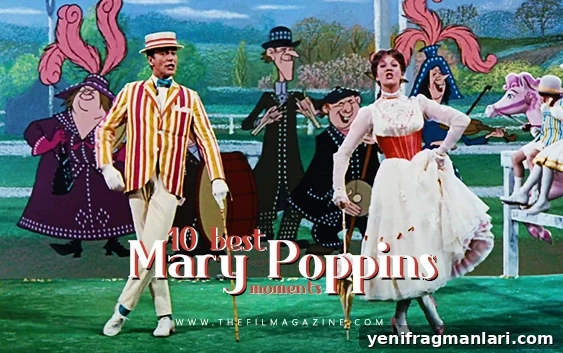
More than six decades after its release, the beloved Robert Stevenson musical Mary Poppins (1964) remains a timeless favourite for audiences of all ages.
Born from Walt Disney’s ambition to produce prestige pictures and inspired by P.L. Travers’ books about a magical nanny, the film endures because of its memorable songs, inventive visuals, distinctive characters and evocative performances—most notably Julie Andrews in the title role. Mary Poppins is filled with iconic moments that continue to charm viewers.
As portrayed in the biopic Saving Mr. Banks (2013), Travers was not entirely pleased with Disney’s adaptation of her stories, yet the film’s warmth and imagination won audiences over. Mary Poppins went on to be a major Oscar success, collecting five awards including Best Actress for Andrews.
Which scenes and musical numbers stand out as the most affecting, uplifting or poignantly funny? From the small domestic absurdities to big musical set pieces, here are the 10 best Mary Poppins moments that keep the movie fresh and alive in the memory.
10. The Admiral’s Timekeeping
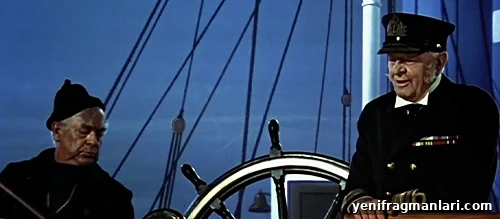
“Posts everyone!”
Across the street on Cherry Tree Lane lives Admiral Boom (Reginald Owen), a retired seafarer who has moored a small ship on his roof and fires a cannon every evening a little after six—his watch runs slow. The entire Banks household braces for the blast.
When the maid Ellen shrieks “Posts, everyone!” the family scrambles into practiced positions to secure fragile items as the house shakes and furniture skids. The sequence is a delightfully absurd piece of physical comedy, achieved through precise timing, rehearsed performances and old-school practical effects. It’s an example of filmmaking craft that blends theatrical technique with cinematic ingenuity.
9. Run on the Bank
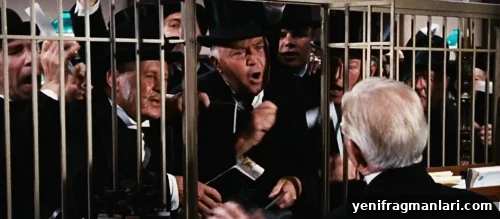
“If you invest your tuppence wisely in the bank, safe and sound, soon that tuppence, safely invested in the bank, will compound!”
On Mary’s suggestion, Mr. Banks (David Tomlinson) brings Jane and Michael to his workplace at the Fidelity Fiduciary Bank. When the elderly chairman Mr. Dawes Sr. (Dick Van Dyke) tries to persuade Michael to open a savings account with his tuppence, panic and chaos follow as customers mistake the commotion for a bank run.
The scene functions as a comical yet pointed commentary on greed and class. The image of stern bankers circling a child to claim his coin for investment is both absurd and telling. It also marks a low point for George Banks professionally and sets up the events that force him to confront his priorities as a father.
8. Into the Chalk Drawing / Jolly Holiday
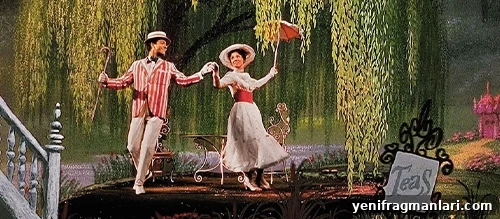
“Why do you always complicate things that are really quite simple? Give me your hand please, Michael. Don’t slouch. One… two…”
Bert (Dick Van Dyke), working as a chalk artist, creates a drawing that Mary Poppins magically transforms into an animated Edwardian park. Mary and the children step into the illustration and enjoy a technicolour Jolly Holiday filled with dancing animals and playful fantasy.
This sequence is a technical triumph for its era, blending live action and animation using early compositing techniques to create a vivid, seamless fantasy world. The playful choreography and charming visuals—especially the dancing penguins—make it one of the film’s most joyous moments.
7. Sister Suffragette
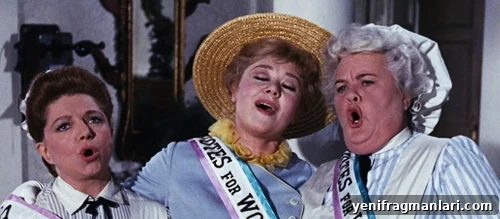
“We’re clearly soldiers in petticoats, and dauntless crusaders for women’s a-votes!”
Mrs. Winifred Banks (Glynis Johns) returns from a suffragette rally and leads the household women in a spirited campaign song. The number introduces Winifred’s character: politically engaged and well-meaning, but so absorbed in her cause that she overlooks troubles at home.
“Sister Suffragette” is energetic and witty, giving younger viewers a light introduction to the historical struggle for women’s voting rights while highlighting the emotional distance between Mrs. Banks and her family.
6. Chim Chim Cher-ee
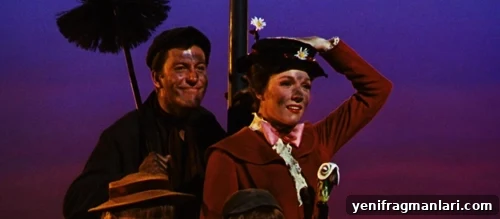
“Never was there a more happier crew, than them what sings Chim Chim Cher-ee Chim Chiroo!”
Bert takes Mary and the children across London’s rooftops via magical chimney smoke stairways, and they sing the chimney sweep’s anthem. The tune earned the Sherman Brothers their first Academy Award for Best Original Song.
The melody and harmonies—led by Julie Andrews and Dick Van Dyke—capture an affectionate, slightly romanticised view of old London while giving the film a distinctive, melodic highlight.
5. Let’s Fly a Kite
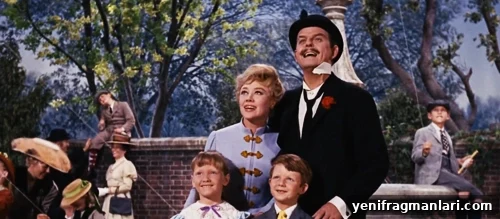
“With tuppence for paper and strings, you can have your own set of wings.”
Following his change of heart, Mr. Banks takes his children to the park to fly a kite. The outing signals his emotional rebirth: no longer the rigid, work-obsessed father, he reconnects with his family and rediscovers joy and spontaneity.
David Tomlinson’s performance sells the moment—his voice may not be operatic, but his heartfelt delivery makes this tender sequence resonate as a celebration of family and renewed affection.
4. Step in Time
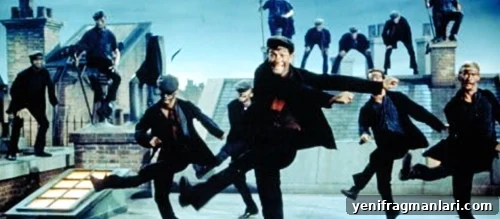
“Kick your knees up, step in time!”
Among chimneys and rooftops, Bert’s fellow sweepers break into a high-energy dance that soon sweeps through the Banks household. A rousing tribute to music hall traditions, “Step in Time” is the film’s dance spectacle: loud, kinetic and joyfully infectious.
The choreography grows in scale and complexity, involving Mary, Bert, the sweeps and even the servants, turning the scene into an exhilarating display of ensemble performance.
3. Supercalifragilisticexpialidocious
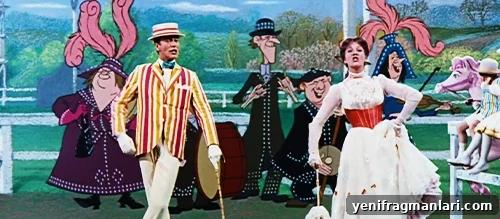
“Even though the sound of it is something quite atrocious, if you say it loud enough, you’ll always sound precocious!”
At the end of the chalk-drawing holiday, Mary leads a spirited, tongue-twisting finale with animated Pearly Kings and Queens. The song’s playful nonsense word is irresistibly catchy and remains one of the movie’s enduring earworms.
Julie Andrews’ measured performance keeps the number grounded even amid extravagant animation, demonstrating her ability to blend warmth and precision.
2. Feed the Birds
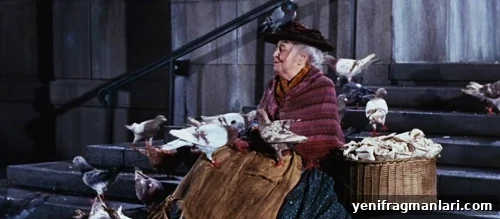
“All around the cathedral the saints and apostles look down… although you can’t see it, you know they are smiling each time someone shows that he cares.”
Sitting near St Paul’s, an elderly woman sells bags of bird seed for tuppence. Through a snow globe’s memory, Mary shares this tender scene with the children as a lesson in compassion and small acts of kindness.
“Feed the Birds” is one of the film’s most moving moments—a simple, lyrical plea for empathy. In Andrews’ luminous voice the song becomes profoundly affecting, gently urging generosity and human connection.
1. Mr Banks’ Revelation
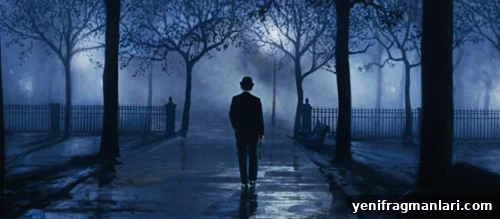
“You’ve got to grind, grind, grind at that grindstone… Though childhood slips like sand through a sieve…”
The film’s emotional pinnacle arrives when George Banks finally recognizes what he has been missing: time and love with his children. Bert offers the crucial nudge that allows George to see how fleeting childhood is and what truly matters.
Stripped of his symbols of authority and facing humiliation at work, George nonetheless experiences a moral and emotional awakening. He returns home transformed, ready to embrace fatherhood and the small, human pleasures he had long ignored—thanks in large part to the lessons Mary Poppins has given his family.
Mary Poppins endures because it celebrates imagination, kindness and the need for play in a world that often prioritises duty and status. Its songs and set pieces combine technical ingenuity with heartfelt emotion, creating a film that remains cherished across generations. Which moments stood out to you? Consider revisiting the movie and rediscovering the scenes that made it a classic.