
Home Bodies Review | An Automated Retro-Future
Home Bodies premiered at the 2026 Fantasia International Film Festival on July 23, marking director Casey Walker’s return to the festival after more than a decade. Known for his horror-comedy work, Walker re-emerges with a film that blends retro-futurism, social commentary, and a creeping sense of surveillance to examine automation, identity, and control.
Produced and directed by Casey Walker, with Karen Harnisch producing and Todd Brown and Chad Archibald as executive producers, Home Bodies is distributed in Canada by VVS Films. The film’s aesthetic and tone align naturally with Fantasia’s genre-minded audience, though its pacing requires viewers to settle into a deliberately slow-burning setup before the story begins to unfold more provocatively.
What Is Home Bodies About?
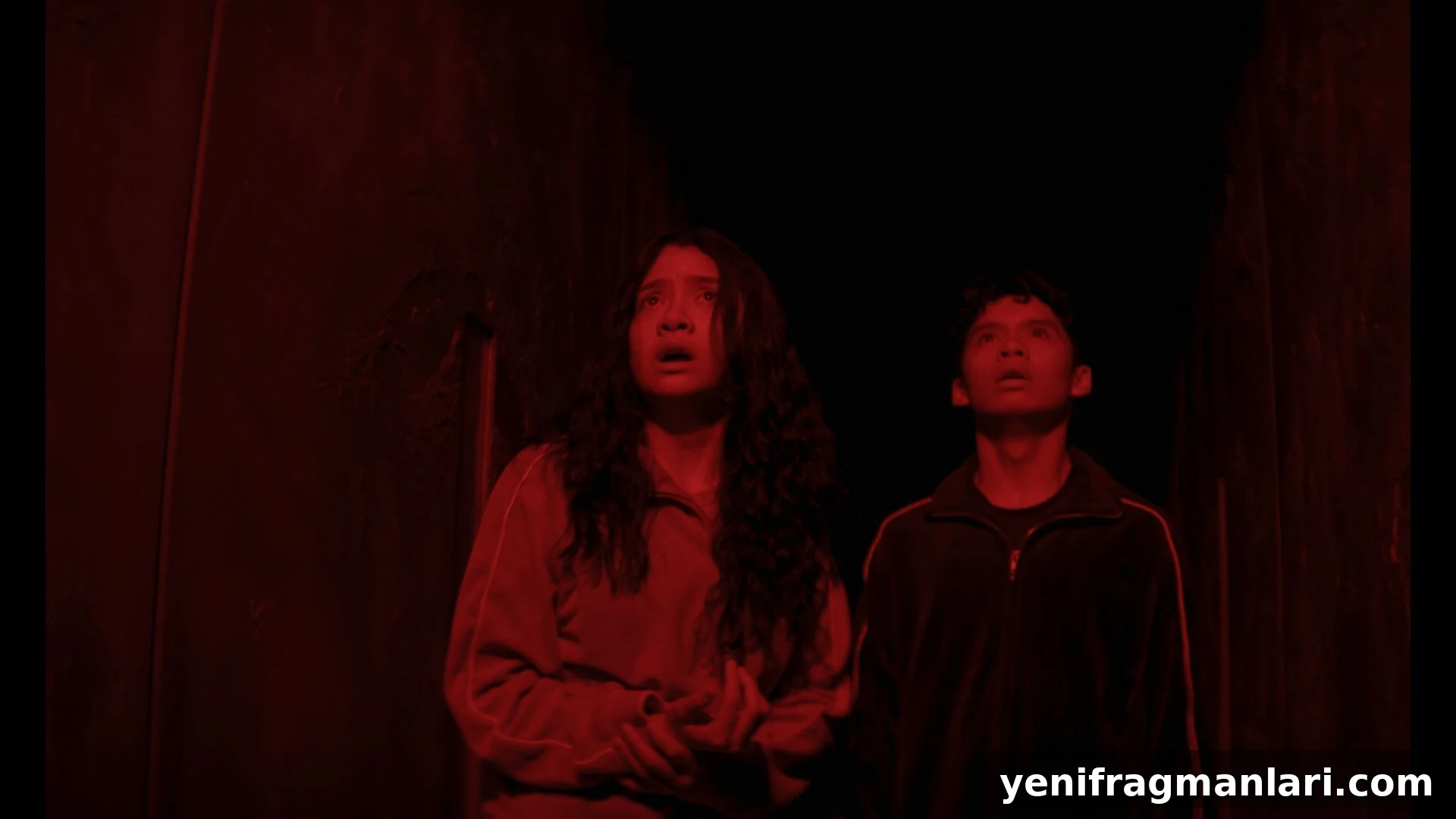
Home Bodies centers on twin siblings Red (Emma Ho) and Blue (Ian Ho), who have been raised entirely inside a fully automated house. Their lives revolve around strict routines, identical meals, coordinated clothing, and a children’s VHS program called “Barn.” The household is controlled by a disembodied authority known simply as Papa, whose voice issues rules from behind a locked door and enforces a rigid social order.
The twins’ insulated world shifts when they receive Pal (Ess Hödlmoser), a silent, androgynous humanoid who brings with them disturbing VHS tapes rather than the safe programming the twins know. Pal’s presence destabilizes the household routine: Red becomes curious and restless, while Blue seeks to maintain the comfortable predictability of their confined existence. The film sets up a clear red-versus-blue dichotomy, but it ultimately complicates that binary by showing how environment and mediated narratives shape both rebellion and compliance.
Life Inside the Fishbowl
Cinematography and camera placement are central to the film’s atmosphere. Wide-angle lenses and unconventional vantage points—sometimes from inside appliances or household objects—create a fishbowl effect that emphasizes exposure and surveillance. These choices reinforce the theme of omnipresent observation and make private routines feel public and ritualized.
The visual language echoes modern online culture, where personalities and formats are imitated until individuality blurs into repetition. Red and Blue eat the same meals, wear matching outfits, and rehearse identical behaviors, producing a sense of identity worn thin by monotony. The film intentionally leans into repetition to illustrate how automated systems and narrow media loops can flatten human experience.
That repetition affects pacing: the early sequences sometimes linger and feel overly patterned. Still, Walker sustains an undercurrent of dread that carries the narrative until Pal’s arrival tips the balance and deepens the psychological stakes.
A Future Designed to Look Like the Past
One of the film’s standout strengths is its production design. The house pairs futuristic automation with vintage furnishings, old kitchen appliances, and VHS technology—creating a retro-future where progress looks like nostalgia. That aesthetic choice underlines the film’s central irony: technology intended to ease life instead deepens dependence and erodes autonomy.
The set design and props work as narrative devices, illustrating how convenience can mask coercion. Papa’s authority is maintained through the house’s systems, which can punish or reward from a distance. The twins’ agency is diminished not by violence but by a steady diet of curated content and regulated comfort.
Performance-wise, Emma Ho and Ian Ho shoulder most of the emotional weight. Their portrayals occasionally veer into stylized or heightened territory, especially early on, yet that heightened quality often feels appropriate given their upbringing in an abnormal, media-saturated environment. Ess Hödlmoser’s Pal is the film’s most unsettling figure: silent, ambiguous, and physically neutral in a way that allows other characters—and the audience—to project layered meanings onto them.
Is Home Bodies Worth a Watch?
Home Bodies is recommended for viewers willing to tolerate a patient, atmospheric opening in exchange for a more provocative middle and finale. The film’s themes—automation, surveillance, identity formation, and media control—are pronounced rather than subtle, and its red-versus-blue symbolism can feel blunt. Yet the movie redeems those direct signals with strong visual design, a pervasive sense of unease, and a central disruption that complicates the twins’ constrained world.
As a slow-burn science-fiction piece with horror undertones, Home Bodies rewards viewers who appreciate careful production design and conceptual clarity. It does not entirely escape the influences that shape it, but Casey Walker’s film offers a peculiar, thoughtful take on how technology and nostalgia can combine to restrict rather than liberate. The conclusion may divide audiences, but it takes the core premise into unexpected territory and leaves a lasting impression.